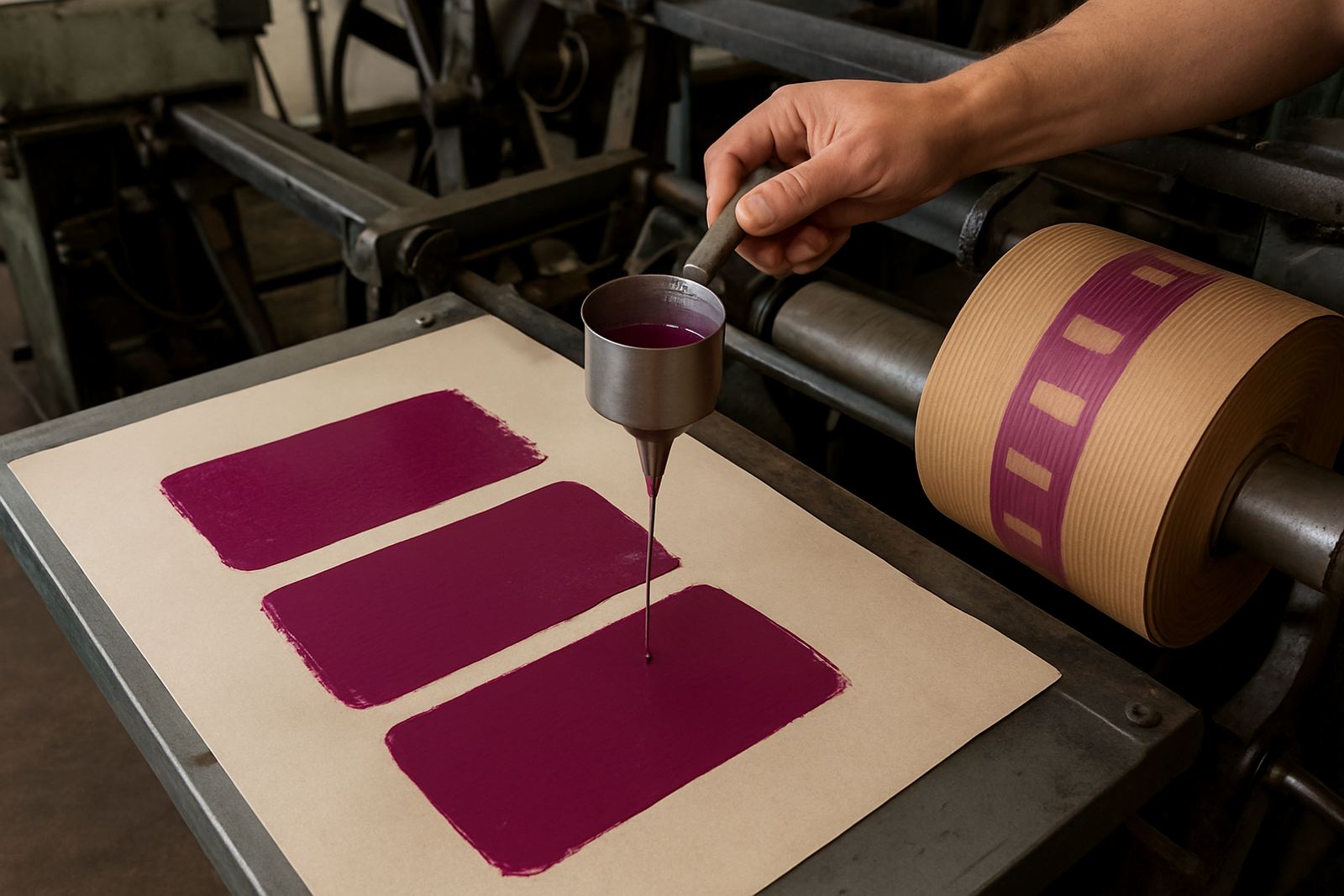
Two response bands for clearer product indication
Dual Range Indigo uses two colour response bands in one system, so a pack can show more than one temperature state instead of a single on or off change. That is useful when a product must stay within a cold chain window, or when buyers need to see if an item has warmed up too far during transport or display. The colour shift is designed for packaging use, not loose labels only, so it can be built into cartons, sleeves, sachets, outer wraps and security panels.
In practical terms, one band can indicate an early warning range while the second band confirms a higher trigger point. This helps teams in Durban, Gauteng and the Cape check handling at a glance before stock is moved. It also supports customer communication because the pack itself gives a visible cue, with less guesswork at receiving and store level.
Typical sizes, formats and working ranges
We supply Dual Range Indigo as a custom system, so the final format is matched to the converter's substrate, press setup and end use. It can be supplied for flexo, gravure, screen or controlled coating application depending on the pack construction. The system is commonly used on paperboard, coated cartons, films and select laminated structures after compatibility testing.
- Available as pilot samples, trial batches and production-ready volumes
- Response bands are set to the product requirement, with a typical two-stage indication window
- Can be supplied as a clear-to-indigo, pale-indigo-to-deep-indigo, or similar visual cue depending on specification
- Suitable for print areas from small warning marks to full panel coverage
- Batch retain samples can be held for repeat orders and audit reference
For most packaging runs, we first confirm the substrate, coat weight and drying profile. That avoids surprises on press and helps keep the final appearance consistent from batch to batch, even when conditions change between Jacobs and inland sites.
Where Dual Range Indigo suits best
This product suits temperature-sensitive packs where a single indicator is not enough. Food service, chilled distribution, medical transport, specialty chemicals and premium retail packaging all use temperature cues in different ways. Dual Range Indigo is also useful where authenticity matters, because the print can be paired with a security pattern or verification layer on the same pack face.
It is a practical option for converters working with municipal waste rules and producer responsibility targets too, since the ink system can be matched to the packaging format already in use. The aim is to add function without creating extra handling steps or unnecessary material changes.
- Chilled or semi-chilled product cartons
- Outer packs for heat-sensitive items in transit
- Authentication marks on premium packaging
- Cold chain audit labels and pack panels
- Trial packs for launches where colour cue clarity matters
Installation, press setup and utility needs
Dual Range Indigo does not need power or gas at the point of application unless the line already uses powered drying, curing or heat-assisted equipment. In most cases the key need is stable press control, proper substrate preparation and a clean production area. On humid coastal sites such as Durban, drying checks matter more because moisture can affect laydown and adhesion if the press room is not controlled.
We support press startup with drawdown panels, threshold tuning and adhesion tests before full production. If the line uses heat, UV or mixed drying, we check compatibility first so the response bands stay accurate and the print does not over-cure or shift. Where needed, our technical team can guide the converter on viscosity, mesh, anilox selection or coating weight, depending on the method being used.
- No direct site gas supply is required for the ink itself
- Electrical needs depend on the printing or drying equipment already installed
- Best results come from stable room temperature and controlled drying air
- For high humidity areas, keep printed stock separated until fully conditioned
- UV verification setups can be added where security features are part of the pack
Care, storage and routine servicing checks
Because this is a specialist packaging ink, storage and handling must be kept steady. Store sealed containers in a cool, dry place away from direct sun and forklift traffic. If stock is left too close to loading bays or on hot concrete, the response behaviour can drift over time. On long supply routes to Cape Town, Gqeberha or Pretoria, packaging and transit conditions should be checked before the material is released to production.
For ongoing use, keep a batch retain library so you can compare new runs against the approved standard. We also recommend routine rub resistance checks, coating compatibility checks and periodic visual verification against the original drawdown panel. If the line starts showing dull colour change, patchiness or weak response, it usually means the substrate, drying or ink build needs adjustment, not that the whole system must be replaced.
What to confirm before you place an order
Ordering is easier when the technical brief is complete. We need to know the substrate, print process, target response bands, pack size and whether the ink must carry any security function at the same time. If your line is running trial batches first, send the actual pack format and the press conditions so we can tune the product for your setup. A clear brief saves time and cuts waste on first run, which matters when materials are arriving from multiple depots.
Please check the points below before you send the enquiry through the contact form on our contact page:
- Substrate type and finish, including coated, uncoated or laminated stock
- Exact two-band temperature targets and the desired visual change
- Print method and any drying or curing limits on the line
- Need for security pattern design, UV verification or authentication support
- Order volume, lead time and delivery point, whether Jacobs, Pinetown, Prospecton or another branch area
- Any colour matching, adhesion or rub resistance requirement for the final pack
Once those details are in place, we can advise on the right build for sample work or production. If the job is going into a regulated supply chain, we can also help with production troubleshooting so the pack performs the same way on repeat runs.
Key facts
| Product type | Custom dual-band thermochromic ink system |
|---|---|
| Response bands | Two set temperature bands in one pack-facing indicator |
| Application methods | Flexo, gravure, screen and controlled coating after testing |
| Compatible substrates | Paperboard, coated cartons, films and selected laminated packs |
| Support services | Colour matching, threshold tuning, adhesion tests and press startup |
| Supply base | Jacobs, Durban with deliveries nationwide |