

Solvent Check Marker
Home / Inks / Solvent Check Marker

Inks

Solvent Check Marker

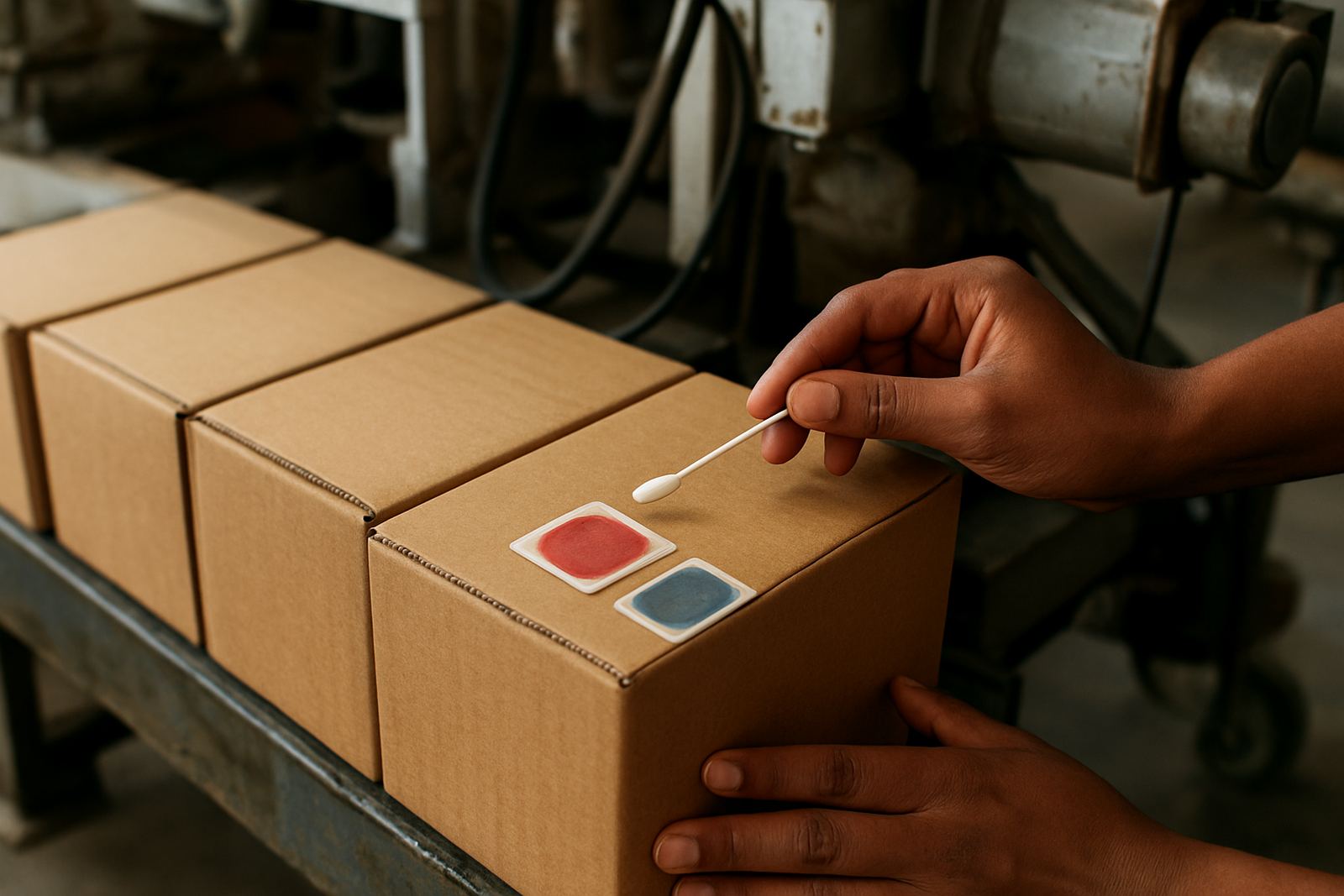
Solvent Check Marker is an indicator ink for packaging areas that need tamper awareness. It changes on contact with selected solvents, helping converters and packers spot interference before product leaves site.

What Solvent Check Marker does on pack

Solvent Check Marker is used where a pack needs a visible sign that someone has tried to lift, clean, rework or alter a printed area with solvent. The mark is laid onto a defined section of the pack, label or seal zone, then matched to the substrate and finishing method so it stays discreet in normal use and reacts when tampering is attempted.

It is suited to carton boards, coated paper, film structures and selected laminated packs used in food, personal care, industrial and controlled goods packaging. In practice, it gives a quick visual cue for QA teams, dispatch staff and end users. If the area has been attacked with a solvent wipe, the mark changes appearance and the affected area is easy to spot.

We supply from Jacobs, Durban, with deliveries to packaging converters across South Africa, including Pinetown, Prospecton, Johannesburg and Cape Town. For coastal sites, we also take humidity and drying conditions into account during setup, because Durban air can affect laydown and cure times if the pressroom is not controlled.

Where the marker suits best

This product is typically chosen for packs that need a tamper signal without changing the main artwork. It is often placed on corners, flap joins, label edges, overprint zones, or inside a security panel on the pack. It works well where the risk is solvent cleaning, patching, relabelling or surface lifting.

  • Cartons for cosmetics, supplements and pharmacy packs
  • Industrial packs with critical instruction panels
  • Labels on refill packs and seal areas
  • Outer packaging for transit sensitive items
  • Short-run and medium-run security packaging projects

It is not a substitute for full pack security on its own. Most clients combine it with a security pattern, variable marking, or another visible check so that both the packer and the customer have more than one point of reference. That approach is useful for municipal tenders, private label work and export cartons where disputes over tampering can become costly.

Sizes, options and print format

Solvent Check Marker can be supplied for trial work, line qualification and production use. The exact configuration depends on the press method, coating system and the width of the security area. We normally start with drawdown panels, then move to a trial batch and press startup support once the reaction profile is confirmed.

  • Test sample packs for lab evaluation and approval
  • Trial batch supply for converter line checks
  • Production-ready bulk supply for ongoing runs
  • Custom response thresholds for different solvent types
  • Matched laydown for flexo, screen or other approved applications

Where needed, we can help with colour matching and threshold tuning so the indicator does not react too easily in normal handling, but still responds properly to attempted tampering. For high-volume work, we also retain approved batch records in the batch retain library for repeat orders and dispute checks.

Installation and line requirements

Most installations need no special power or gas supply beyond what the existing print line already uses. The marker is applied through the chosen print process, then checked for adhesion and rub resistance on the final substrate. If the pack has a coating or laminate, we look at compatibility first so the indicator does not fail after folding, gluing or packing.

Typical set up checks include line speed, drying capacity, web tension and the handling of the marked area through finishing. On a hot day in Jacobs or Prospecton, drying can behave differently from a cooler inland site, so we often adjust the trial conditions before sign-off. In some cases, press startup support is enough to get the settings right in one shift.

  • No separate gas line is usually needed
  • Power requirements depend on the print equipment already in use
  • Good ventilation and stable drying conditions are recommended
  • Clean handling is important before sealing or overlamination

Care, storage and servicing on site

Like most security-related inks, Solvent Check Marker should be stored clean, closed and away from unnecessary heat. Keep containers sealed between shifts and avoid contamination from other inks, wash-up liquid or dust. If the material is left open in a humid room, performance can drift and that makes troubleshooting harder later on.

We recommend routine checks for settlement, viscosity change and laydown consistency before each production run. If the indicator seems too sensitive or too weak, the answer is usually found in the coating, drying window or substrate treatment rather than the marker itself. Our production troubleshooting service covers this kind of fault finding, and we can review rub resistance checks and UV verification setups where the job needs extra control.

If a site is running night shifts or dealing with load-shedding, keep the line plan simple and avoid long idle periods between make-ready and print. That small bit of discipline saves spoilage and keeps the tamper response consistent, which matters on a security pack.

What to check before you order

Before ordering, it helps to confirm the pack structure, the intended solvent exposure, the print method, and the exact area to be marked. If you already have artwork, send the panel dimensions and the expected run size so we can advise on the most suitable setup. For converters in Johannesburg, Pretoria and Cape Town, we usually work from the final substrate spec and a sample if one is available.

  • Substrate type and coating or laminate details
  • Pack size, marked area and print position
  • Expected solvent type or tamper scenario
  • Run quantity and repeat order frequency
  • Required approval tests and sign-off process
  • Any storage or transport limits for the finished packs

If the job has to move through more than one site, let us know which branch or area is handling the next step. That helps us coordinate supply through Jacobs, Durban South, Pinetown, Prospecton, Cape Town, Gqeberha, Johannesburg or Pretoria without delays.

How our team supports packaging converters

ThermoInk works with packaging converters that need practical support, not guesswork. Sibusiso Mthembu and the team handle everything from security pattern design to coating compatibility, so the indicator fits the production line and the pack use case. Shaun October manages technical sales, Lindokuhle Dlamini oversees production, Pieter van Wyk handles the security ink side, Nomfundo Khumalo leads the colour lab, and Jason Pillay coordinates national logistics.

That means you can ask for a solvent check solution, a trial batch, or a full production supply plan from one place. We serve South African packers who need a clear tamper signal and steady repeatability, without overcomplicating the line. For many clients, the real value is simple: fewer disputes, better traceability, and a marker that does what it is supposed to do.

Key facts

Product typeIndicator ink for solvent tamper detection
Primary useShows attempted solvent interference on sensitive pack areas
Suitable substratesCarton board, coated paper, film structures and selected laminates
Supply formatTest samples, trial batches and bulk production supply
Installation needsApplied on existing print equipment, no separate gas line usually needed
Support servicesColour Matching, Threshold Tuning, Adhesion Tests, Rub Resistance Checks, UV Verification Setups

Print and pack feedback

Verified Google reviews of AM.CO.ZA, our supply partner.

Questions we get asked

Does Solvent Check Marker react to normal handling or only tampering?

It is set up to stay stable in normal handling, then respond when exposed to the selected solvent conditions agreed during approval.

Can it be used on coated or laminated packs?

Yes, but coating compatibility must be checked first. We normally test adhesion and rub resistance before production release.

What should I send before requesting a quote?

Send substrate details, marked area size, run quantity, print method and the type of tamper risk you want the marker to show.

Planning something? Send the team a message.

Contact form