What our rub resistance checks cover for pack print quality
Rub resistance testing looks at how a printed surface performs when it meets carton against carton contact, pallet movement, chilled room condensation and repeated handling by packers, dispatch teams and retailers. In practical terms, we check whether the print keeps its colour, whether the surface smears, and whether any special thermochromic or security feature still reads clearly after abrasion.
For packaging converters in Jacobs, Pinetown, Prospecton and beyond, this matters on cartons, sleeves, labels, wraps and cartons that move through humid KwaZulu-Natal conditions or long hauls to Gauteng and the Western Cape. Chilled storage can soften some coatings while dry warehouse dust can make scuffing worse, so we test against the way your packs are actually used, not just what looks good on a sample table.
- Scuff and smear checks on printed areas, text blocks and special effects
- Ink transfer checks onto white board, film and folded panels
- Resistance checks after handling, stacking and pack-out simulation
- Optional checks for thermochromic zones and security print edges
How we run the test from first sample to final report
We start with your sample pack or printed drawdown and confirm the substrate, coating and print method. Then we agree the test direction, pressure and number of cycles. Some packs need light handling checks for retail shelves, while others need tougher conditions for cold chain, export cartons or busy distribution centres. If the pack has a gloss coat, matte coat, varnish or a clear barrier layer, we note that too because these finishes can change the result a great deal.
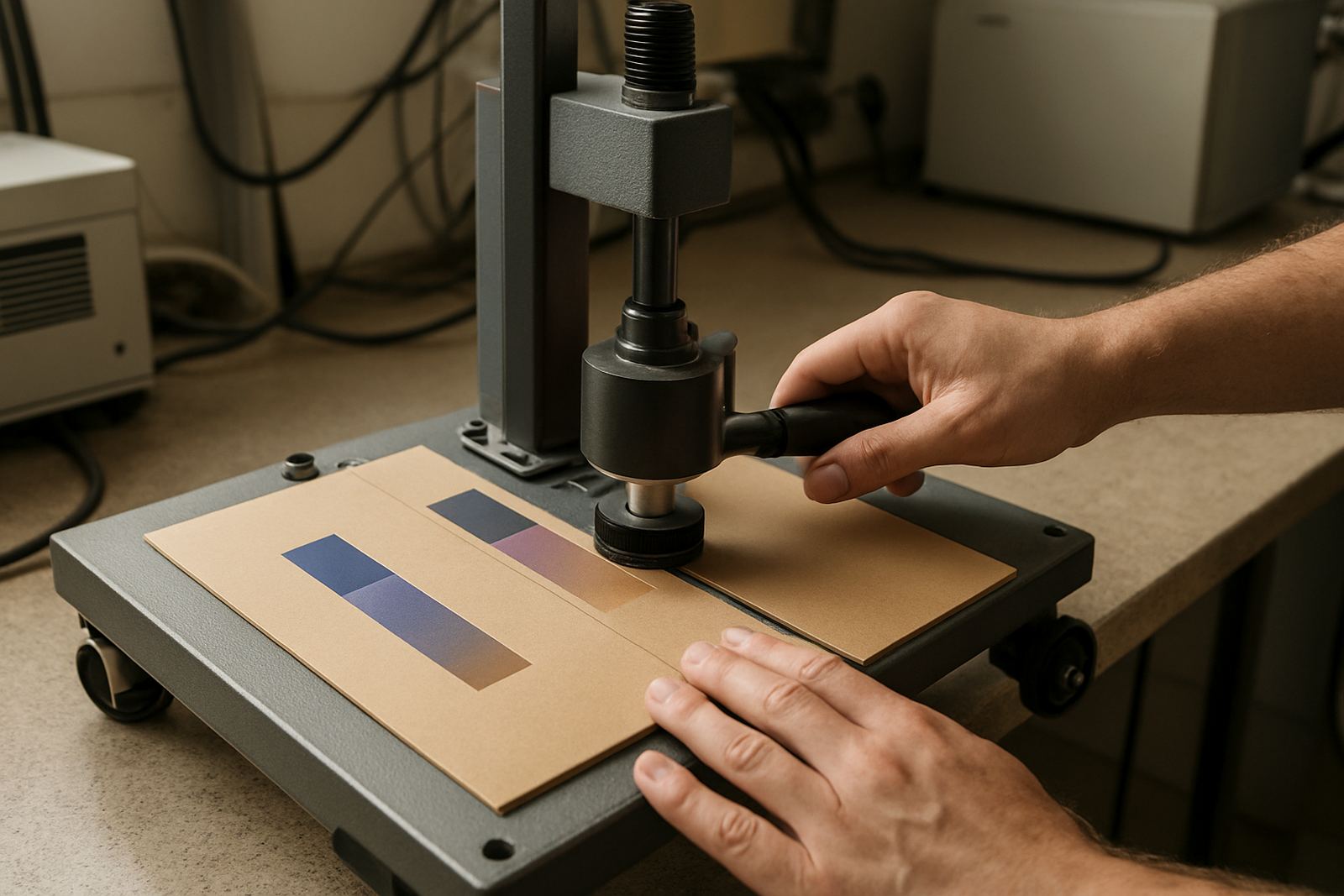
Our team then runs the test using controlled rub cycles and visual comparison at set intervals. Where needed, we also check after conditioning in warm, cool or damp storage conditions. That helps expose weak spots before a full production run starts. Shaun October handles technical sales support, while Lindokuhle Dlamini oversees production-side practical checks and Pieter van Wyk looks at any security related print behaviour if the pack carries covert or overt features.
- Sample intake and specification review
- Conditioning to suit the end use, including chilled or humid exposure
- Set rub cycles with recorded pressure and direction
- Visual scoring, transfer checks and issue notes
- Feedback on coating, ink laydown or drying adjustments
Typical specs we use for packaging durability checks
Not every job needs the same test load, so we select settings to match your pack size, print area and transport route. A lightweight sleeve for a cosmetic carton does not need the same approach as a corrugated tray going from Durban to Johannesburg in summer heat. We can test small panels, finished cartons and labelled wraps, and we record the findings in plain language so your team can act on them quickly.
Common spec points include cycle count, rub direction, pressure level and the surface being checked. We can also compare uncoated board against coated board, because the result changes quickly once a barrier is added. For chilled goods, we often suggest a pre-condition step at cooler temperatures so you see what happens after the pack has picked up moisture or condensation.
- Test area: 50 mm x 50 mm up to full pack panels
- Cycle counts: 25, 50, 100 or custom
- Pressure bands: light, medium or heavy handling
- Conditioning: ambient, cool-room and humid exposure
- Evaluation: colour loss, scuff marks, ink transfer and readability
Turnaround times for urgent production runs and scheduled audits
Standard turnaround is usually 1 to 3 working days from sample receipt, depending on the number of conditions and the amount of comparison work needed. If you only need a quick pass or fail check on a single print line, we can often move faster. For larger projects with several substrates, coatings or versions for different provinces, we will schedule the work so you get a clear result without slowing down your production window.
We understand that some converter teams work around load-shedding, machine downtime and dispatch cut-offs, so timing matters. Jason Pillay coordinates deliveries nationwide from our Durban base, including Johannesburg, Pretoria, Cape Town and Gqeberha. Where samples arrive from more than one site, we can compare them side by side and flag any variation in coating, drying or print density.
- Rush checks for urgent release decisions where capacity allows
- Same-day review possible for simple single-condition samples
- Multi-sample projects booked in sequence for consistent comparison
- Dispatch of findings to your production or quality team once complete
Pricing approach based on sample count and test depth
We price rub resistance checks according to the number of samples, the condition set and whether you need basic screening or a fuller process review. A single sample checked once is priced differently from a full set of boards run before and after conditioning with multiple rub counts. That keeps the cost aligned to the work, instead of charging you for a big package when you only need a narrow check.
For converters who need repeat testing, we can set up a scheduled cost structure for production batches or approval work. This is useful when you are tuning coatings, changing ink coverage or assessing a new substrate from a different supplier. If the job needs follow-up adjustments, we can link the rub test to coating compatibility, adhesion tests or threshold tuning so you get one practical report rather than several disconnected notes.
- Single sample screening for quick release decisions
- Batch pricing for multiple versions or repeated runs
- Project pricing for new pack development and print approval
- Repeat-test rates for monthly QA or seasonal production checks
When to repeat rub testing during production and storage
We usually recommend repeating rub resistance checks when you change substrate, coating, ink film weight or drying conditions. It is also worth retesting after a machine service, after a new batch of board arrives, or when a pack moves from dry inland warehousing to humid coastal storage. In Durban especially, moisture can change the feel of the print face more quickly than many teams expect.
If your product is sensitive to retail handling, chilled distribution or export freight, a routine monthly or quarterly check can help keep the line stable. For security print or thermochromic packs, repeat testing also helps confirm that the feature remains readable after the surface has been handled and rubbed in transit. Nomfundo Khumalo can help compare colour shifts where visual cue accuracy matters, and the batch retain library makes it easier to track what changed and when.
Clients reach us through the enquiry form on our contact page and we will advise the right interval based on your pack type, route and print system.
Key facts
| Test focus | Scuffing, ink transfer, colour loss and readability |
|---|---|
| Sample size range | 50 mm x 50 mm test zones up to full pack panels |
| Conditioning options | Ambient, cool-room and humid exposure |
| Cycle counts | 25, 50, 100 or custom set-ups |
| Reporting | Pass or fail notes with issue points and comparison comments |
| Typical turnaround | 1 to 3 working days, depending on sample count and conditions |