What Security Pattern Design Covers
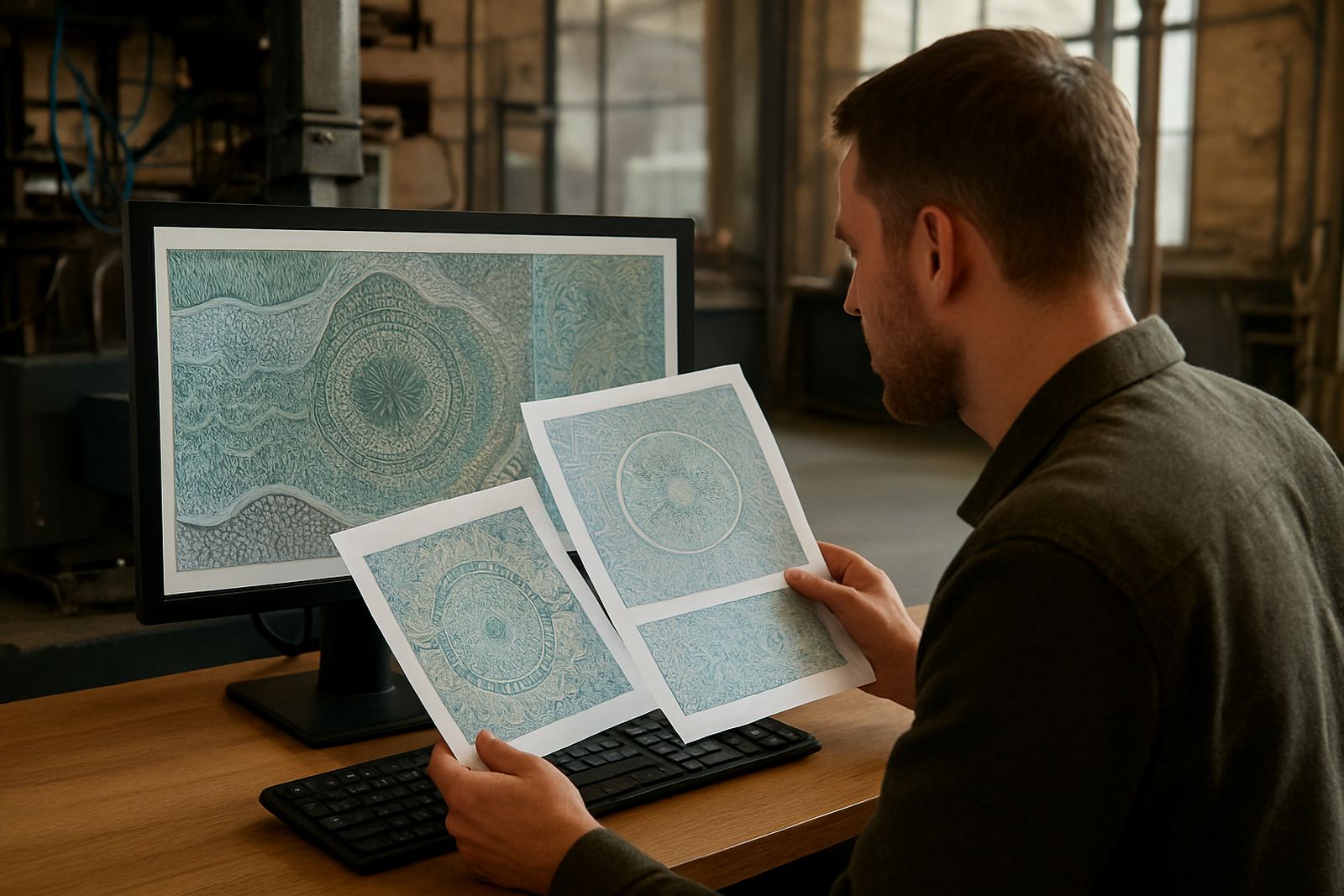
Security pattern design is the planning stage that turns a blank artwork area into a printed control feature. For packaging, that can mean microtext that reads only under magnification, fine-line guilloche work, latent images that appear at a viewing angle, and hidden checks that can be verified on the line or in the warehouse.
We develop layouts for cartons, labels, sleeves, pouches and inserts, with attention to the way packaging is actually handled in South Africa. That includes heat, dust, coastal humidity in Durban, fast line speeds, and the fact that many converters need a feature that still checks clearly after folding, varnishing or lamination.
- Microtext sized for print legibility at production speed
- Guilloche patterns for difficult-to-copy line structures
- Hidden verification marks for site inspections and QC
- Artwork layouts that fit existing packaging panels
What Is Included In A Typical Project
Every project starts with a discussion around the risk level, the substrate and the print method. Some clients need a visible feature that customers can spot at a glance. Others need a low-visibility layout for internal verification only. We prepare the pattern set to match the level of control required, without loading the artwork with features that are hard to print or hard to inspect.
Typical inclusions cover concept development, placement planning, line weight selection, text scaling, and compatibility checks for flexo, gravure, digital or screen applications. We also advise on whether the pattern should sit in a spot colour, a clear layer, or a dedicated security panel. If the pack is for export or high-volume retail, we can include multi-step checks so the same pack can be assessed by production, receiving and field teams.
- Concept sketches and layout options
- Microtext, linework and hidden image development
- Substrate and coating compatibility review
- Verification method recommendation for the plant
How The Design Process Runs
We keep the process direct so converters can get a workable result without losing time on rework. Once we have the pack size, artwork area and intended print process, we map the security field and confirm where the feature will live on the pack. From there we develop the first pattern set and check it against the practical limits of the press and the converting line.
The process normally moves through four steps. First is the brief and sample review. Second is the pattern draft and technical check. Third is a trial print or drawdown panel if needed. Fourth is approval and handover with notes for press use. If a client has existing packaging, we can review that artwork and tighten the feature without changing the whole pack. Shaun October and Pieter van Wyk support the technical side, while Nomfundo Khumalo handles colour related checks where the security layout sits inside a colour-controlled panel.
- Brief review and risk level agreement
- Pattern design and placement draft
- Trial batch or panel verification if needed
- Final approval notes for production use
Technical Specs We Work To
Security pattern design only works when the details are tight enough for print but still stable on the press. We set microtext and line structures to suit the chosen process, then check how they behave with varnish, lacquer, heat and pressure. On coastal jobs, we also factor in humidity since paper and film can move a little from morning to afternoon in the same plant.
As a rule, we look at line thickness, repeat size, text height, negative space, and the level of contrast needed for visual inspection. We also advise on whether the pack needs UV verification, concealed marks, or a pattern that breaks apart under copying. For security panels on cartons and labels, the pattern can be built to fit within a few millimetres of tolerance, depending on registration and the substrate.
- Microtext: from about 0.2 mm height depending on press and substrate
- Fine-line work: set to suit the print method and registration tolerance
- Hidden marks: built for visual, magnified or UV based checks
- Panel fit: sized to the artwork area and pack format
Turnaround, Trials And Support On Press
For simple pattern additions on an existing pack, turnaround can be quick once the brief is complete. More detailed projects with multi-layer checks, hidden images or a trial batch usually take longer because the feature has to be proven on the actual substrate. We work with packaging converters in Durban, Pinetown, Prospecton and further afield, so logistics are set up for both local collection and nationwide delivery.
Jason Pillay coordinates dispatch and timing, which helps when a trial needs to get to a plant in Johannesburg, Pretoria, Cape Town or Gqeberha without missing a startup slot. If the line needs support, we can assist with press startup checks and production troubleshooting so the security pattern is not only well drawn but also printable under working conditions.
- Fast review for existing artwork amendments
- Trial batch support where proofing is needed
- Press startup help for registration and visibility checks
- Nationwide delivery to packaging converters
Pricing Approach And Maintenance Intervals
Pricing depends on how complex the security structure is, how many versions are required, and whether a trial or verification set is included. A single hidden feature on one pack size costs less than a full family of patterns across several SKUs. We quote after reviewing the artwork, print method and required checking level, so the price reflects the actual work not a generic template.
For ongoing packaging runs, we recommend maintenance intervals that match the print volume and the risk profile. High-volume cartons may need a pattern review every 6 to 12 months, while seasonal packs can be checked before each new production run. If a client changes substrates, coating, or print supplier, the pattern should be rechecked before full production. That is where batch retain records and pattern library notes help, because you can compare new output against the original approved version.
- Quote based on complexity, volume and version count
- Review before substrate or coating changes
- Suggested inspection every 6 to 12 months for active lines
- Retain samples kept for comparison on future runs
Key facts
| Service type | Security pattern design for packaging |
|---|---|
| Pattern elements | Microtext, guilloche, latent images, hidden verification marks |
| Typical formats | Cartons, labels, sleeves, pouches and inserts |
| Print compatibility | Flexo, gravure, digital and screen applications |
| Technical checks | Coating compatibility, UV verification, press legibility, registration tolerance |
| Service area | Jacobs, Durban and nationwide delivery to packaging converters |