What the Bloemfontein converter needed on the floor
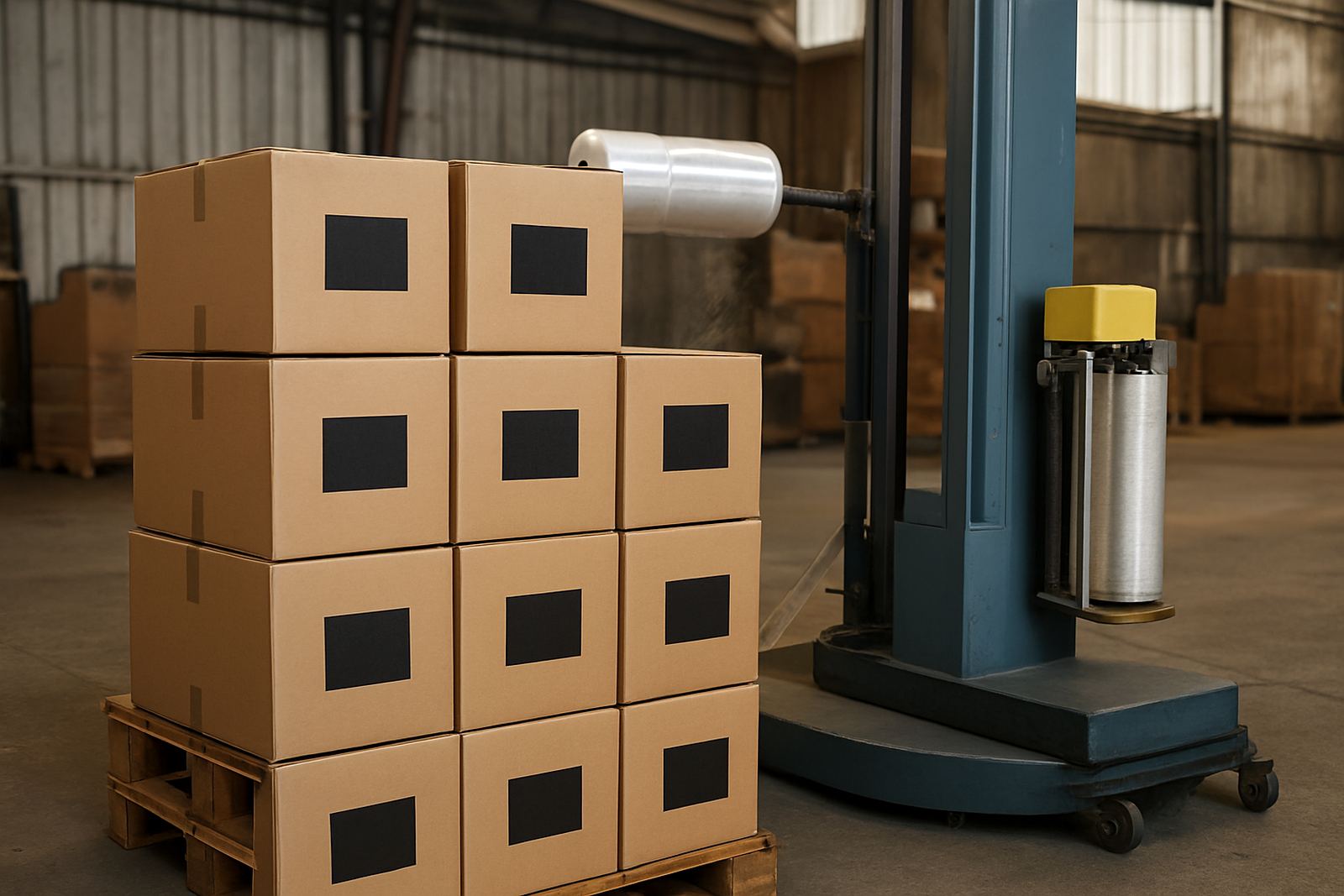
The brief came from a packaging converter supplying corrugated cases for a food and dry goods customer in Bloemfontein. The cartons had to do more than carry print. They needed machine-readable security panels that could be scanned at receiving, during dispatch and again at the warehouse counter, even when the cases picked up dust or light scuffing.
The client wanted a straightforward mark that operators could trust on the line. The panels had to sit within the existing case layout, work on recycled board and stay stable across a range of board shades. Because the cartons moved through inland warehouses and onto road freight, the print also had to cope with vibration, pallet rub and changes in temperature between day and night.
- Application: corrugated case marking for warehouse scanning
- Location: Bloemfontein, with supply through the converter
- Format: machine-readable security panels on outer cartons
- Material: corrugated board with variable recycled content
Constraints from board, drying time and inland handling
Corrugated board is unforgiving when the print window is tight. On this job the main issue was balance. The ink had to read clearly without soaking into the liner, and it had to dry fast enough for stacking, but not so fast that the panel edge looked uneven. Bloemfontein’s drier inland conditions helped in one sense, yet the converter still had to manage dust in the plant and keep the panels consistent from the first sheets to the last.
We also had to allow for the client’s scanning setup, which needed a predictable contrast response. A panel that looks fine to the eye can still fail on a scanner if the tonal shift is off by a small margin. That is why we treated the job as a print control project, not just a colour match. The first samples had to prove the signal before the line could run in full.
- Board condition: recycled corrugated with mixed absorption
- Process limits: short drying window and pallet stacking soon after print
- Scan requirement: clear contrast for warehouse readers
- Risk points: dust, rub marks and uneven laydown
Ink set-up, threshold tuning and panel testing
We supplied a security ink system with a defined trigger point for the machine-readable panel, then carried out threshold tuning so the panel changed or responded at the right point for the scanner setup. That meant working through drawdown panels first, then moving to press trials once the contrast curve was where it needed to be. The aim was repeatability, because a case marking system only earns trust when the tenth carton looks like the first one.
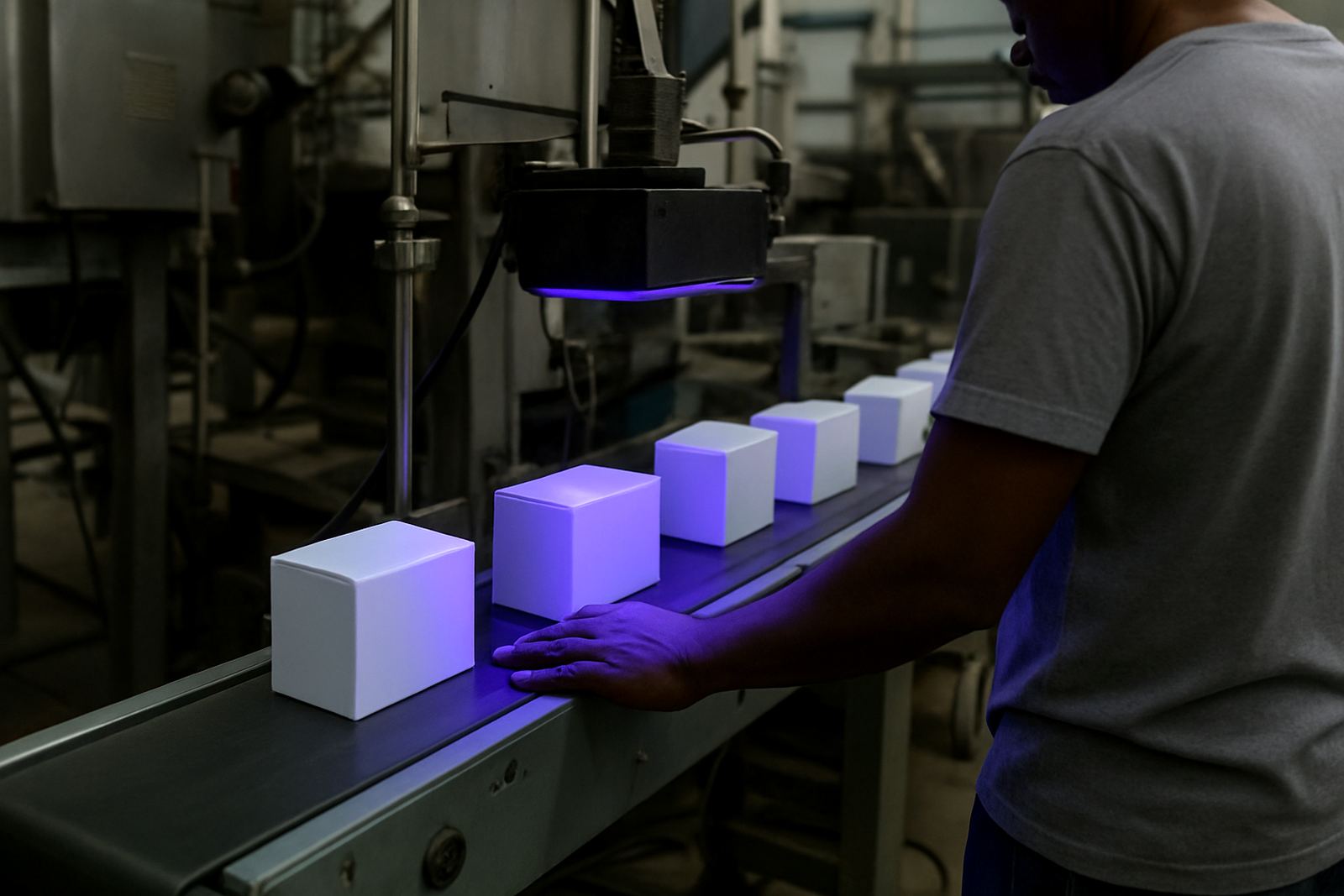
Our technical team prepared test sheets for adhesion checks and rub resistance checks. We also set up UV verification where needed, since the converter wanted a secondary check for line control during batch sign-off. The production team then ran a trial batch and compared the panel against the retain sample library so future runs could be matched quickly. It took two weeks from first consultation to approved test print, with another week for the full production changeover.
- Step 1: drawdown panels for colour and signal review
- Step 2: threshold tuning to match scanner response
- Step 3: adhesion tests on the selected corrugated board
- Step 4: rub resistance checks after drying and stacking
Press support during the trial batch run
Once the converter moved onto press, Shaun October supported the sales and technical side while Lindokuhle Dlamini handled production coordination from our Jacobs base. Pieter van Wyk checked the security pattern design and made sure the panel content stayed difficult to copy by casual reproduction. Nomfundo Khumalo led the colour lab work, and Jason Pillay coordinated delivery timing so the cartons and retain samples were on site when the press was ready.
The press startup support focused on practical points: viscosity control, anilox or applicator compatibility, line speed and drying between passes. We also checked coating compatibility because corrugated case work often uses a different finish from label stock or film. In this run the ink had to sit cleanly on the board without causing edge spread. That kept the panel crisp enough for the scanner and clean enough for visual checking at dispatch. By the end of the run the operator had a stable set-up and the make-ready waste was lower than on the first trial. Small thing, but it saved time on the floor.
- Support given: production troubleshooting and press startup checks
- Controls: line speed, drying, laydown and edge definition
- Compatibility: corrugated board and protective coating review
- Outcome on press: cleaner make-ready and fewer rejected sheets
Results for warehouse scanning and traceability
The finished cases gave the client a practical marking system that worked for warehouse scanning without slowing down packing. The security panel was easy to place during packing, visible enough for staff, and dependable under normal handling. For a Bloemfontein warehouse that moves mixed stock daily, that matters. Anything that reduces a second scan or a manual override helps the shift keep moving.
The client also gained a better internal check on batch control. Because the panel spec was retained in our library, repeat orders can be matched against the approved sample rather than started from scratch. That is useful when a packaging line has more than one shift or when the board stock changes slightly from one delivery to the next. The same format can also be adjusted for other inland depots if the scanner requirements differ by site.
- Better read rate at receiving and dispatch
- Less manual sorting of cases on the warehouse floor
- Stored retain samples for repeat production
- More stable batch control across future runs
What we would repeat on the next case-marking job
If we were doing the same project again, we would keep the same sequence: sample, tune, verify, then run production. That order worked because it let the converter test the scan response before committing to a full batch. For corrugated case work, especially where warehouse scanning matters, it is better to spend an extra day on the first tests than to chase faults after 10,000 cartons have been packed.
We would also repeat the retain library approach and keep the security pattern locked to the approved board type. When the same converter later needs a related case format for another inland client or a coastal despatch point, having the sample history on file saves time. For us, the key lesson from Bloemfontein was simple: if the marking has to work in a real warehouse, it must be tested in a real production setting first.
- Repeat plan: trial batch before full run
- Best practice: keep retain samples against the approved board
- Future use: adapt the same panel logic for other carton sizes
- Priority: scanner performance first, print appearance second
Key facts
| Project type | Corrugated case marking for warehouse scanning |
|---|---|
| Town | Bloemfontein |
| Timeline | 3 weeks from first sample to approved production run |
| Substrate | Corrugated board with variable recycled content |
| Ink system | Machine-readable security ink with threshold tuning |
| Checks completed | Adhesion tests, rub resistance checks and UV verification |
| Support scope | Drawdown panels, trial batch making and press startup support |