Start with the carton job, not the effect
Before you choose a coating or special ink, define what the carton must do on the shelf, in transit and on the filling line. A folding carton for chilled food, over-the-counter medicine or a premium gift set will not face the same handling, folding or humidity. In Jacobs, Durban and along the coast, cartons often see moisture in the air, so a finish that looks good in the studio can still fail in the pack house.
Start by writing down the basics: board type, print process, folding pattern, glue points, storage time and whether the pack will sit under bright retail lighting or in a cold chain. If the carton must carry a temperature cue, the colour change must remain clear after varnish, lamination or creasing. If you add a security feature, the print should still be readable, scannable and acceptable to your packaging converter.
- Confirm board grammage and coating side before sampling.
- Check whether the carton will be glued, stitched or nested.
- Ask how long the pack will be stored before filling.
- Allow for humidity in Durban, Cape Town and other coastal areas.
Match the finish to the handling requirement
Gloss, matt, soft touch and textured finishes all change how a carton behaves. A high gloss look can sharpen colour and make effects stand out, but it may show scuffs more easily during packing and transport. A matt finish can hide minor marks better, though it may reduce the contrast of some colour-change effects if the system is not set up correctly.
For cartons that pass through multiple hands, rub resistance matters as much as appearance. Always check whether the coating will crack on score lines or lift at the folds. On high-speed lines, coating that is too slick can also affect carton feeding. If the job includes a security design, keep in mind that heavy topcoats can reduce UV response or weaken fine detail. The right choice is usually a balance, not the fanciest finish on paper.
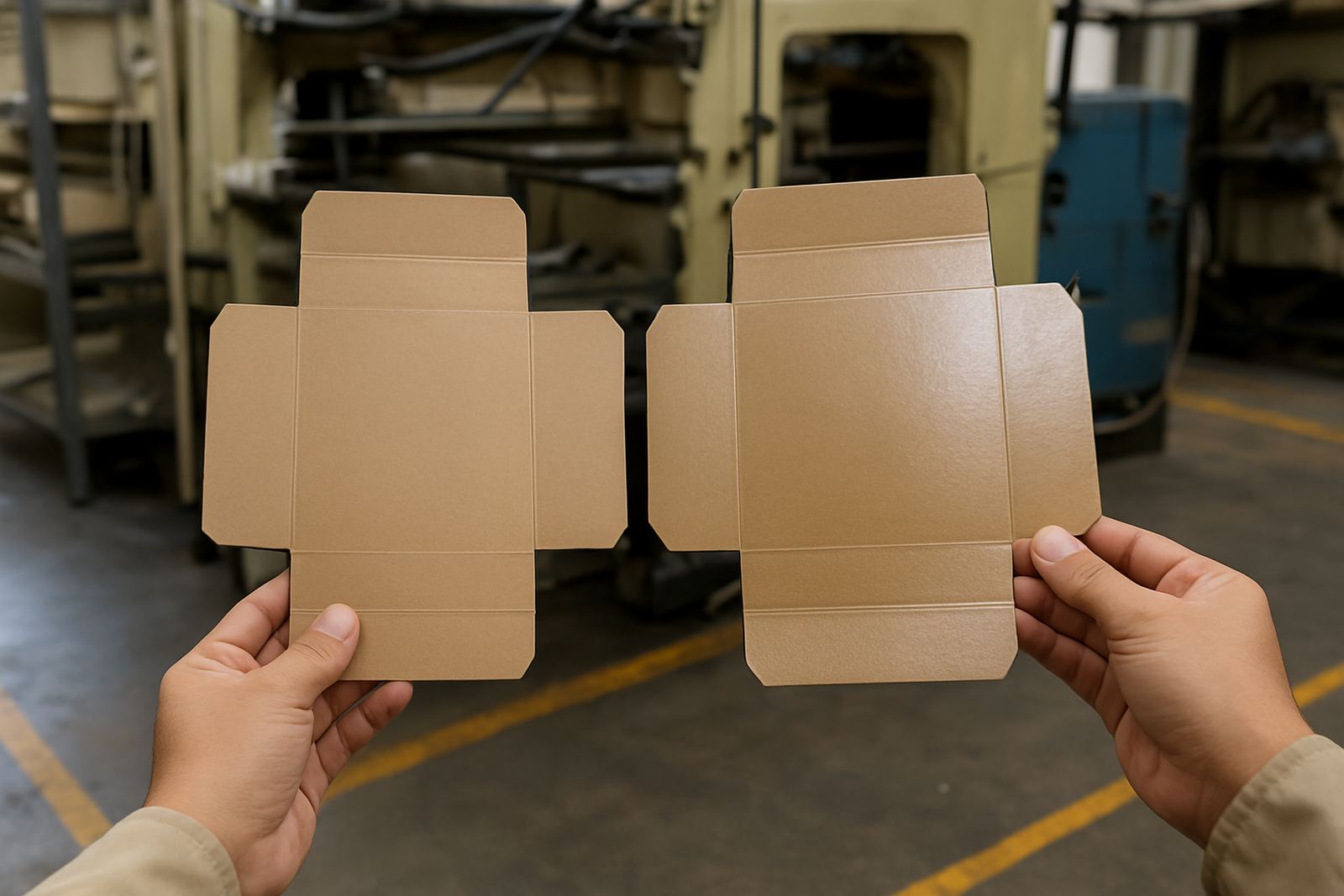
- Use drawdown panels to compare effect strength before a full batch.
- Test crease lines for cracking after folding.
- Run rub checks on both print and coating layers.
- Review glue bond areas so the finish does not interfere with sealing.
Build temperature cues into the carton print
Thermochromic features work best when the trigger point is chosen for the real pack use. A carton for a chilled product may need a different threshold than a carton for heat exposure or process monitoring. If the cue changes too early, it loses value. If it changes too late, it misses the moment the customer or operator needs to see. That is why threshold tuning is a key part of the sample stage.
Keep the message simple. Use the colour change to show one clear state, such as safe to handle, too warm or not yet ready. Dense artwork around the active area can reduce visibility, so leave enough space for the effect to show. For cartons used in retail, the active panel must still look neat when the effect is off. Press startup support helps here, because a small shift in ink laydown can change how fast the signal appears.
- Decide what the trigger should tell the user in one sentence.
- Set the temperature range against actual product storage conditions.
- Check the effect under natural light and indoor store light.
- Keep the active area free from heavy overprint unless tested.
Add security without cluttering the carton
Security inks are useful on cartons where authenticity matters, especially for regulated goods, premium items and products at risk of copying. The aim is not to overload the pack with features. It is to add one or two visible or covert checks that are easy to verify in production and in the field. A clean carton with a well-placed security pattern is usually more effective than an overcrowded one.
Security pattern design should work with the carton artwork, not sit on top of it like an afterthought. Use consistent placement so operators know where to inspect. If a UV check is part of the process, the verification setup must be repeatable from one shift to the next. Batch retain library records are also useful when there is a complaint later, because you can compare the finished carton with the approved sample.
- Choose the inspection method before final artwork release.
- Keep a retained sample from each approved batch.
- Mark the inspection zone clearly on proof copies.
- Train line staff on what normal and tampered packs should look like.
Test coating compatibility before full production
Some carton failures are not design problems, they are compatibility problems. A coating can repel an ink, reduce adhesion, or shift the colour so much that the final pack no longer matches the proof. This is especially important when combining thermochromic and security layers with standard CMYK or spot colours. What looks fine on a single sheet may behave differently once the board is creased, glued and packed in a warm warehouse.
Run small trials before committing to a full run. A proper trial batch should include print, coating, folding and final inspection. Look at edge lift, pinholing, smearing, transfer and how the carton behaves after 24 hours. If you supply into Johannesburg, Pretoria or inland routes where summer heat builds up in trucks, allow for higher storage temperatures too. It is cheaper to fix a coating issue in a trial than to scrap cartons after filling.
- Check adhesion on coated and uncoated areas.
- Inspect for scuffing after simulated transport.
- Compare results after 24 hours and again after 72 hours.
- Record the press settings, drying time and board lot used.
Use a simple approval checklist on every new carton effect
A repeatable checklist keeps the work practical. It also helps your packaging converter, printer and brand team speak the same language before production starts. Keep the list short enough to use on site, but specific enough to catch the issues that matter. A good checklist prevents last minute changes that slow the press and push up cost.
For most folding carton jobs, the approval path should include artwork review, sample testing, press trial, fold test and final sign-off. If the pack is going nationwide, add logistics to the review. A carton that passes in Durban but fails after travel to Cape Town or Gqeberha is not ready. And if the pack is for a sensitive product, keep production troubleshooting notes on file so the next order starts from known settings rather than guesswork.
- Artwork confirmed against the carton dieline.
- Effect area visible after print, coating and folding.
- Security check verified under the agreed light source.
- Rub and adhesion tests passed.
- Final sample signed off before bulk production.