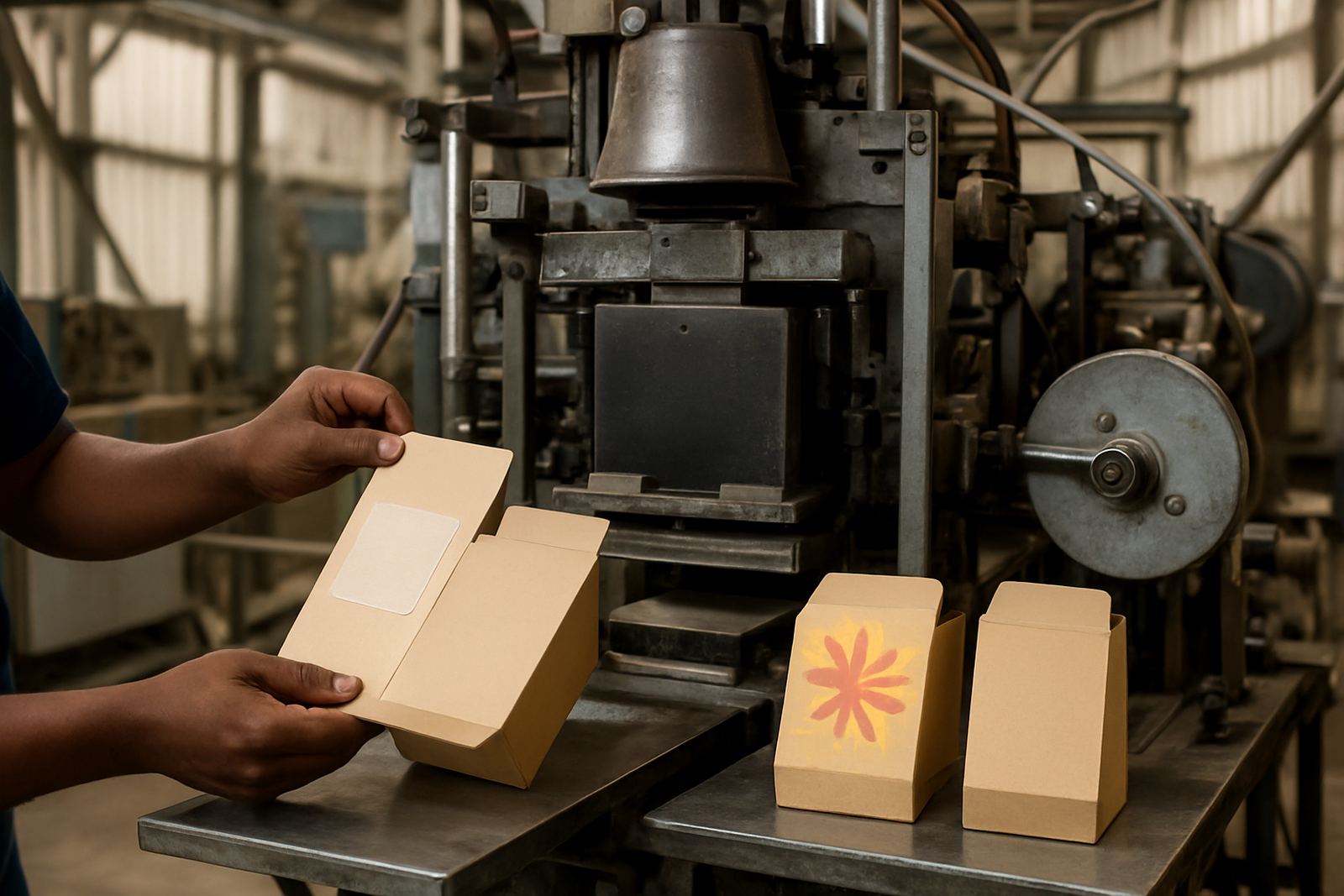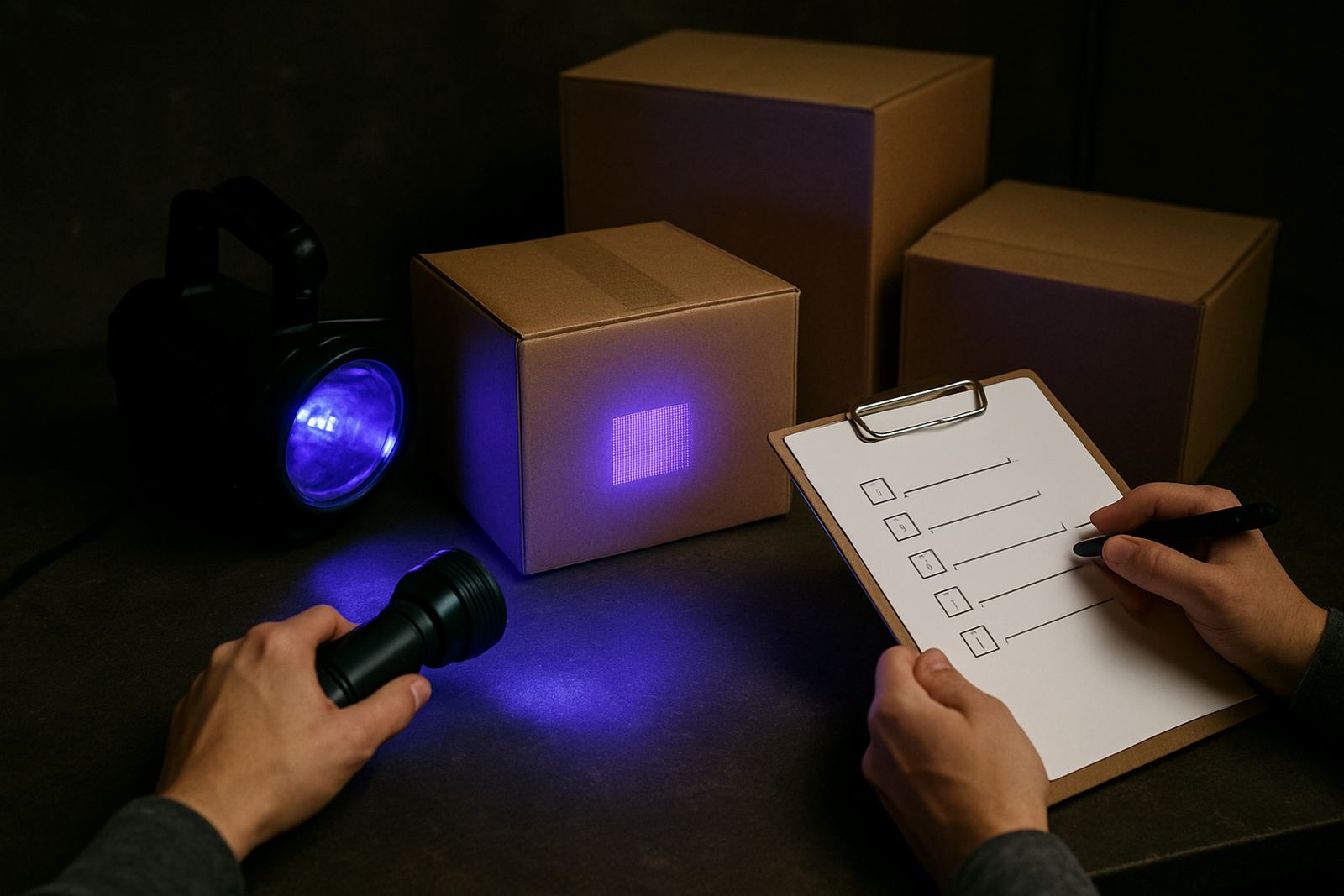
Start with a fixed UV inspection point
Keep UV verification in one clearly marked place on the line or in the QA room. The operator should test every batch under the same conditions, at the same height, with the same lamp and viewing angle. If the set-up changes from shift to shift, the results will not be consitent and you will end up arguing about the print instead of checking it.
For packaging converters in Durban, humidity and dust can affect how marks read under UV light, so keep the area clean and dry. In coastal plants, avoid placing the lamp near open doors where daylight can wash out the signal. In hotter sites or where load-shedding disrupts routine, make sure the check point can be restored quickly once power returns.
Choose the right UV lamp and viewing conditions
Use a lamp that gives a stable, repeatable output for your chosen ink system. The lamp should be mounted securely and checked often, because weak bulbs and dirty covers cause false readings. If you are checking security patterns, make sure the lamp covers the full print area and that the operator can see the entire mark without moving the item too much.
- Keep the inspection distance the same for every test
- Use a dim area or shaded booth, not direct sunlight
- Replace worn bulbs before output drops too far
- Clean lenses and covers on a set schedule
- Record the lamp type, date fitted, and change-out date
Build a simple pass-fail standard for each pack type
Every pack format needs its own acceptance rule. A carton with a small security panel will not behave the same as a flexible pouch or a laminated label, so define what good looks like before the job starts. For temperature-sensitive packs, the UV mark may need to sit alongside a visible colour-change area, and both must be checked against the same batch record.
Set your standard around clear questions: does the mark show at the right intensity, is the pattern complete, and does it hold after handling. If your team checks loose samples, sealed packs and finished cases, note the same rule for each stage so there is no confusion at dispatch.
- What is the accepted UV response level?
- Which parts of the print must be visible?
- What is the reject limit for broken or faded marks?
- Who signs off on the first article and on changeovers?
Test before the run, not only after the problem starts
Do a short verification before every production run. That includes first articles, machine wash-ups, ink changes and any shift where the substrate changes. If you are moving from one carton grade to another, or from one coating to another, run a quick UV check before the full batch is released.
A good start-up routine reduces scrap, especially when a line is under pressure and the team is trying to catch up after power interruptions. It also helps with municipal waste control, because fewer failed packs mean fewer rejects going to disposal or rework. ThermoInk often supports converters with trial batch making, drawdown panels and press startup support so the check reflects real production conditions.
Watch for coating and substrate interference
Not every coating plays nicely with UV systems. Some varnishes, films and board stocks can dull the response or create uneven reading across the pack. Before full production, check how the ink behaves on the final substrate, not just on a plain test sheet.
Use adhesion tests and rub resistance checks to confirm that the UV feature will survive handling, stacking and cold-room movement. If the job is for a coastal customer or a chilled distribution route, ask whether condensation is likely at packing or in transit. That can change how the mark appears and whether the team should adjust the threshold.
- Confirm coating compatibility before approval
- Check rub resistance after print cure
- Test on the real board, film or label stock
- Repeat the check after lamination or overprint
Keep records so the next shift can repeat the same result
Good UV control is not only about the lamp. It is also about records that another operator can follow without guessing. Keep the batch number, press settings, lamp details, sample photos and sign-off in one place. If a customer queries an order a month later, you should be able to trace the result back to the retain sample and the exact run conditions.
For nationwide supply from Jacobs in Durban, this record trail helps the team support converters in Cape Town, Gqeberha, Johannesburg, Pretoria, Pinetown, Durban South and Prospecton without confusion. It also helps when a line needs production troubleshooting after a change in substrate or ink laydown. A clear record saves time on site and on the phone, and it makes the next run easier to repeat.