Why anilox choice changes the way special inks behave
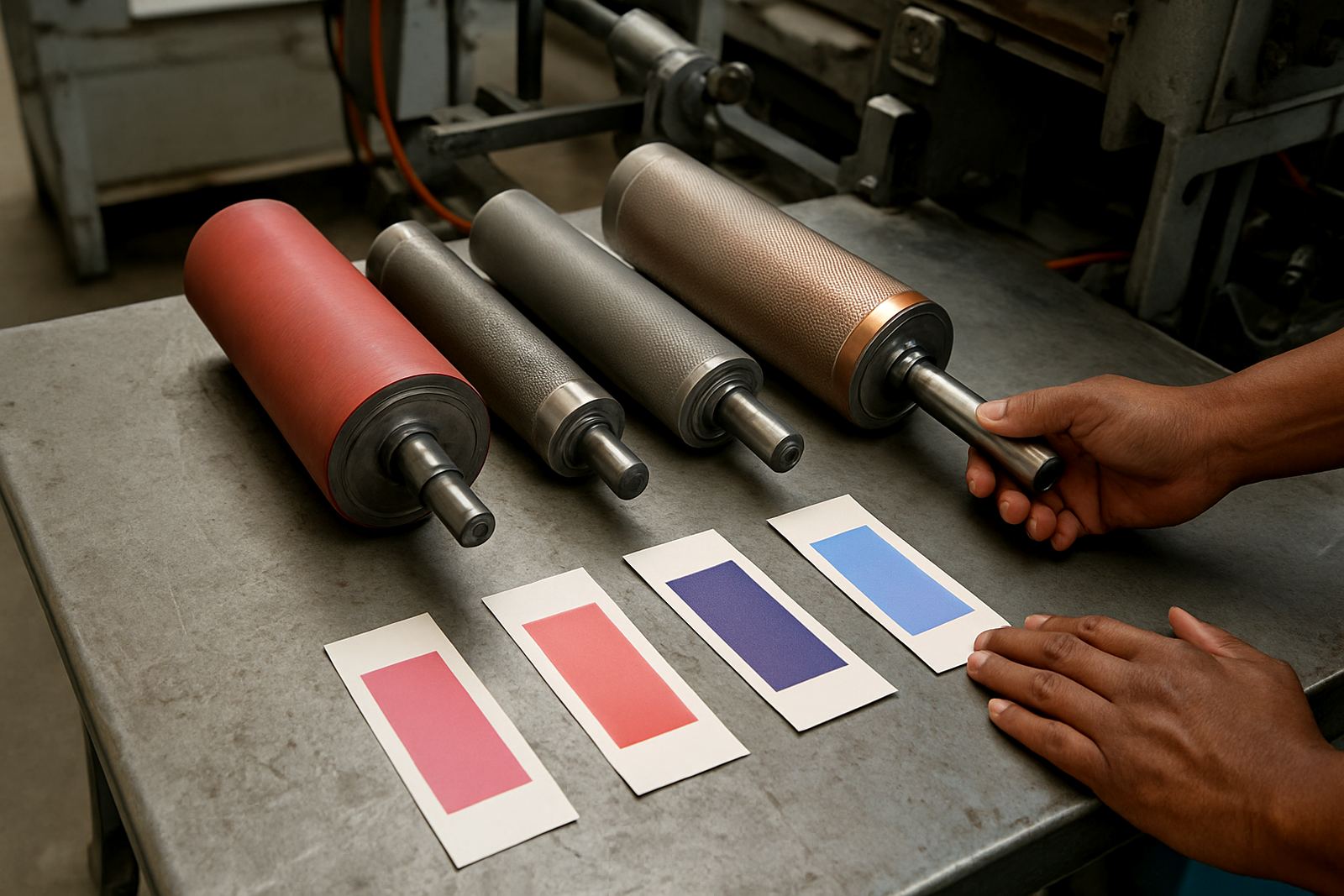
Anilox is not just a roller spec on a job sheet. It controls how much ink reaches the plate, how evenly it transfers, and how much detail survives from the cylinder to the substrate. With thermochromic and security inks, that matters more than many printers expect because these inks are often loaded with pigments, functional particles or heat-responsive components that do not behave like standard process inks.
If the cell volume is too high, the job can flood, lose edge definition and dry too slowly. If it is too low, the colour shift may look weak, the security pattern may not read cleanly, and the coating can appear patchy across the sheet. In Durban’s humidity, especially around Jacobs and Prospecton, that balance gets tricky on long runs when board or film is also absorbing moisture.
Cell volume must match the ink body, not the wish list
One common mistake is asking for more density by simply increasing anilox volume. That can work on some conventional coatings, but special packaging inks need the transfer to suit their formulation. A heavier laydown may help with opacity, yet it can also mask temperature response or reduce the fine detail needed for hidden images and authentication marks.
- Start with the ink viscosity and solids content, not only the required colour strength.
- Check whether the ink has functional particles that can settle or bridge in the cells.
- Match cell volume to the substrate absorbency, whether you are printing carton, labels, or flexible packaging.
- Allow for press speed and ambient drying conditions, which change during coastal humidity and load-shedding recovery.
At our Jacobs base, we often find that a small reduction in transfer volume gives cleaner control than chasing stronger colour on the press. That is especially useful when the same artwork must hold both a visible indicator and a security element in one pass.
Transfer behaviour tells you more than a spec sheet
Two anilox rolls with the same nominal volume can behave very differently. Cell shape, engraving angle, wall structure and wear all affect release. A worn roll might still look acceptable under a loupe, but it can deliver uneven ink film and create streaking that becomes obvious on large packaging panels.
Transfer also changes with doctor blade pressure, ink temperature and the condition of the substrate. In a packaging plant in Pinetown or Johannesburg, a job may run fine in the morning and start drifting after lunch once the press room warms up. That is why practical testing matters more than assumptions.
- Watch for mottling across solid areas, not only on text.
- Check whether the ink releases cleanly or stays in the cells after the impression.
- Inspect fine security lines under UV verification if the ink includes a hidden pattern.
- Keep a simple press record of roll spec, substrate, speed and ambient conditions.
Thermochromic inks need controlled laydown to shift properly
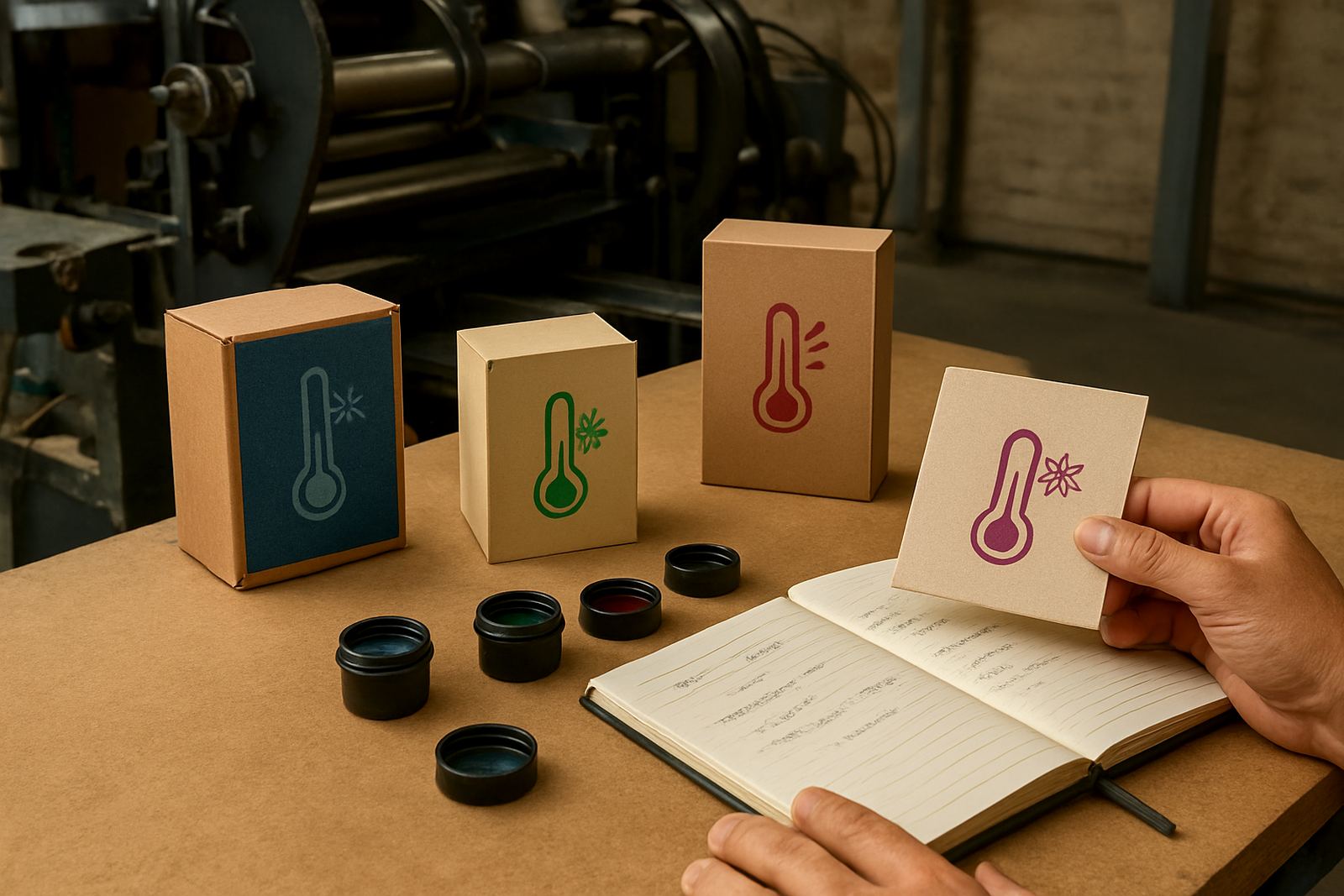
Thermochromic ink is judged by how clearly it changes colour at the target temperature. If the film is too heavy, the shift can appear muddy. If it is too thin, the change may be visible on paper but not on a coated carton or film laminate. The anilox has to support the threshold you want, not fight against it.
For a chilled-food pack, for example, a printer may need a clear visual cue at 8 to 12 degrees Celsius so the retailer or end user can see if product has warmed during transport. That cue must still work after finishing, lamination or overprint varnish. We usually recommend trial drawdowns and press startup support before full production so the converter can see how the ink behaves on the actual substrate.
- Test the colour change after drying, not only while wet.
- Confirm compatibility with coatings, laminates and adhesives.
- Check rub resistance because thermochromic systems can be sensitive to overhandling.
- Keep the same anilox spec for the final job, otherwise the threshold can drift.
Security inks demand clean detail and repeatable release
Security printing is unforgiving. A pattern that looks clear on a proof can lose legibility if the anilox leaves too much film or if the cells are not releasing evenly. Fine guilloche lines, microtext and hidden markers need controlled transfer so the printed feature can be checked during production and later verified if needed.
At ThermoInk, Pieter van Wyk and the production team often review security pattern design alongside coating compatibility and batch retain records. That matters when a pack must look ordinary to the consumer but still carry a measurable authentication cue. A good anilox setup helps the pattern hold its shape, while also reducing make-ready waste on press.
For converters supplying nationwide, from Cape Town Supply to Gqeberha Supply and Pretoria Supply, repeatability is more valuable than chasing a slightly darker first sheet. Once the press is set, the same roll should keep the line stable through the run, even when ambient conditions shift.
Practical checks before you commit to full production
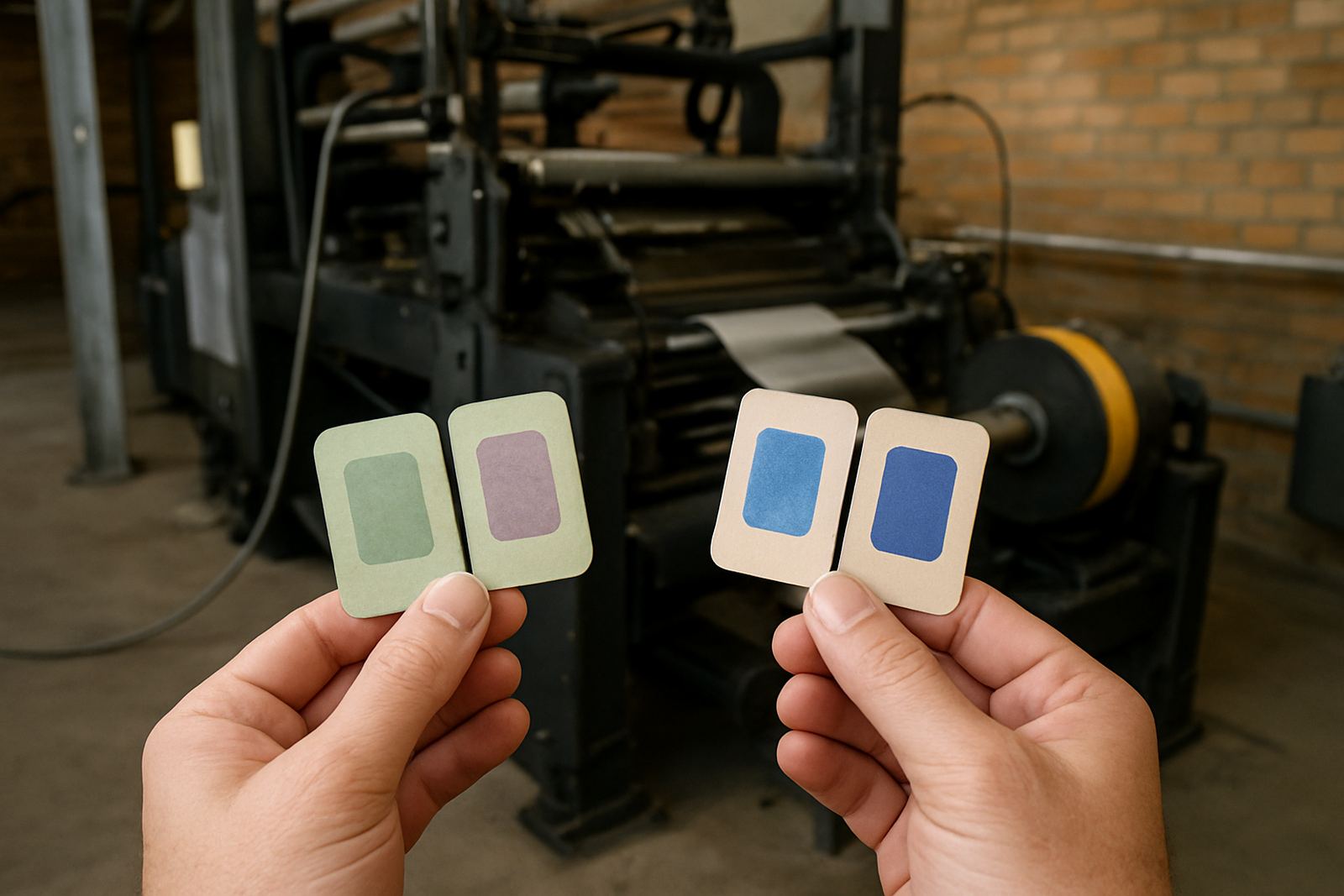
Before approving a long run, it helps to test the anilox against the actual ink and substrate combination. Small trial batches can reveal whether the roll is right for the job or whether the transfer needs to be opened up or reduced. This is where drawdown panels, adhesion tests and rub resistance checks save money later.
- Run a trial batch on the same stock that will be used in production.
- Measure print density, opacity and colour shift against the required spec.
- Check the finish after drying, overprinting and any lamination step.
- Retain a sample from the approved batch for comparison on future reorders.
If the job is moving between sites or shifts, keep the roll details and press settings in one place. That helps the production manager, technical sales team and logistics coordinator stay aligned when a converter in Durban South needs a repeat run to meet a shipment deadline.