Why a small run saves money before the big order
When a packaging line is due to go live, the cost of getting the first run wrong can be far higher than the cost of a controlled trial. A small run lets a converter check how the ink behaves on the actual substrate, on the actual press, with the actual drying conditions. That matters in South Africa where summer heat, coastal humidity in Durban, and load-shedding can all affect consistency.
For temperature sensitive packs and security features, the first question is not whether the idea looks good on a swatch sheet. It is whether the ink holds up under real production conditions. A trial batch gives you the chance to catch issues early, before a full pallet of printed stock is at risk.
- Check colour shift at the right trigger point
- Confirm adhesion on the intended film, board or label stock
- Test rub resistance after stacking and handling
- See how the finish responds to drying, curing and line speed
What gets tested in a trial batch at Jacobs
At our Jacobs base in Durban, small run trials are set up to answer specific production questions. The goal is not just to print a few sheets. It is to measure whether the ink system will behave properly once the converter moves into full supply.
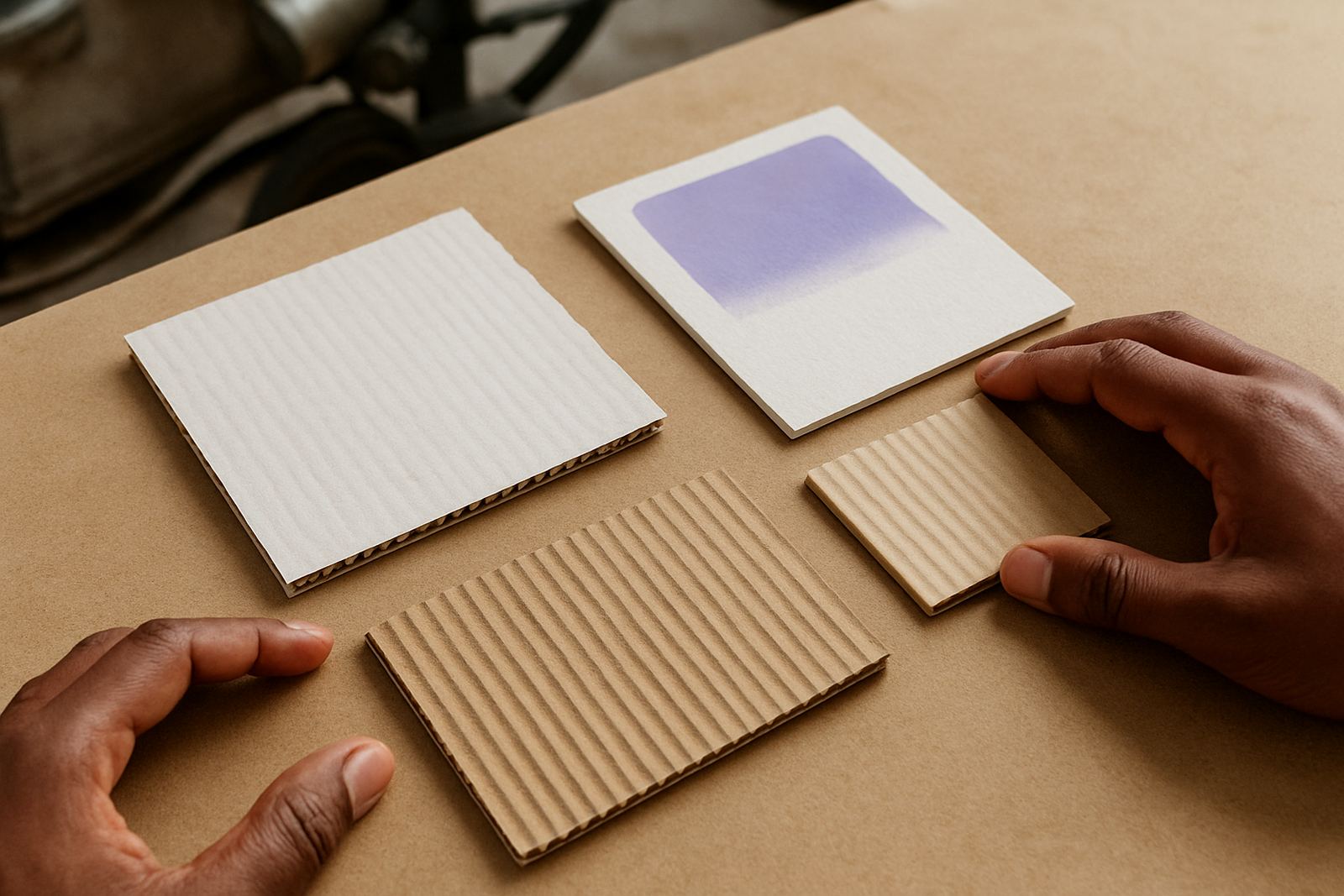
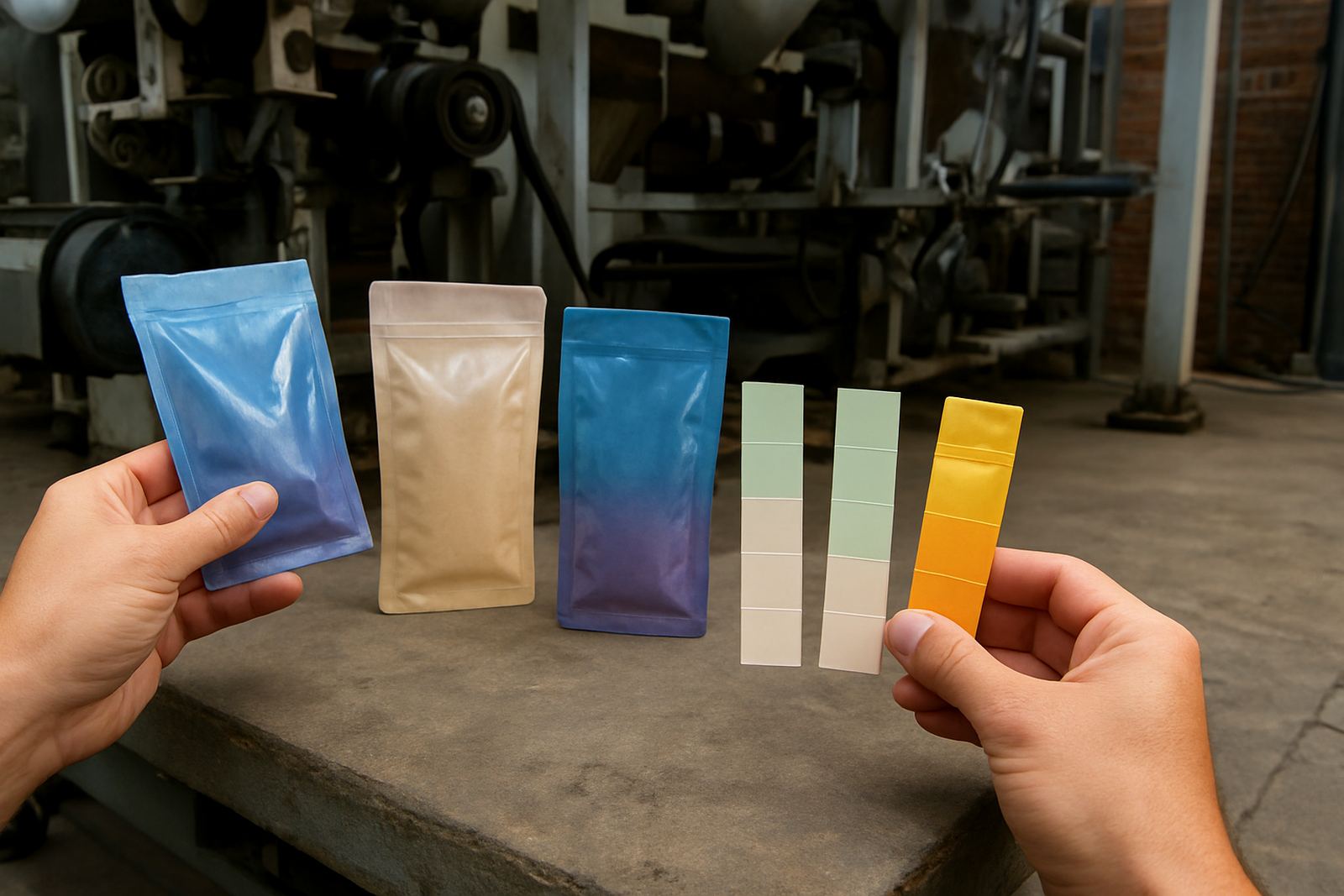
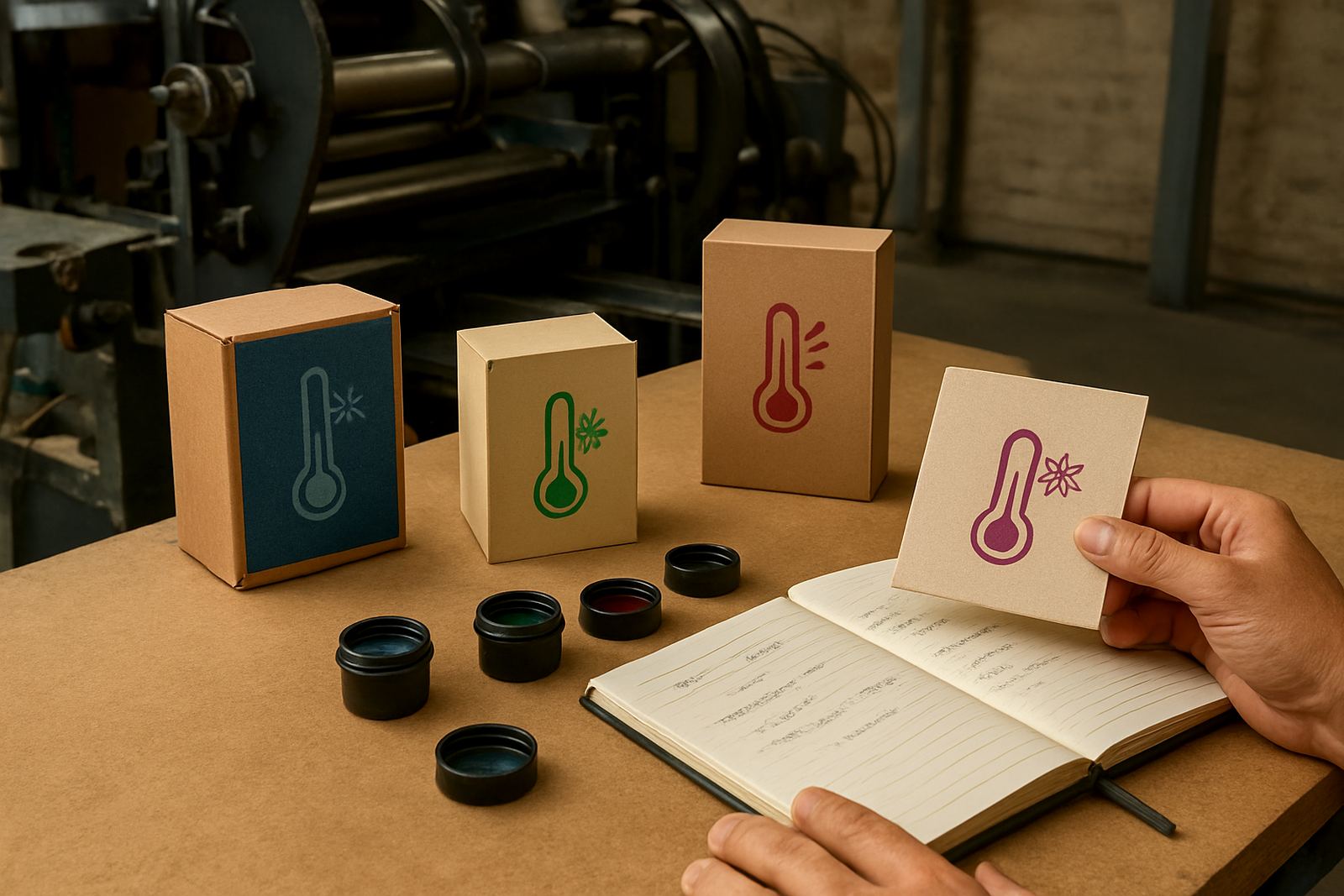
That usually includes drawdown panels for quick comparison, then trial batch making on the intended material. From there we review colour matching, threshold tuning, adhesion tests and rub resistance checks. If the pack needs a visible temperature cue, we look closely at when the colour changes and whether that point is practical for the product.
- Drawdown panels for side by side evaluation
- Threshold tuning for colour change control
- UV verification setups where hidden marks are required
- Coating compatibility checks before the press run
How trial runs reduce press downtime and scrap
Large production runs leave little room for guessing. If the ink is too sensitive, too slow to dry, or not matched to the coating, the press team loses time adjusting settings. That can mean scrap, rework and delays to dispatch. A small run trial gives the production manager a chance to fix those points while the stakes are still low.
It also helps with batch retain control. Keeping a tested sample in the library gives the team a reference if a customer asks for a repeat run three months later. For converters supplying retailers, pharmaceutical packs or chilled goods, that record can save a lot of back and forth later on, especially when a repeat order comes in with a fresh carton or label substrate.
- Less waste during start-up
- Faster sign-off from production and quality teams
- Better repeatability on future batches
- Clearer fault tracing if something changes on the line
A Durban example: coastal humidity and cold-chain packs
Take a converter in Durban South supplying packs for temperature sensitive food products. The artwork may be approved, but once the job moves into the factory the real conditions can change the outcome. On a humid morning near the coast, some coatings take longer to settle. If there is a power cut and the line restarts later in the day, drying times can shift again. That is exactly where a pilot run earns its keep.
By running a small batch first, the team can see whether the thermochromic effect activates at the right point and whether the security pattern remains clear after handling. If not, the formula can be adjusted before the full order is released. It is a practical step and not a fancy one, but it protects the customer and the converter at the same time.
Security inks need proof, not promises
Security features are only useful if they can be verified quickly and consistently. A small run lets you test whether the chosen pattern can be recognised under UV, whether it holds after folding, and whether it still works after the pack has been through the actual filling line. That is particularly important when the aim is to make counterfeiting harder without slowing down production.
Our security ink specialist and colour lab lead work with converters to set up the right checks before volume supply begins. In practice, that means looking at the pack as a whole, not just the ink alone. A good result on paper is not enough if the varnish, board or film changes the finish once the job is running.
What to ask before you approve a full order
Before you sign off full production, ask for evidence from a controlled pilot run. The most useful answers are usually simple and measurable. If the supplier cannot explain how the ink behaved during the trial, the risk is still sitting on your side of the table.
Useful questions to ask include:
- Did the colour change at the temperature we specified?
- Did the ink pass adhesion and rub checks on the real substrate?
- Was the security feature visible and repeatable after handling?
- Are retained samples available for the next order?
- What press settings were used so we can repeat them later?
A controlled trial is not extra paperwork. It is a simple way to make sure the final supply performs as expected. For converters in Jacobs, Pinetown, Prospecton, Cape Town, Gqeberha, Johannesburg or Pretoria, that early check can mean the difference between a smooth launch and a costly reset.