Why retort changes the rules for printed packaging
Retort processing is harder on print than many converters expect. The pack is sealed, then exposed to high temperature and pressure for a set period, and that combination can push an average ink system past its limit. If the print was only checked at press speed, the real weak points often show up later as colour shift, poor adhesion, fading, scuffing or loss of code legibility.
In South African packaging, this matters across ready meals, sauces, pet food, soups and other shelf-stable products. A pack that looks fine in the factory can still fail after heat processing, especially if the substrate, coating and ink were not matched properly from the start. The trick is to plan for the full journey, not just the first print run.
- Heat can soften some ink layers and reduce bond strength.
- Pressure can cause fine print to blur or lift at edges.
- Steam and condensate can affect drying, slip and rub resistance.
- Metalised or coated films may need extra surface testing before production.
The first check is substrate and coating compatibility
Before any colour work begins, the substrate has to be checked for coating compatibility. A film or laminate that holds standard print in ambient conditions may behave very differently once it is heated, cooled and handled again. Surface energy, coating chemistry and the way the pack is formed all influence how well the ink anchors.
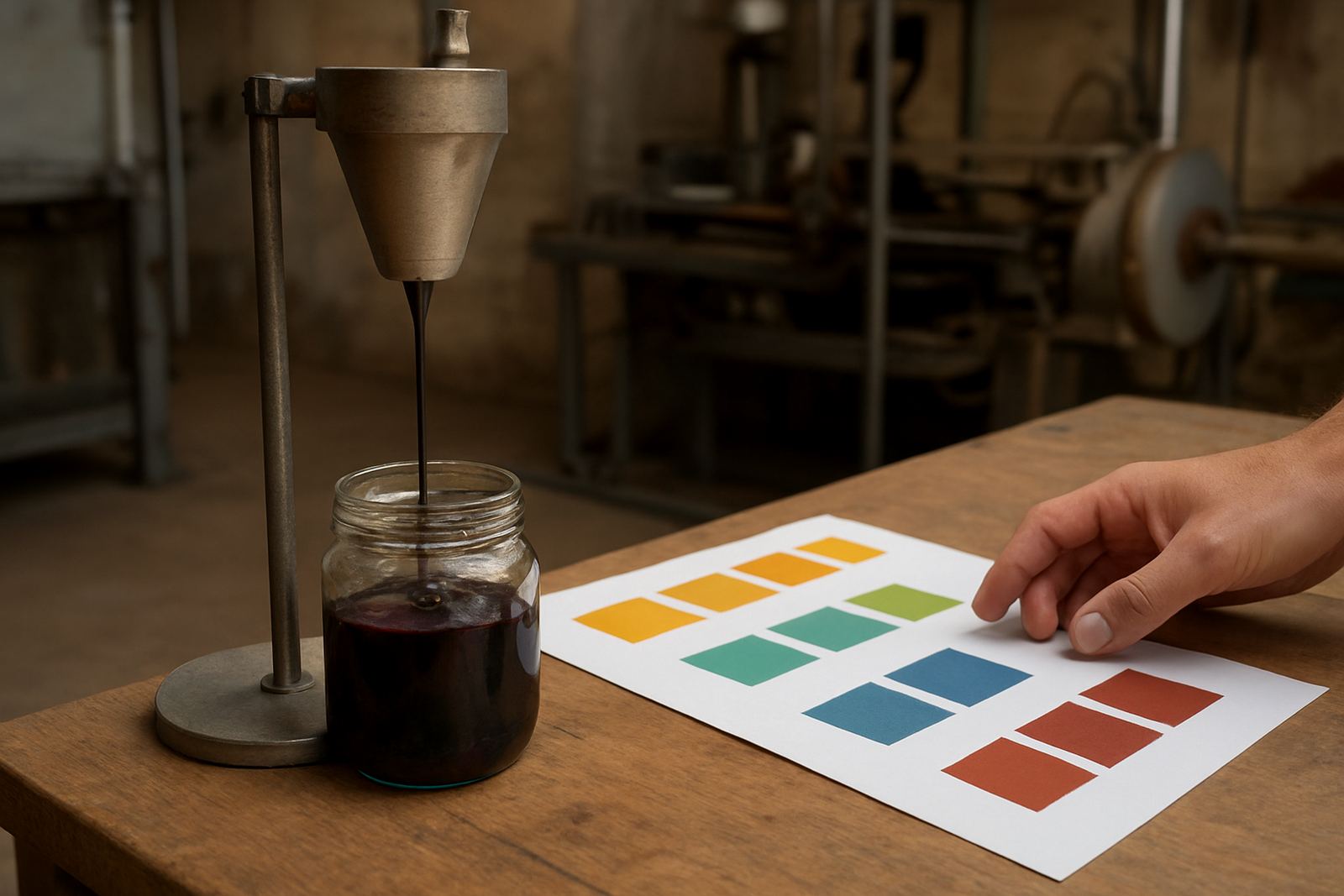
We normally start with drawdown panels and adhesion tests, then move to trial batch making if the pack structure looks promising. That helps identify whether the issue is the ink, the coating or the base material. In practice, this saves time because a press fault is not always a press fault. Sometimes the problem is a topcoat that works well for a dry snack pack but fails on a retort pouch.
- Check the substrate supplier spec before changing ink formulations.
- Test the exact print surface, not only a sample sheet.
- Review whether the sealing zone will sit near printed areas.
- Ask how the pack behaves after heat, not only before it enters the vessel.
Colour shift after heat: what to watch on press and in the lab
Retort inks need to hold colour through the process, not just on day one. Some hues shift slightly under heat and pressure, which can affect brand consistency or make a warning panel harder to read. That is where colour matching and threshold tuning matter. The aim is to keep the printed result inside practical limits so that batch to batch variation stays under control.
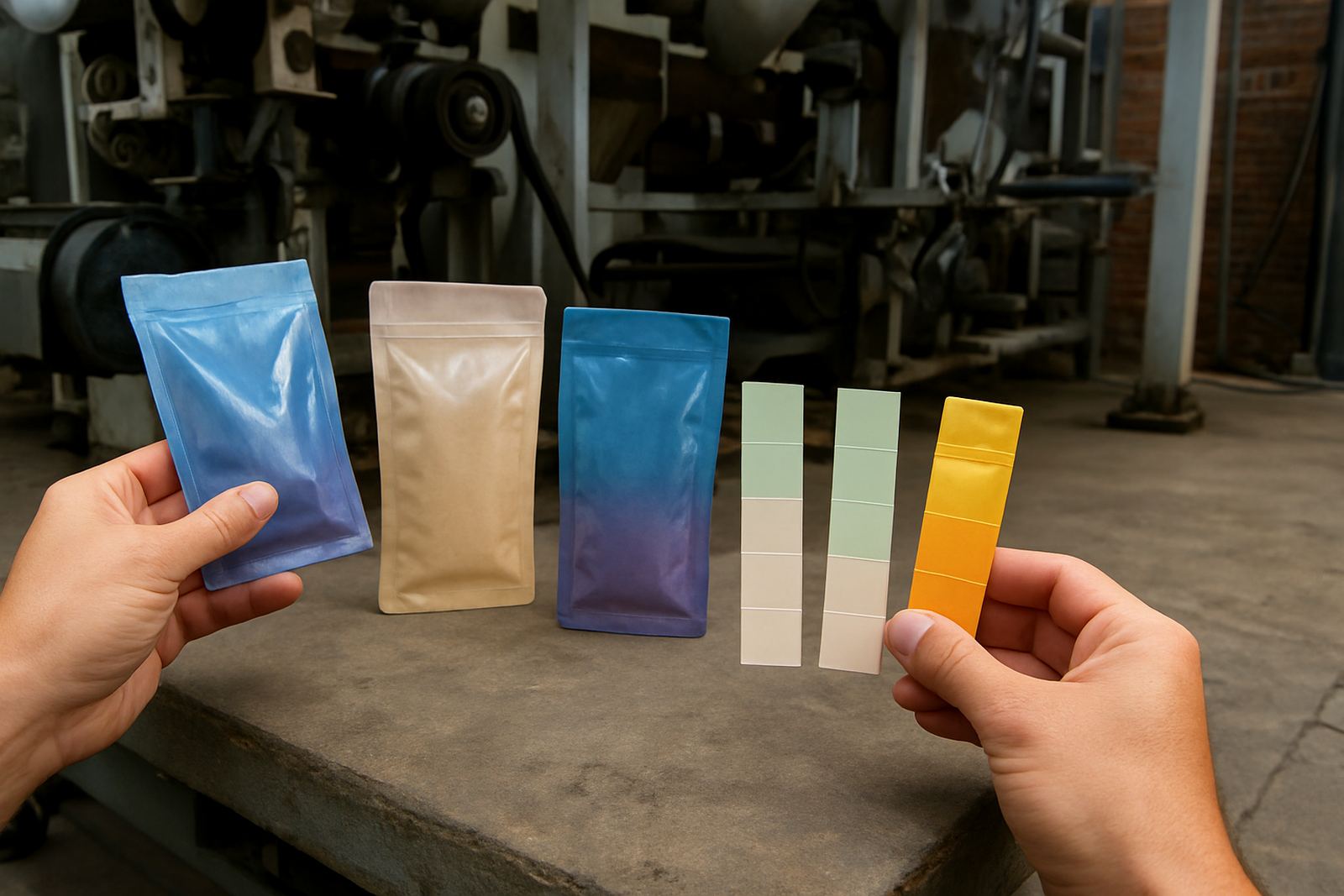
For a Durban converter working on export pouches, a small shift in red or blue can create a bigger problem than people think. The customer may accept the proof, then reject the final pack because the tone after retort no longer matches the approved standard. That is why proofing should include realistic processing conditions and retort cycle samples where possible.
- Compare pre-retort and post-retort samples under the same lighting.
- Record the cycle time and temperature used for each trial.
- Keep a retain library so later batches can be checked against a known result.
- Watch for white areas becoming duller or grey after heat exposure.
Rub resistance and handling after the vessel
Many failures only show up once packs are out of the retort and back on the line. Condensation, baskets, cartons and manual handling can all scuff the printed surface. If the ink has not fully bonded or cured for that environment, the print can mark, pick or smear during packing and palletising. Coastal humidity in Jacobs can make this even more sensitive if stock stands around before dispatch.
Rub resistance checks should be part of the normal qualification process. It is also worth including realistic handling in the test, such as stacking, carton contact and short warehouse holds before dispatch. A good result at the lab bench is useful, but a good result after a hot day in transit is what counts.
- Test for dry rub and wet rub where the pack may see condensate.
- Check whether labels, sleeves or overprints touch the main artwork.
- Allow for longer drying time in humid conditions.
- Review stacking pressure before the product reaches the cold room.
Security printing still needs to survive processing
For some packs, retort is not only about appearance but also traceability and anti-tamper control. Security inks and print features need to stay readable after heat treatment, otherwise the authentication layer is lost. That is especially important where packs move through multiple depots, or where product authenticity is checked by buyers and distributors after packing.
Security pattern design has to be practical for the substrate and the process. Fine line elements, hidden markers and colour response features must be designed with the thermal cycle in mind. If the feature is too delicate it may look good on a sample but fail after processing. The goal is a mark that still performs once the pack has been cooked, cooled and handled again.
- Use UV verification setups to confirm the feature after retort.
- Design security patterns around the print process you actually use.
- Keep the feature visible enough for operators and auditors to check quickly.
- Make sure the added print step does not interfere with seal integrity.
A practical Durban approach from trial to production
In Jacobs, where production schedules often run tight and deliveries need to move to Pinetown, Prospecton and farther afield, retort work has to be managed carefully. A sensible run-up starts with trial batch making, then press startup support, then a controlled production run once the results are stable. That sequence helps identify problems before they become costly waste.
ThermoInk works with packaging converters nationwide, with supply support into Durban South, Cape Town, Gqeberha, Johannesburg and Pretoria. The process usually includes production troubleshooting, coating compatibility checks and sample review so the converter can decide what needs changing before the next run. For retort packaging, that practical step-by-step approach is worth more than chasing a quick fix.
When the ink system is matched properly, the pack stays readable, the colours stay within range and the security features still do their job. That is the standard to aim for, whether the product is going into a Durban distribution centre or leaving by road for inland customers.