Why viscosity changes the way ink behaves on press
Viscosity is the resistance to flow. In simple terms, it tells you how thick or thin an ink behaves under real press conditions, and that affects every part of the print run. If the ink is too thick, transfer can be patchy, plates may not release cleanly and print density can swing from sheet to sheet. If it is too thin, dot gain, misting, flooding and poor edge definition become more likely.
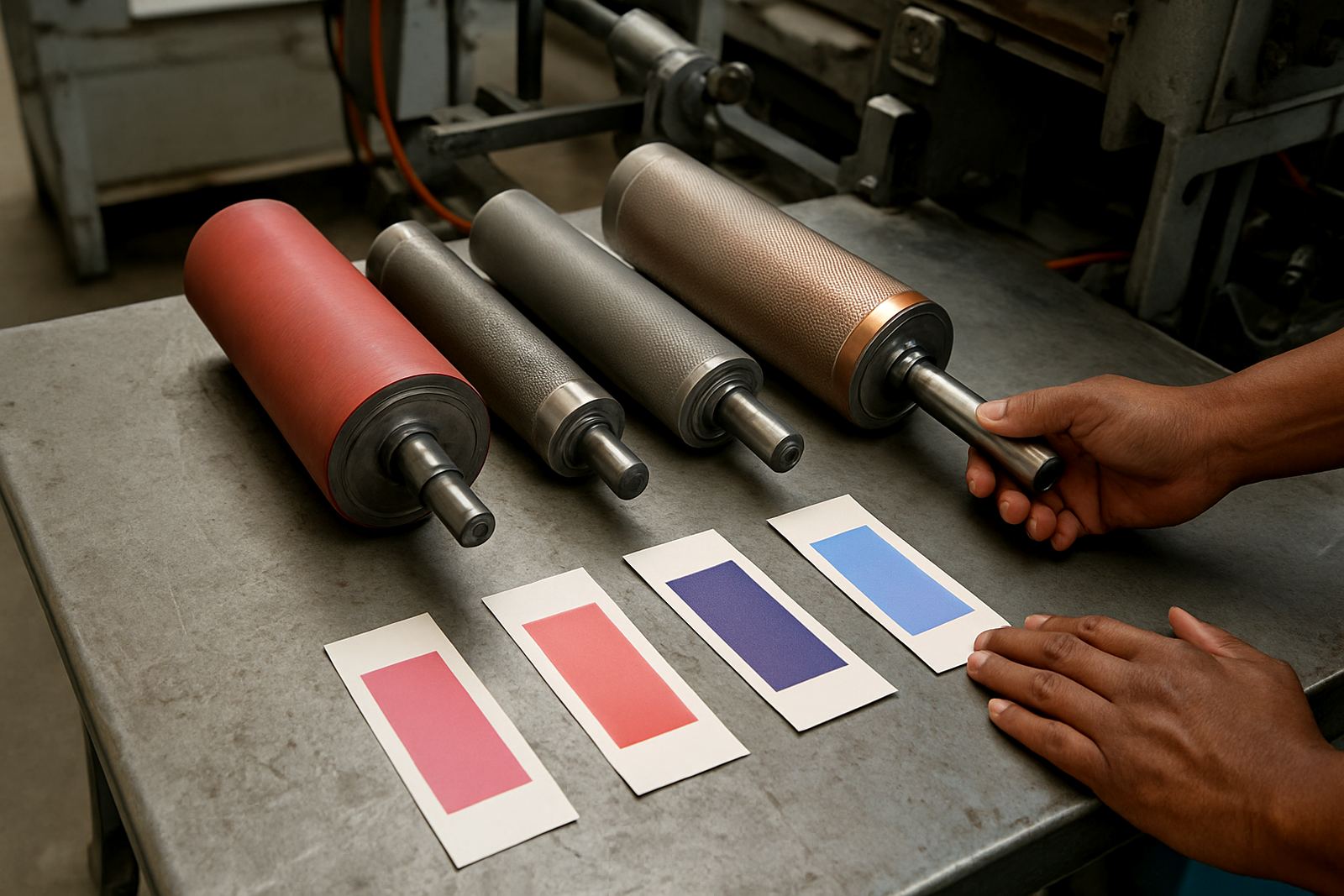
On packaging work, especially for film, laminated board and coated substrates, the target is not just a number on a gauge. You want the ink to move consistently from the anilox, plate or other transfer system, then sit properly on the surface without spreading or starving. In humid coastal conditions around Durban, that balance can shift faster than many teams expect. A job that looked fine at 8am can behave differently after lunch when temperature and moisture climb.
How transfer shows up as print quality problems
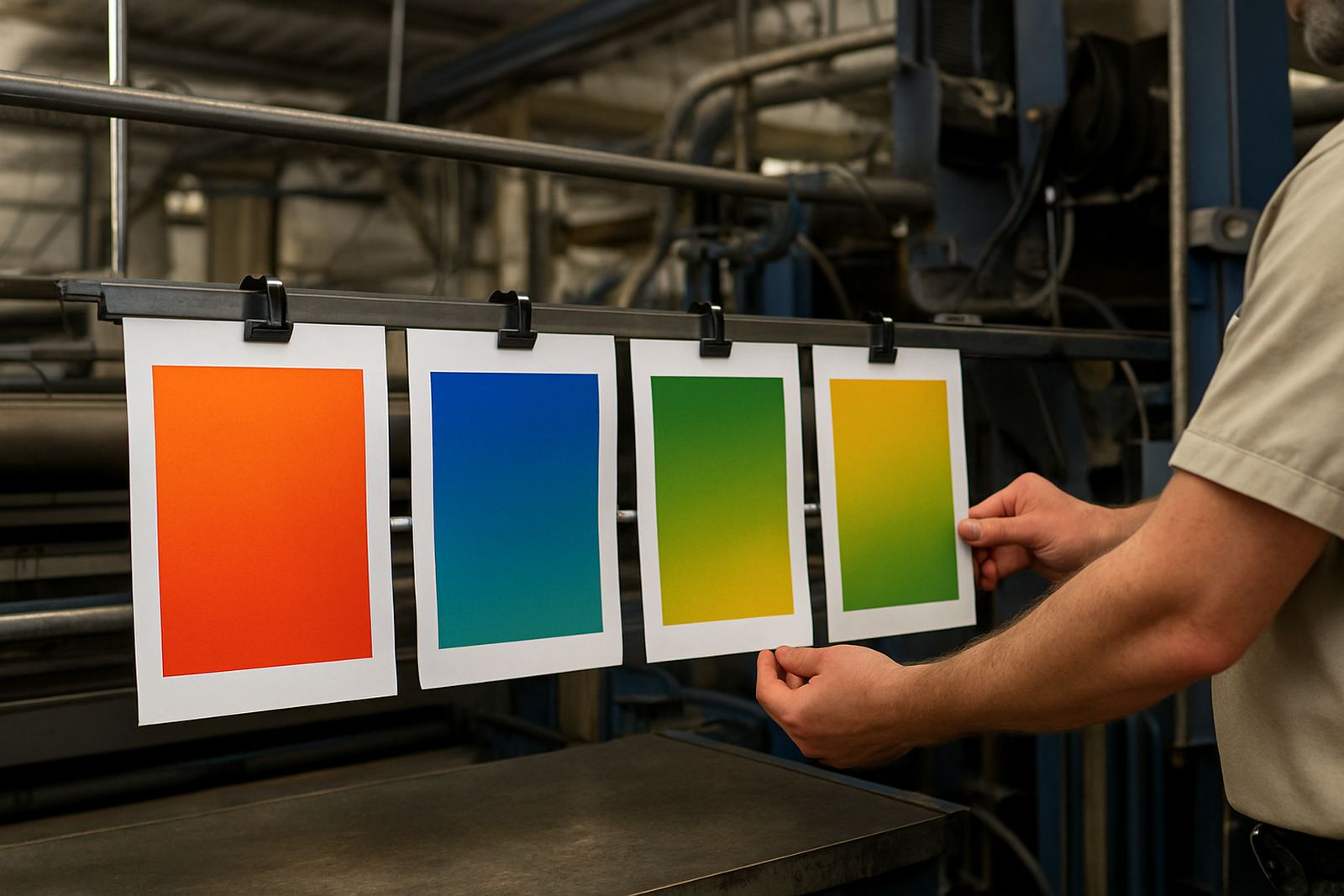
Clean transfer is visible in the finished print long before a production supervisor reaches for the microscope. The most common signs are uneven solids, weak barcodes, fuzzy reverses and inconsistent colour across the web or sheet. On security work, poor transfer can also disturb fine lines, hidden marks and verification features that need a stable ink film.
When transfer is off, the press crew often blames drying first. Drying may be part of the issue, but it is not always the root cause. Ink that is too viscous can leave too much residue in the cell or on the plate. Ink that is too fluid can empty too quickly and force the operator to chase colour by adjusting too many other variables. The result is more waste, more stops and less trust in the batch.
- Poor solids coverage usually points to restricted release or low ink laydown.
- Feathered edges can mean the ink is too thin for the substrate or the surface energy is not right.
- Misting and fine spray often come from over-thinning or excess speed.
- Weak security detail can be a transfer issue, not a design issue.
Setting a working window before the first full run
The best control starts before production. A working viscosity window should be agreed during trial batch making, with the print method, substrate and drying setup all taken into account. A value that works on a coated carton board may be wrong for a film pouch, and a setup that behaves on a small press may need a different window on a long flexo run.
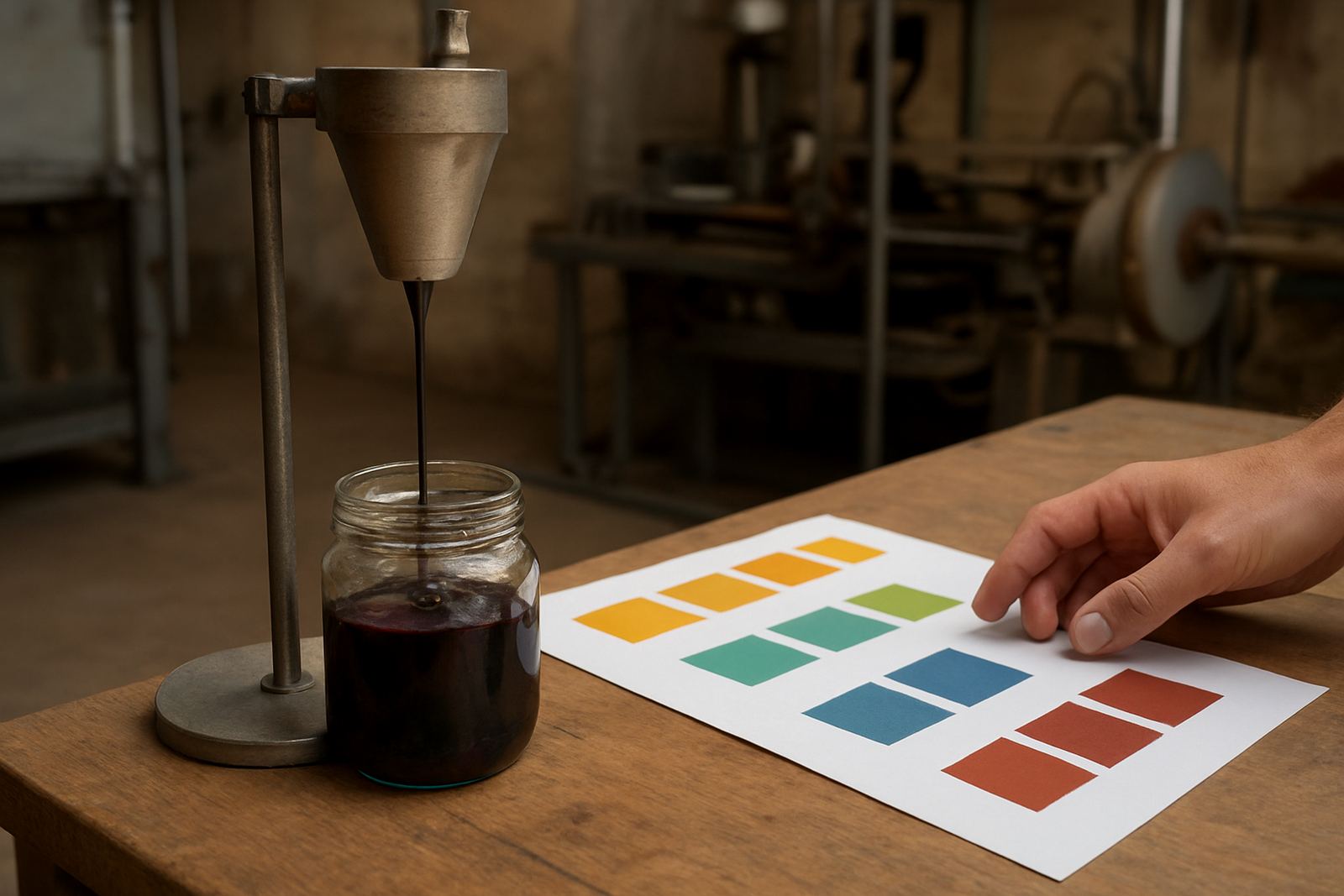
At ThermoInk, practical setup work normally includes drawdown panels, threshold tuning and coating compatibility checks before the job moves to press. That saves time later because the team is not guessing at the balance between colour strength and transfer. If adhesion is borderline, or if a security layer must stay readable after handling, those issues should be seen early and adjusted while there is still room to test.
- Match the viscosity target to the substrate and drying method, not just the ink type.
- Confirm whether the job needs full opacity, fine detail or a controlled colour change.
- Allow for temperature shifts in Jacobs, Pinetown and coastal routes where humidity can affect handling time.
- Keep the same sampling point and test method from batch to batch.
What happens when a converter chases colour by thinning
Many press problems begin when a team tries to fix colour drift by adding more diluent without checking the full system. That can help in the short term, but it often creates a wider problem later. The ink may pass through the system more easily, yet it can lose body, reduce hiding power and change the way it anchors to the substrate.
For packaging converters serving Durban, Johannesburg or Cape Town, this matters because material changes are common. A carton supplier may change coating, a film supplier may alter slip levels, or a client may switch to a new pouch structure. If the ink was already sitting near the edge of its working range, even a small change can upset transfer and drying. The safer route is to measure, adjust and retest rather than relying on the feel of the first pull.
Production records help here. Retaining the batch details, the test results and the press conditions makes it easier to repeat a successful run, or correct one that moved off target. That kind of discipline is worth a lot when a customer needs the same appearance across multiple print sites and delivery points.
Humidity, drying and the Durban reality
In coastal South Africa, press conditions are rarely ideal for long. Durban humidity can hold moisture in the air and slow surface drying, which then changes how quickly the next colour layer can be applied. If an ink stays open too long, transfer may look acceptable on the first pass but fail in later handling or stacking.
This is where support on press matters. A good startup check should cover substrate temperature, room conditions, drying capacity and whether the ink is holding its viscosity after a pause. On a hot day in Jacobs, an open container can skin differently from one left sealed. On a cooler morning in the outer industrial areas, the same ink may need a slightly different preparation time before the run starts.
Practical teams do not treat viscosity as a lab-only number. They watch what happens at the press, then compare that with what the test panel showed. When those two match, the run becomes much more predictable.
A practical control routine for repeatable transfer
The simplest control routine is the one the press team will actually follow every shift. It should be quick, clear and written in the language of the line, not hidden in a file nobody opens. For packaging work, consistency comes from repeating the same checks at the same point in the job.
- Check viscosity at the start of the shift and after any long pause.
- Record room temperature and humidity where possible.
- Keep containers covered to limit skinning and solvent loss.
- Use the same test substrate for comparison pulls.
- Verify adhesion and rub resistance before full production starts.
- If the colour is changing, test the full print response, not only the liquid in the vessel.
When the routine is followed properly, operators spend less time fixing drift and more time holding the run steady. That lowers waste, protects the print result and keeps the packaging suitable for delivery to distributors, converters and brand owners nationwide.
From trial batch to full production without guesswork
Good transfer is usually the result of preparation, not luck. A trial batch should show whether the ink can be laid down cleanly, cured or dried properly and remain readable after handling. If security features are included, they need to be checked under the right verification setup before the job goes large. If a thermochromic feature is part of the brief, the ink must still shift colour at the intended threshold without compromising print clarity.
That is why viscosity control sits at the centre of print consistency. It links the lab to the press, and the press to the final pack on shelf. When the balance is right, the job runs cleaner, the colour holds better and the transfer behaves the way the production team expected from the first sample.