Why a drawdown is the first sensible test
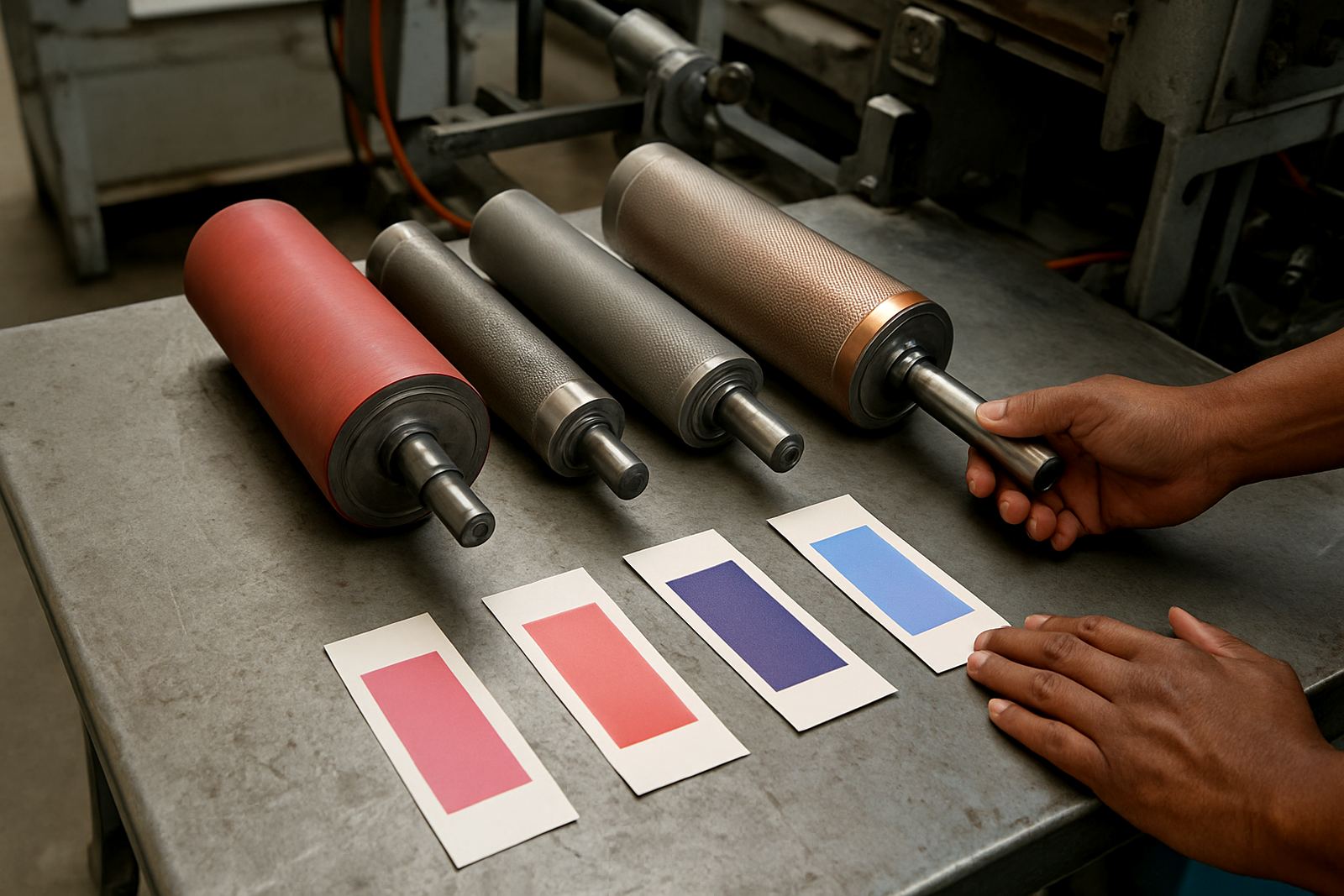
A lab drawdown is a controlled sample made on a small strip of substrate so you can see how an ink behaves before production starts. It is one of the quickest ways to check whether a thermochromic or security ink will suit the pack, the press and the product inside it.
On packaging lines there is little room for guesswork. A supplier in Jacobs may need to compare three shades for a chilled food carton, then confirm whether the colour still reads clearly after coating or varnish. A drawdown gives a clean, repeatable view of the ink film, instead of relying on a verbal description or a tiny swatch that does not show enough detail.
For converters, the biggest gain is speed. You can review shade, transparency and activation behaviour in the lab before setting up plates, ink keys or drying settings. That means fewer stops, less waste and a better chance of getting the first press sheets close to spec.
What the sample must show, not just what it must look like
A useful drawdown is not only about colour. It must show how the ink sits on the substrate, how dense it appears, and whether the activation changes happen at the right point. If the ink is too heavy, the image may look muddy. If it is too light, the message may disappear on the shelf.
When we prepare drawdown panels, we check practical points that matter on the line and in store. That includes the look under normal light, the response to heat or touch where relevant, and whether the print still holds up after handling.
- Shade match against the approved target
- Opacity on white, kraft, metallised or coated stock
- Activation point for thermochromic features
- Finish after drying or curing
- Visibility of security patterns and fine detail
This is especially useful for packaging that must work in cold rooms, distribution trucks and humid coastal conditions. In Durban, a sample can behave differently on a rainy morning than it does in a dry inland store room, so it is worth checking the actual conditions a pack will face.
How opacity and colour strength guide the press setup
Opacity tells you how much the ink hides the substrate underneath. Colour strength tells you how strongly the colour shows at a given film weight. Both affect how a pack will look once it goes into full production.
For a label or carton with a dark background, a drawdown can show whether a single pass will be enough or if a second hit is needed. That saves time on press because the converter can plan the right film build before the first long run. It also helps with coating compatibility, since some finishes can lift or soften the layer if the system is not matched properly.
In practical terms, the lab sample lets the team answer questions such as: do we need a denser mix, should the substrate be changed, or is the ink better suited to a lighter pack? These are small calls, but they protect both appearance and yield.
- Use the same substrate type planned for production where possible
- Record drawdown bar size, drying time and film weight
- Keep the approved sample with batch records for later reference
- Compare wet and dry appearance before making a final call
Testing activation behaviour before the first carton is printed
Thermochromic inks are designed to change appearance at a chosen temperature, so drawdowns are essential for checking threshold tuning. The sample shows whether the colour changes too early, too late, or within the right range for the pack application.
That matters for items like chilled foods, temperature-sensitive promotions and other packs where the visual cue has a job to do. If the activation is off by just a few degrees, the effect can be missed by the customer or triggered too soon in transit.
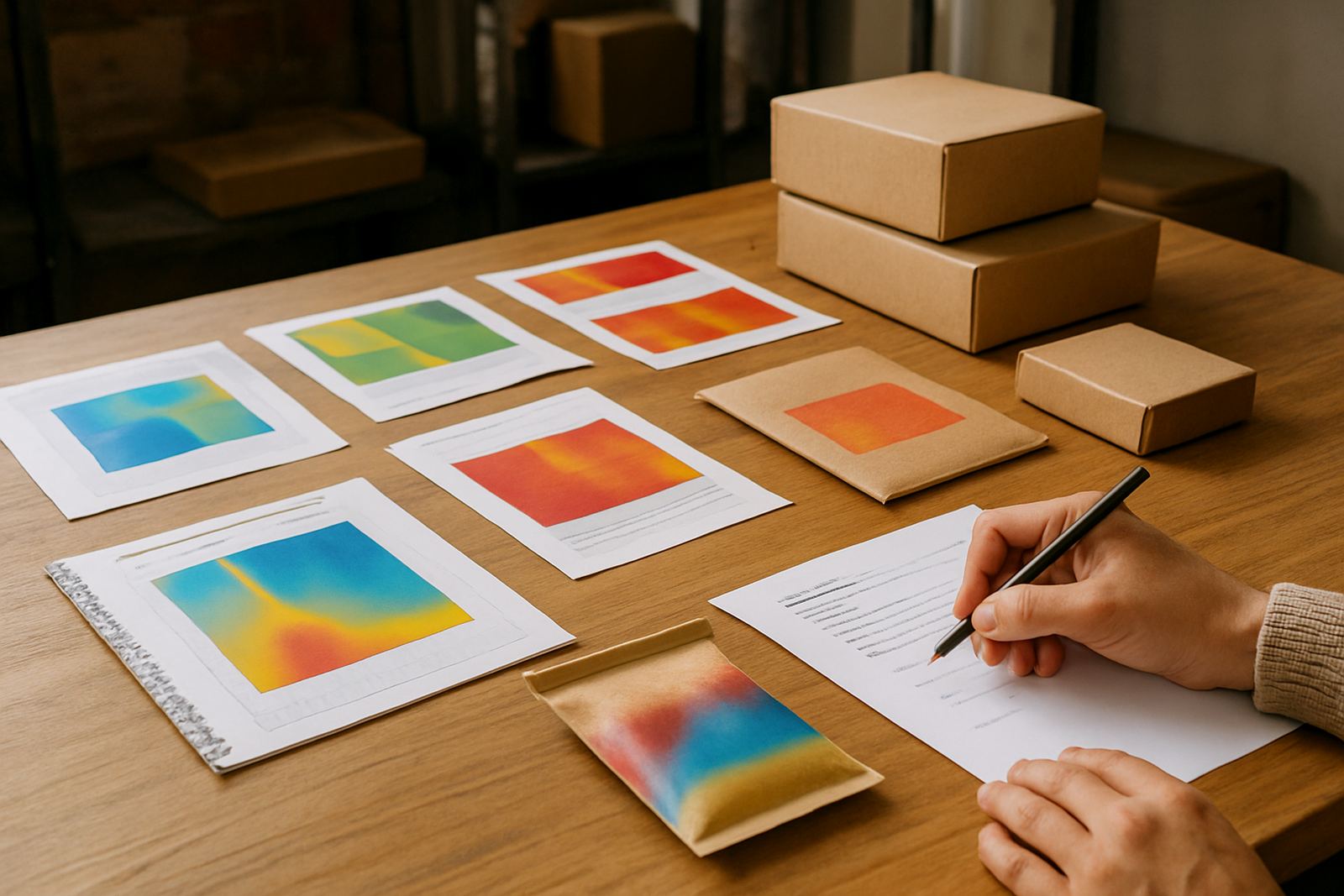
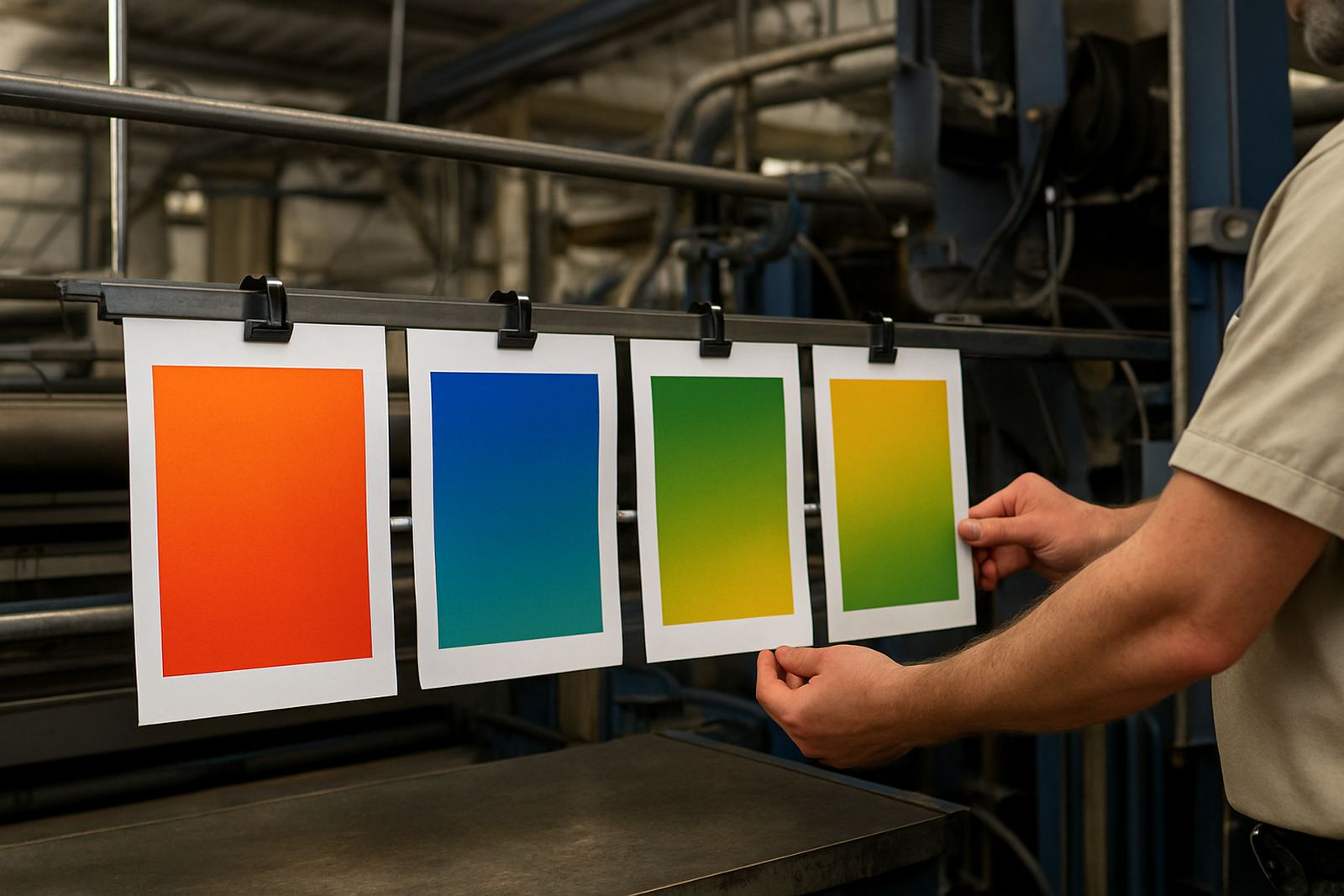
Our team often uses drawdown panels to compare several activation points side by side. That makes it easier for the converter and the brand owner to agree on the most practical option. It also allows a quick check under real handling, because a hand warmed sample may behave differently from one left in a cool prep room.
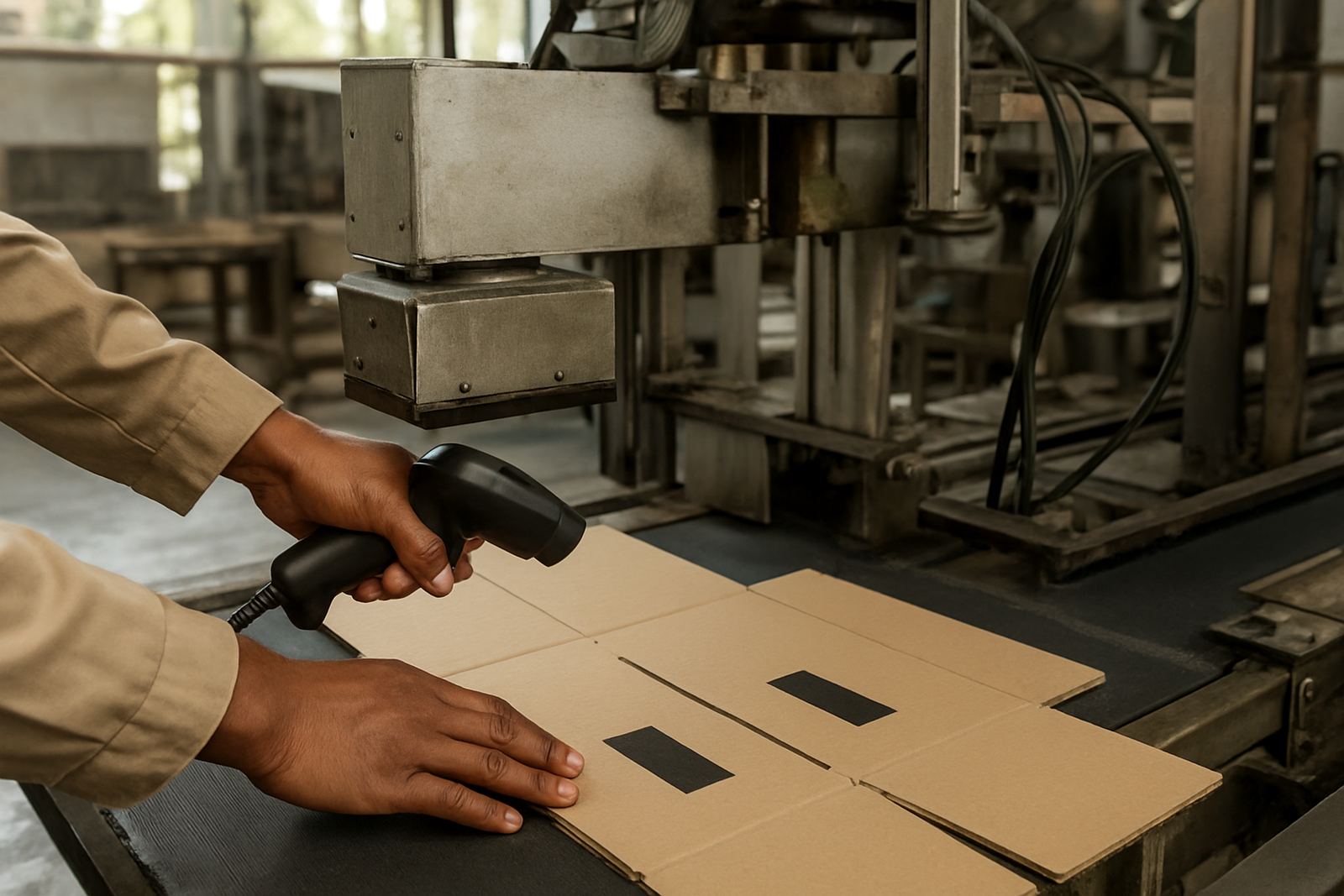
Where needed, the sample can be paired with UV verification setups, so the security element and the colour-change feature are checked together. That is useful when the pack needs both visibility and authenticity in one system.
Security inks need the same discipline as colour work
Security ink is only as reliable as the proof behind it. A drawdown helps verify whether the pattern, line work or hidden feature prints cleanly enough to be recognised later. If the detail fills in, breaks up or loses contrast, the design may not do its job on press or in the field.
For packaging converters, this stage is where fine adjustments happen. The Security Ink Specialist can compare line width, density and response under the relevant light source, while the Colour Lab Lead checks consistency from one trial to the next. If a sample needs better adhesion or rub resistance, that can be identified before production gets underway.
This is not just about appearance. It is about making sure the security feature is practical to print, practical to handle and practical to verify after packing. In busy plants with load-shedding and stop-start shifts, a small confirmed sample is much easier to trust than a full run that has to be corrected later.
A Durban example: from trial sheet to production run
A local converter in Jacobs handling a chilled carton project may start with three drawdown panels on the intended board grade. One panel checks shade, one checks activation, and one checks how the ink behaves after coating. The team can then compare the results before committing to a trial batch.
If the pack is going to stores along the coast, humidity becomes part of the decision. A sample that looks fine in a dry room may slow down or change its finish when the air turns damp. By seeing that early, the converter can adjust drying, coating or film build before the run hits full speed.
That process also helps with national supply. A team in Durban can approve the sample, then share the retained drawdown with colleagues in Johannesburg or Cape Town so everyone is working from the same reference. It keeps the standard consistent across plants and avoids repeated debate over what the colour should look like.
- Start with the final substrate, not a random test sheet
- Check the sample under the same light used on site
- Keep a retained sample with the batch record
- Review handling, stacking and rub performance before press approval
Using drawdowns to reduce waste and keep production moving
In packaging, small decisions make a big difference. A good drawdown helps avoid wasted ink, unnecessary press stops and rework on finished cartons or labels. It also gives the production team a clear reference when a question comes up later in the job.
For ThermoInk, the value of a drawdown is that it links the lab to the factory floor. Colour Matching, Trial Batch Making, Press Startup Support and Production Troubleshooting all become easier when there is a verified sample on hand. The result is a tighter handover from test work to full production, which is exactly what converters need when schedules are tight and deliveries have to move nationwide.
When the sample is right, the run is easier to start, the pack looks right on shelf, and the functional feature does what it should. That is the point of the drawdown: not a nice-looking sample, but a practical tool for making better packaging decisions.