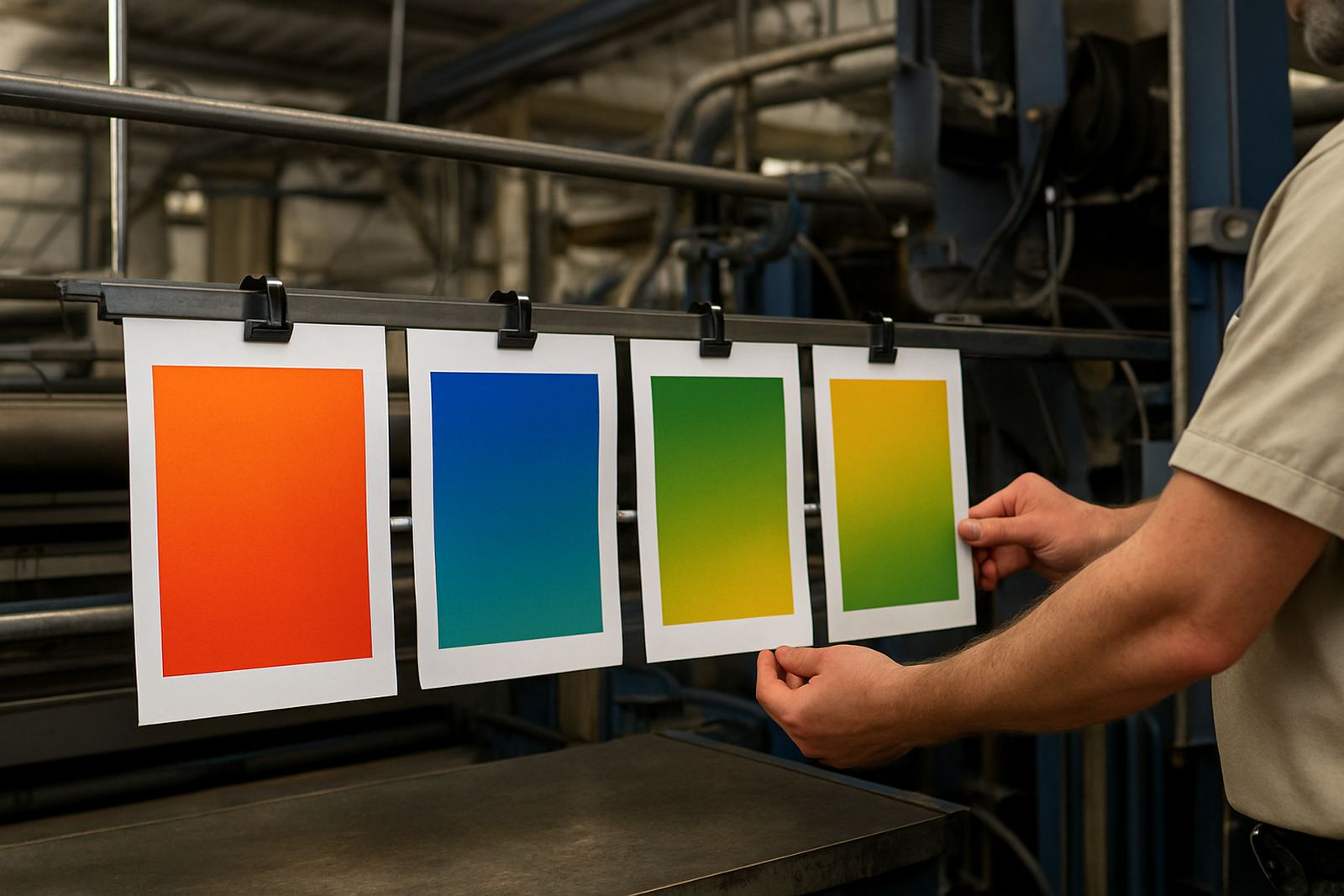
Start With the Exact Pack Format, Not a Guess
The fastest approvals begin with the real packaging format, not a generic sample. A pouch, carton, label or shrink sleeve can all change how an ink reads once it is printed, folded or sealed. If the approval is for a chilled food pack, a medical carton or a pallet label, say so from the start. That lets the technical team match the ink to the actual use, whether the item must hold up in cold rooms, on humid coastal routes, or under warehouse handling.
In Durban, where moisture and heat can shift drying times, it helps to share the substrate type, coating, and expected line speed before the first drawdown. The more exact the brief, the less back and forth later. Even small changes like a different film thickness or paper absorbency can alter the final shade and rub resistance.
- State the exact substrate, including paper, board, film or laminate.
- Confirm the print method and drying or curing route.
- Share the final use, such as chilled storage, retail shelf or export pack.
- Note any finish already on the substrate, including varnish or coating.
Send the Right Sample Set the First Time
One sample is rarely enough for a clean approval. A good set includes the approved artwork, a reference sample if there is one, and a few blank substrates from the same batch that will be used in production. This gives the colour team a proper base for colour matching and threshold tuning, instead of working against mixed references that do not agree with one another.
For quicker turnaround, ask for drawdown panels and trial batch making at the same time as the initial colour check. That way the lab can compare the target shade, the printed result and the practical press behaviour together. It saves a week of repeated revisions in many cases, especially when the pack has security features or thermochromic elements that must trigger at a set temperature.
- Include an approved master sample where possible.
- Send blanks from the same substrate batch.
- Label each sample clearly with job name and version.
- State the target shade, effect or activation temperature if relevant.
Keep Performance Tests Close to Press Conditions
Many approvals slow down because the lab result looks fine, but the ink behaves differently on press. Adhesion tests, rub resistance checks and coating compatibility should be done against the same conditions expected during production. If a pack will be folded, glued or die cut, mention that before the trial. If the job runs on a machine that heats up through the day or stops often because of load-shedding, that matters too, because drying windows can shift.
The best approvals are built around practical checks, not just colour. For packaging converters in Prospecton or Pinetown, where production can move fast and turnaround is tight, a short press startup support session can prevent a second round of sampling. Small adjustments to viscosity, drying or overprint sequence often fix the issue before it becomes a full job problem.
- Match the test to the real press speed and drying method.
- Ask for adhesion and rub tests before sign off.
- Check the result after folding, sealing or handling where relevant.
- Note any heat, humidity or stop start issues on the production line.
Use Clear Approval Notes, Not Long Messages
Approvals move faster when each person knows what they are signing off. A clear note should say what was tested, which version was approved, and what still needs monitoring on press. If a security pattern is included, the approval should also state how verification will happen during production and at receiving. That avoids later confusion when a different team member checks the pack and sees a mark or pattern they do not recognise.
Keep the notes short and practical. A long thread can hide the real decision, while a simple sign off sheet gives everyone the same reference. This is particularly useful when a job moves between teams in Jacobs, Cape Town or Johannesburg and the production notes need to travel with the order.
- Record the version number or batch reference.
- State the approved shade, effect and any tolerance limits.
- List the tests completed and the date they were done.
- Note who signed off and whether any conditions still apply.
Build in Retain Samples Before Production Starts
A retain library is one of the easiest ways to speed up the next approval. Once a shade or security ink is signed off, keep a labelled retain sample with the batch details, substrate notes and production settings. If the job repeats next month or next quarter, the comparison starts from a known point instead of from scratch. That cuts down on trial batches and keeps colour drift under control.
For businesses serving national retail and export packs, retain samples also help when a buyer asks for proof of consistency. A well kept library supports batch tracking and makes later audits simpler. It also helps when a customer changes carton board or film supplier, because there is a record of how the approved ink behaved on the earlier material.
- Store retains by job, substrate and ink batch.
- Keep one reference from the approved production run.
- Mark any changes in coating, curing or line speed.
- Review retains before repeat orders are released.
Plan for Security and Colour in the Same Approval
When a pack uses both colour and security features, do not separate the approvals unless you have to. A thermochromic effect, tamper check or verification pattern can change how the printed surface looks, especially under different lighting or when the pack is chilled. If the security ink sits under or over a coloured layer, the order of printing needs to be agreed early so the final result is predictable.
In Durban, a local food pack with a temperature cue may need to be checked at room temperature and again after chilling. That second check is often where small issues show up. For example, the colour change may be too slow, or the signal may appear before the pack reaches the intended temperature. Sorting that out in trial batch making is much easier than after cartons are already printed. It is also cheaper, which matters when paper prices, freight and downtime are all under pressure.
If your team works with packaging converters nationwide, keep the same approval format across every site. The more consistent the paperwork, test notes and retain records are, the faster each new job can move from sample to start-up. A clean process does not remove the need for judgement, but it does remove a lot of avoidable delay.