Why special effects fail after the press
Thermochromic and security inks are often judged on the press sheet, then forgotten once the job moves into finishing. That is where trouble starts. A strong colour change or hidden mark can be weakened by an overprint that is too heavy, a varnish that is not compatible, or a handling step that rubs the surface before the film has fully settled.
In Jacobs and across Durban, we see the same pattern on food sleeves, tamper evident cartons and promotional packaging. Coastal humidity can slow drying on some substrates while load-shedding can interrupt line timing, so the ink is asked to behave under less than ideal conditions. If the protection plan is weak, the effect may look good on day one and fail in the warehouse by day three.
- Overprint weight changes how much light and heat reaches the effect layer.
- Heat sealing can distort a sensitive patch if the placement is too close to the seal area.
- Wet stacking can cause blocking, especially on coated boards and film.
- Rough carton handling can polish the surface and dull the visual effect.
Overprints need a reason, not just a finish
Many converters assume a clear overprint is always safer. That is not always true. Some effect inks need open exposure to work properly, while others need a very specific topcoat thickness to keep the change visible. The wrong layer can flatten contrast, reduce activation or interfere with the security response.
When we test a pack, we look at how the overprint behaves in real production conditions, not only on a sample bench. A thin coating that performs in the lab may crack on folded cartons, while a heavier varnish may hide a thermochromic image that should be obvious in the chiller aisle. It is about balance, not just protection.
- Match the overprint to the substrate, whether board, labelstock or film.
- Check gloss and matt finishes separately, because they affect visibility in different ways.
- Confirm whether the effect should remain fully exposed or sit under a protective layer.
- Test the final print path, including die-cutting, folding and pack-out.
Handling choices decide whether the effect survives packout
Even a well-made effect can be damaged by the way packs are moved. Stacked pallets, tight straps and repeated transfers can create scuffing at the same point on every carton. If the feature is part of a brand promise or an anti-tamper check, that damage is not cosmetic only, it becomes a product issue.
For Durban converters supplying nationwide, the logistics trail matters as much as the print recipe. A carton that travels from Jacobs to Johannesburg in winter should still read clearly after the cold morning loading and the warmer afternoon unpacking. We advise clients to watch the full path from press to dispatch, because the weak point is often the handover between departments.
- Use clean transfer sheets between layers when stacking sensitive jobs.
- Keep straps away from printed areas that carry colour-change or security features.
- Allow full drying time before shrink wrap or pallet wrapping.
- Separate samples, rejects and approved stock so the wrong batch does not get handled twice.
What to check before a full run
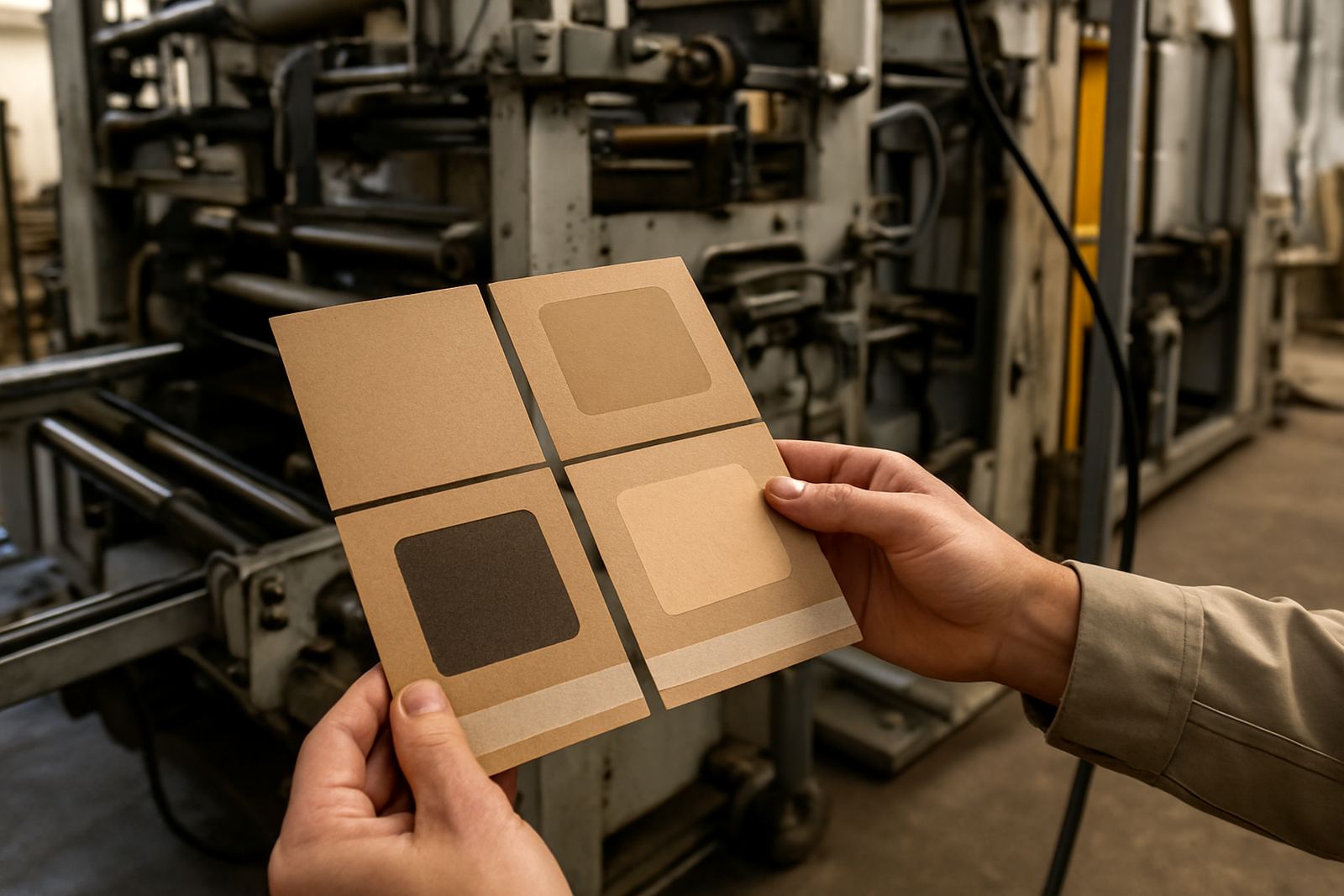
A short trial run saves far more than it costs. We advise drawdown panels, threshold tuning and rub resistance checks before committing to a full packaging order. For security work, add UV verification setups and batch retain samples so the final pack can be matched later if there is a dispute.
Production teams sometimes skip these steps when the print schedule is tight. That is where small errors become expensive. If a thermochromic signal activates too early, or a security pattern loses definition after an overprint, the whole run may need to be reworked. A few hours spent on set-up can prevent a week of stress.
- Confirm colour matching under day light and warehouse light.
- Run adhesion tests on the actual board or film, not just a substitute.
- Check rub resistance after folding, cutting and packout.
- Keep one retained sample from each approved batch for reference.
Local conditions in Durban change the picture
Durban’s humidity, salt air and warm storage rooms can all shorten the life of a special effect if the system is not set up correctly. We have seen security features hold well on a cool morning in Jacobs, then show weak definition after a day in a hot dispatch area in Prospecton. That does not mean the ink failed. It means the full pack system was not matched to local conditions.
Our production team often asks a simple question: where will this pack sit for seven days, not just seven minutes? That answer shapes the coating choice, curing target and handling advice. For chilled goods, cosmetic cartons and promotional sleeves, the storage route must be part of the spec from the start.
A practical example from a Durban supply chain
A food client in the south of Durban wanted a temperature cue on a carton sleeve for retail packs moving through cold storage, then across a hot loading bay before delivery inland. The first sample looked strong, but after overprinting and stacking the activation mark became harder to read. The fix was not a new effect ink, but a change in the coating weight and the handling sequence.
We adjusted the threshold, tightened the overprint window and changed how the sleeves were stacked before dispatch. The result was a cleaner signal on the shelf and far fewer damaged units at unpacking. Small changes made the difference because the team treated the special effect as part of the whole pack line, not just a decoration.
That is the practical side of protecting special effects: design for the printer, the warehouse and the customer, all at once. When the overprint is matched properly and the handling plan is realistic, the effect lasts longer and the pack does its job properly.