

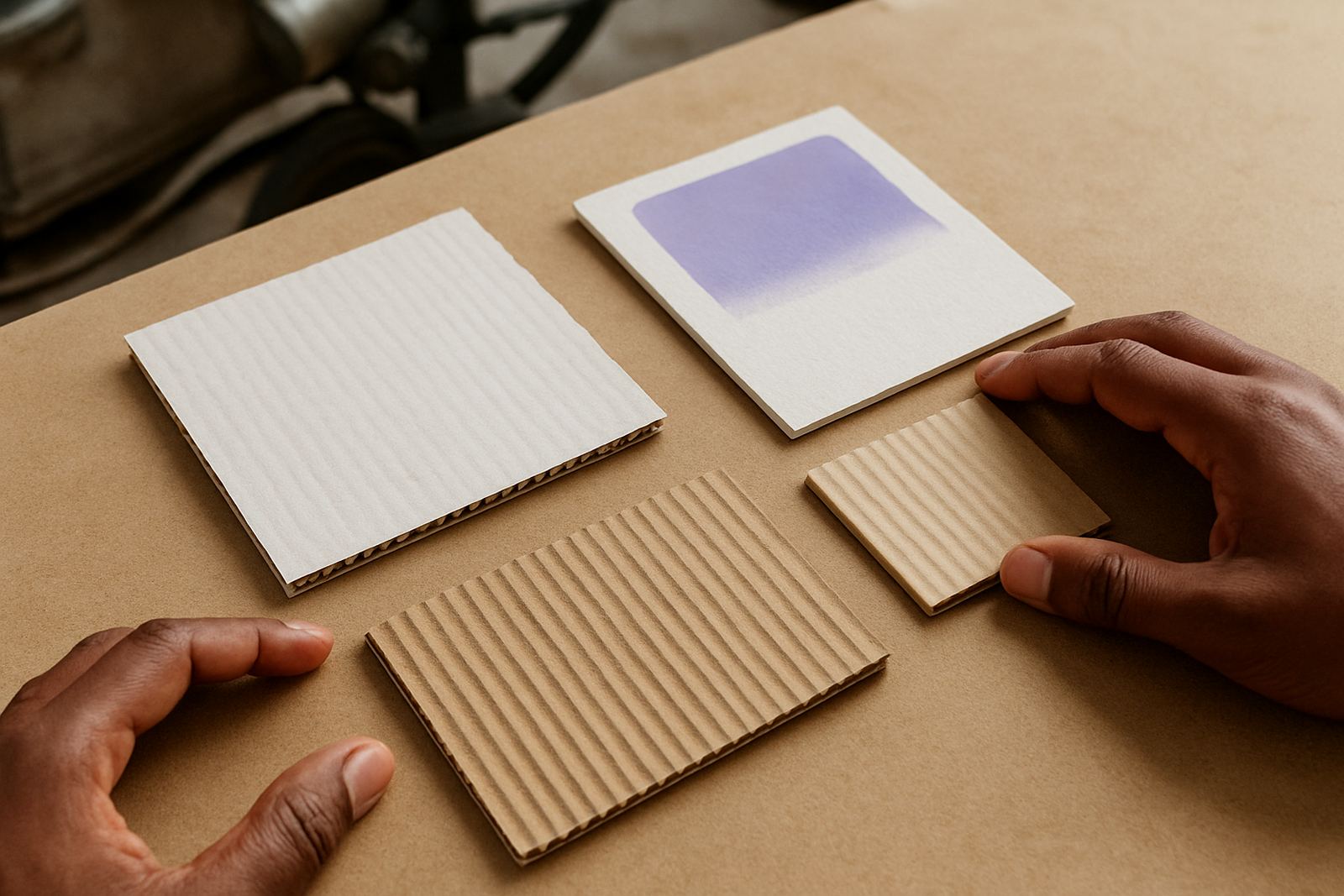
Why the substrate decides more than the print result
When a pack does not hold ink properly, the issue is often the substrate before the ink is even considered. Paperboard, coated board, films, labels and laminated packs all behave differently under heat, pressure, drying and handling. A surface that looks fine at the proof stage may still struggle on the press if it has low surface energy, dusting, migration or too much moisture.
For thermochromic work, the substrate matters because the effect must stay visible and react at the right threshold. For security inks, it matters because the coating must sit cleanly on the surface and keep its pattern or verification feature intact. In Jacobs and Prospecton, we often see the same problem on hot days and during load-shedding recovery: a substrate that was stable in the morning becomes less consistent by the afternoon if storage and press conditions shift.
- Paperboard usually gives good print holdout, but may need careful coating compatibility checks.
- Plastic films can offer better moisture resistance, but often need surface treatment before ink adhesion improves.
- Laminated packs may need targeted testing because the top layer can behave differently from the base layer.