What adhesion testing tells you before print run starts
Adhesion testing shows whether an ink, varnish or security layer will stay attached to the substrate once it has been printed, dried and handled. For packaging work, that matters on PE and PP films, folding cartons, self adhesive labels, laminated packs and coated board where the surface energy, slip additives or varnish layer can affect performance.
At our Jacobs base in Durban we see the effects of coastal humidity every day. A material that looks fine in the morning can give poor hold after a few hours in warm air, so we test for real world conditions, not just neat lab results. Our checks help reduce set off, flaking, patchy transfer and scuffing on the line.
Materials we test and the signs we look for
We test a wide range of packaging materials used by converters across KwaZulu Natal, Gauteng, the Western Cape and the Eastern Cape. The aim is to confirm whether the printed layer bonds properly and keeps its grip during conversion, packing and distribution.
- Films including PE, PP, PET and laminated structures
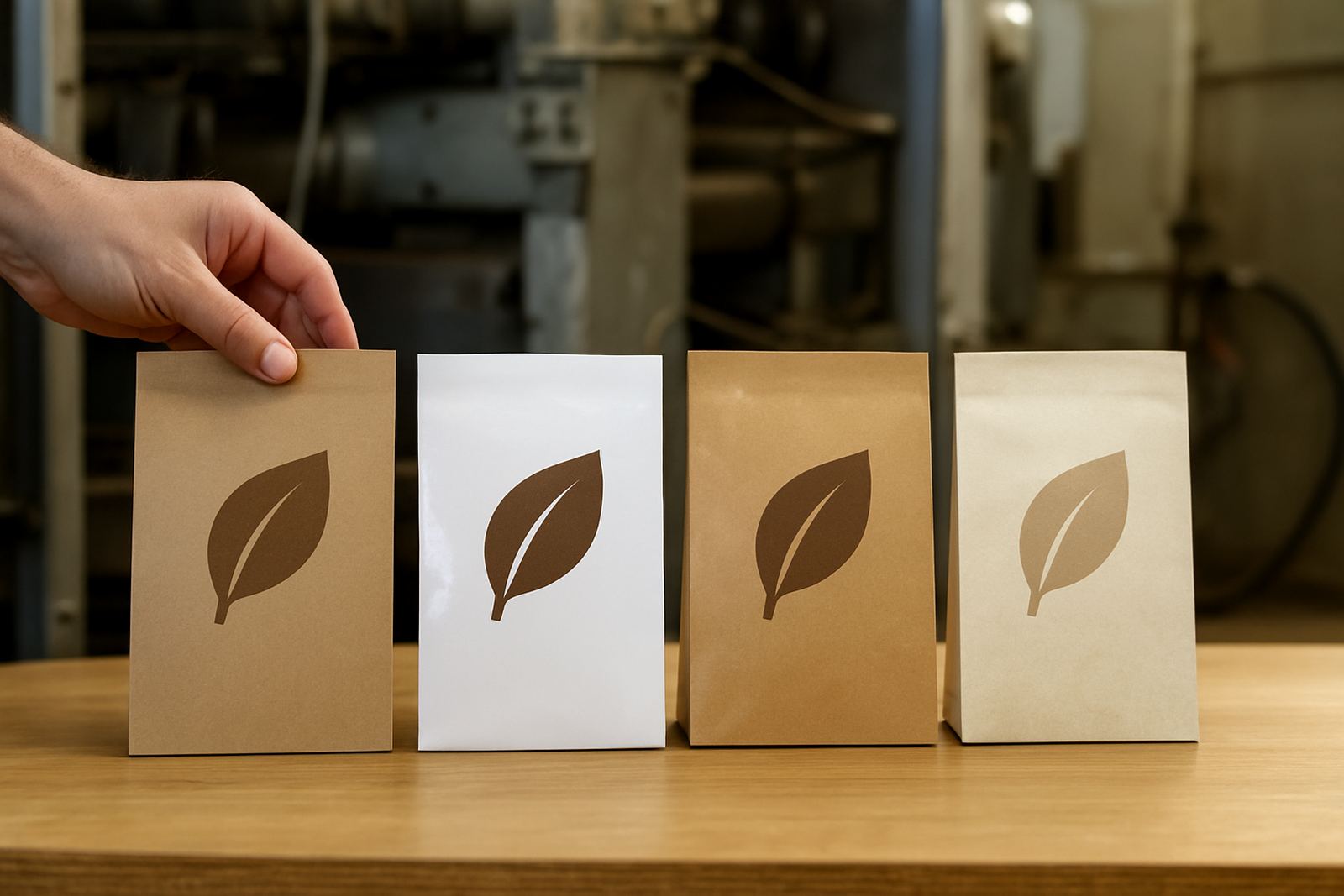
- Cartons and folding box board with coated or uncoated faces
- Labels, sleeves and pressure sensitive stock
- Coated packaging materials with gloss or matt finishes
- Security printed panels, overprints and special effect areas
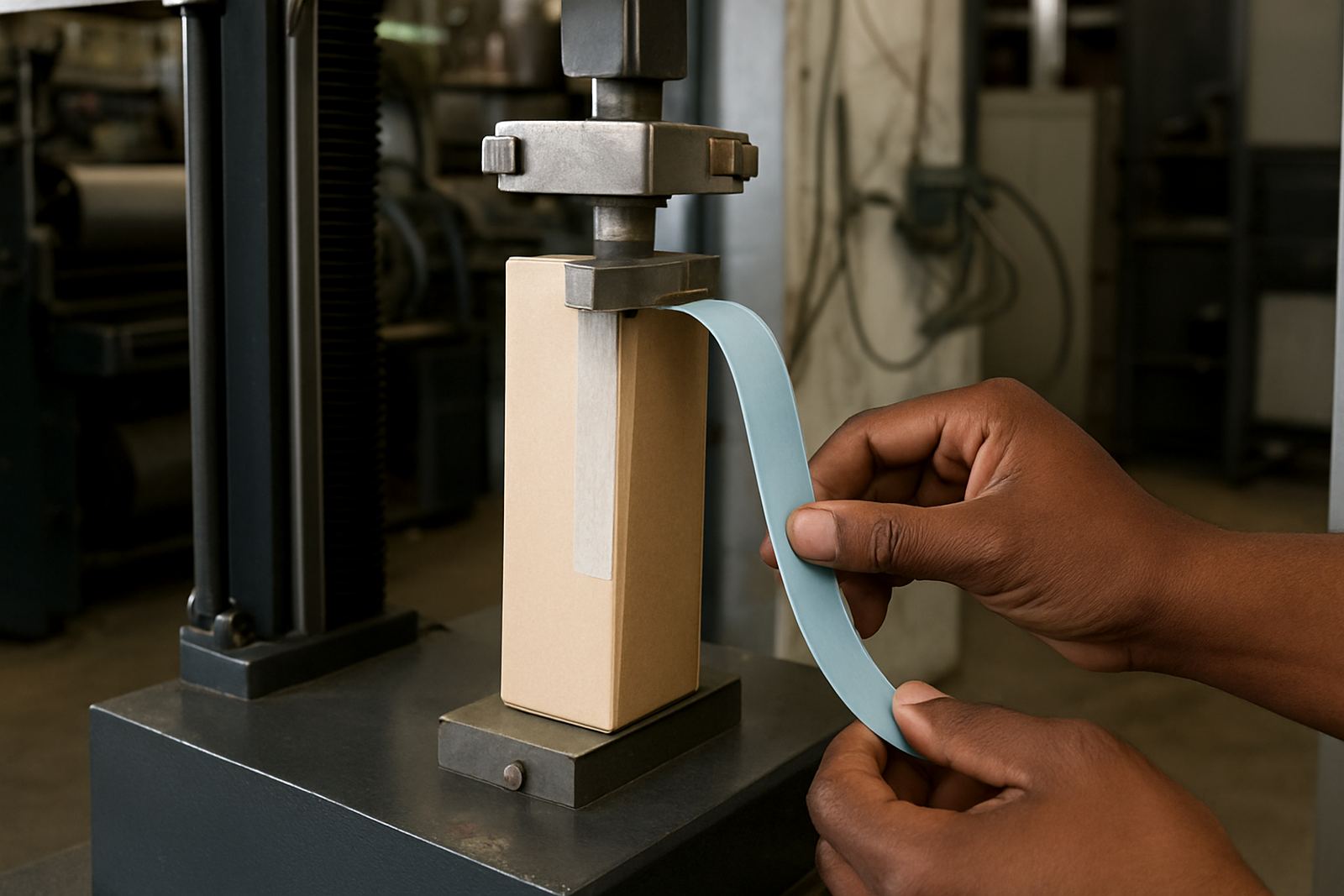
We look for lifting at edges, scratching through the ink film, poor transfer on tape pull checks, uneven removal after abrasion and weak hold after exposure to heat or moisture. If a sample fails, we can usually point to the likely cause, whether that is surface preparation, curing, coating compatibility or the wrong ink choice for the job.
How the test is carried out from sample to result
Every job starts with a sample review. We confirm the substrate type, print method, drying system and the conditions the pack will face in use. That includes temperature changes, stacking pressure, chiller storage, transport in humid weather and handling in depots or retail back rooms.
- Receive sample and confirm substrate details
- Inspect print area, coating and any treated surface
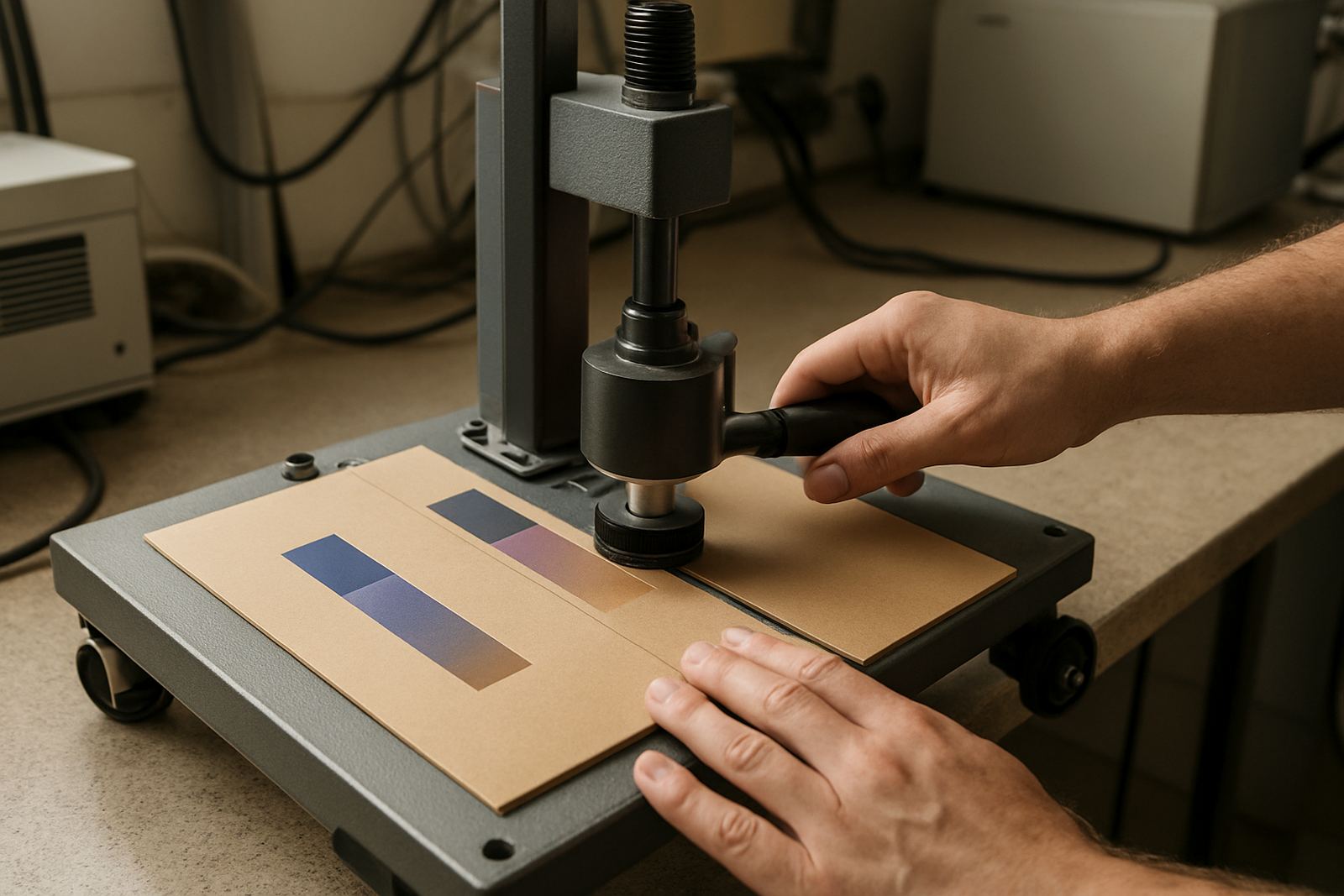
- Run tape adhesion checks and cross hatch style checks where suitable
- Carry out rub and scuff inspection after set intervals
- Record results and note any weak areas or failure modes
- Recommend follow up steps such as surface treatment, curing changes or a different ink system
For new packaging trials we can also prepare drawdown panels and trial batch material so the test reflects the production setup more closely. If needed, our team in Durban can work with your converter during press startup to check adhesion on line and not only in the lab.
Turnaround times that suit urgent packaging work
Simple adhesion checks are often turned around within 1 to 2 working days once samples arrive, depending on the number of materials and the test set requested. More involved jobs that include repeat checks, UV verification, coating compatibility or trial batch review can take 3 to 5 working days.
If a customer is dealing with a live production issue, we try to prioritise the job and keep communication direct through our enquiry form. That helps us avoid delays when a carton, label or film is already on hold at the converter, and it saves a second round of corrections where possible.
For nationwide deliveries and sample collections, Jason Pillay coordinates the logistics so that converters in Johannesburg, Pretoria, Cape Town, Gqeberha, Pinetown and Prospecton can get support without losing time on transport arrangements.
Pricing approach for one off checks and repeat production control
We price adhesion testing according to the material count, the test complexity and whether a simple pass or fail check is enough, or a fuller report is needed. A single substrate with basic tape adhesion checks is priced differently from a multi material comparison that includes rub resistance, UV exposure and trial batch review.
For repeat production work, many converters prefer scheduled checks at set intervals. That can be monthly, quarterly or tied to a product line change, depending on how sensitive the pack is and how often the substrate supplier or coating spec changes. Regular testing usually costs less than sorting out a failed print run after the fact, especially when a municipal or retail contract has tight delivery dates.
- Single sample checks for quick approval
- Batch based testing for ongoing production control
- Project pricing for new pack development or troubleshooting
- Repeat testing plans for converters with frequent substrate changes
Maintenance intervals for stable pack performance
Adhesion is not a once off problem. It can change when the press condition shifts, when the ink film thickness changes, or when a new batch of board or film arrives. We normally recommend routine checks whenever you switch substrate suppliers, change coatings, adjust drying settings or move a product into hotter or more humid storage conditions.
As a guide, high volume packaging lines should review adhesion at least every 3 months, and sooner if there are any signs of scuffing, poor transfer or edge lift. For temperature sensitive packs and security printed items, monthly spot checks can be worth it, especially in Durban where moisture in the air can expose a weak bond very quickly. A small gap in testing now can become a full reprint later, which nobody wants.
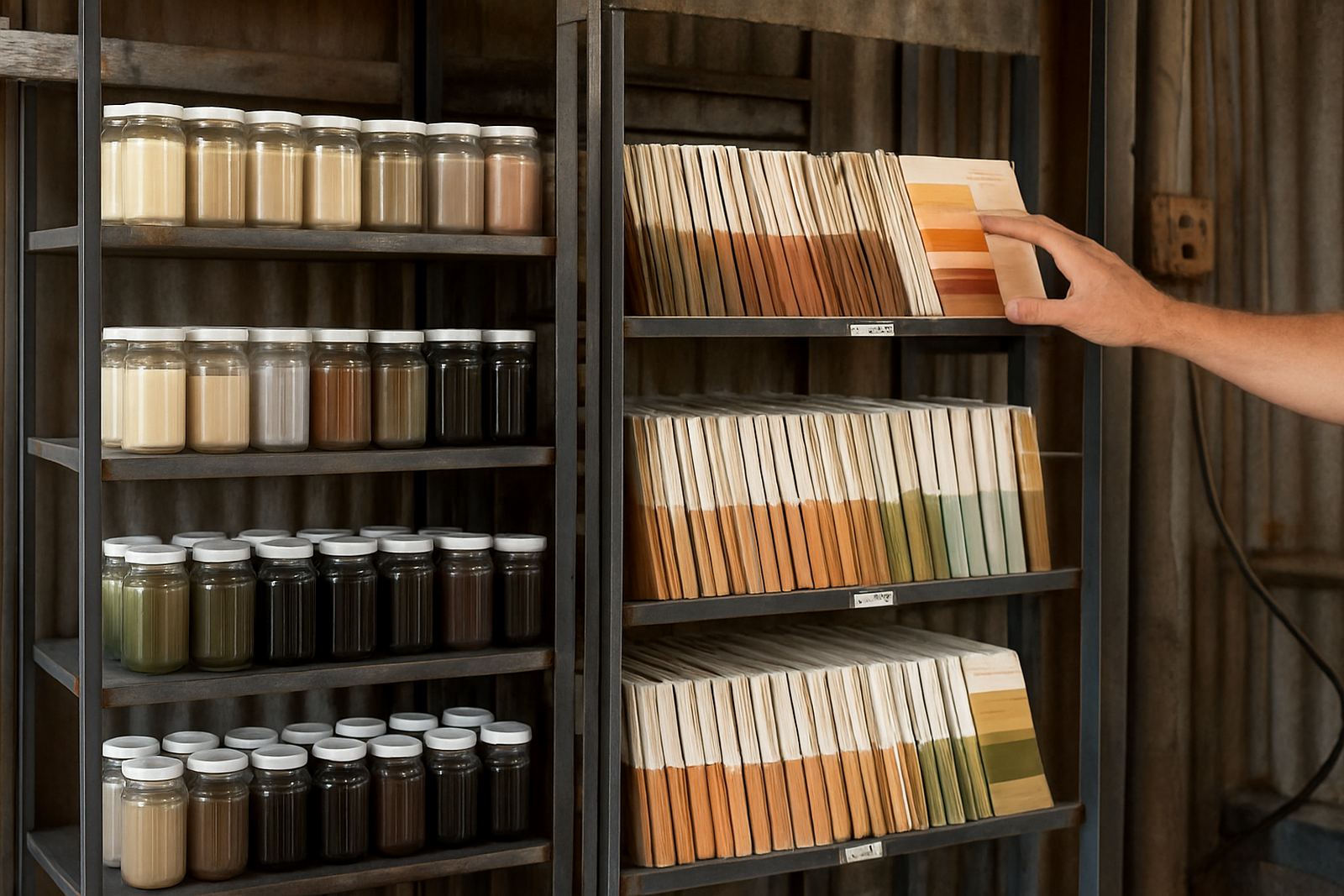
Our team can keep a batch retain library and recorded results on file so you have a point of reference when a future run behaves differently. That makes troubleshooting faster and gives your production team a clear baseline to work from.
Why packaging converters call ThermoInk for adhesion support
We work with packaging converters because adhesion is one of those issues that affects everything from appearance to shelf life. If the print lifts, the pack looks tired and the product loses trust before it reaches the customer. In food, healthcare and promotional packaging, that can be a costly miss.
ThermoInk was founded in 2008 and our team includes Sibusiso Mthembu, Shaun October, Lindokuhle Dlamini, Pieter van Wyk, Nomfundo Khumalo and Jason Pillay. Each one handles a part of the process from technical review to production control and delivery planning. That means you get practical answers, not vague advice, and the support stays close to the realities of South African packaging lines.
Whether your job is a carton with a coated face, a film pack going through hot fill or a label that must survive chilled storage, we can test it properly and tell you where the bond is sound and where it is not.
Key facts
| Test substrates | Films, cartons, labels, sleeves and coated packaging materials |
|---|---|
| Typical sample size | A4 sheet, cut panel or press sheet sample |
| Core checks | Tape pull, cross hatch style adhesion, scuff and rub observation |
| Environmental focus | Humidity, temperature change, stacking pressure and transport handling |
| Typical turnaround | 1 to 2 working days for standard checks |
| Service area | Jacobs, Durban with deliveries nationwide |