A fast line, a tight brief
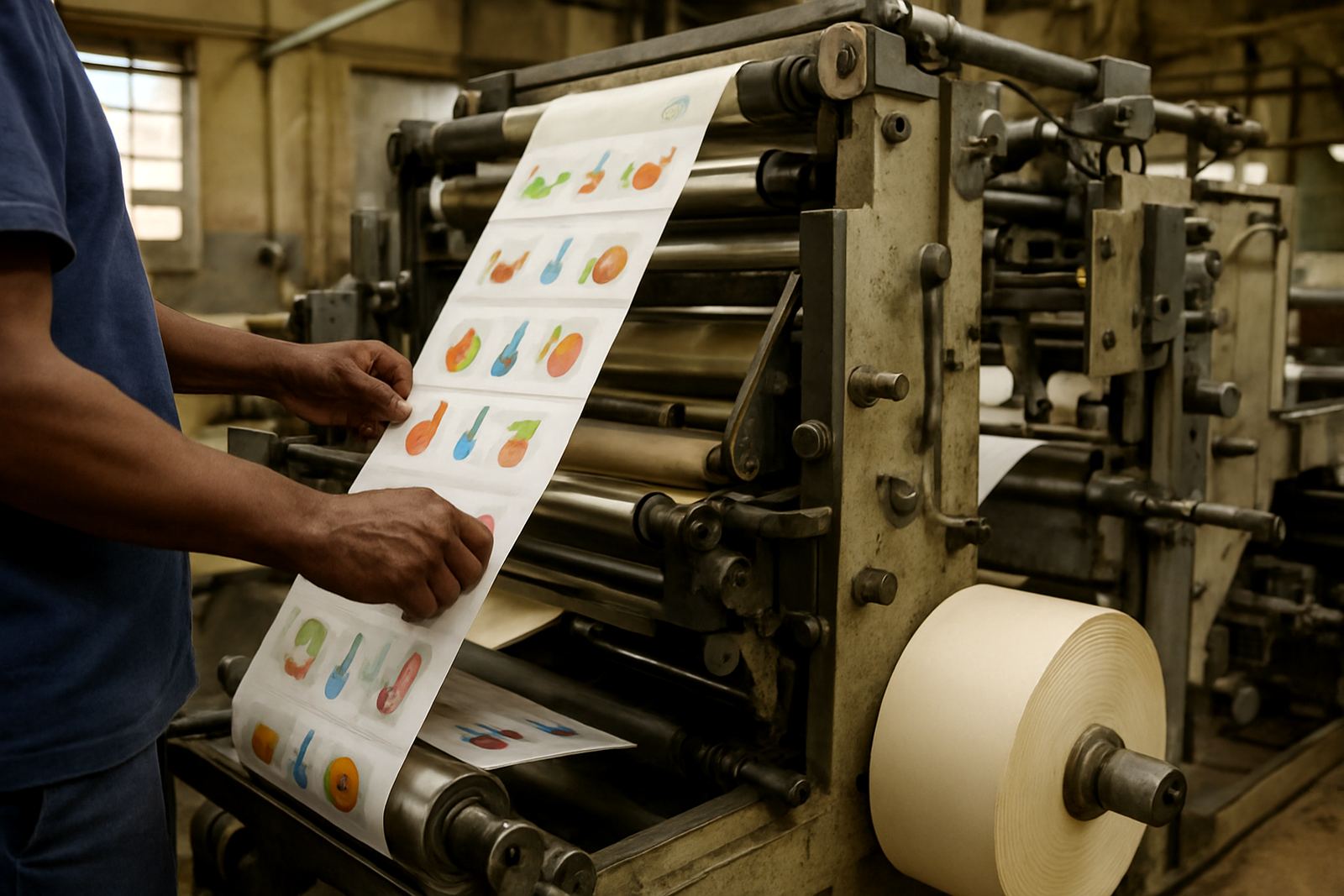
The client was a sachet converter in Aeroton, Johannesburg supplying FMCG and personal care packs into retail and wholesale channels. Their problem was simple to state and hard to solve: they needed a discreet security mark that would sit inside the print area, stay readable after filling and sealing, and not create stoppages on a line already running under pressure.
The brief covered two needs at once. First, the mark had to give the converter a way to confirm authenticity on finished packs. Second, it had to print cleanly at speed on a flexible substrate that was already carrying multiple colours, registration points and sealing bands. There was no room for excess drying time or any ink that would block, smear or transfer in the stack.
- Client type: sachet converter
- Location: Aeroton, Johannesburg
- Application: discreet security marking on flexible packaging
- Line condition: fast-moving, high-output production
What the line could and could not tolerate
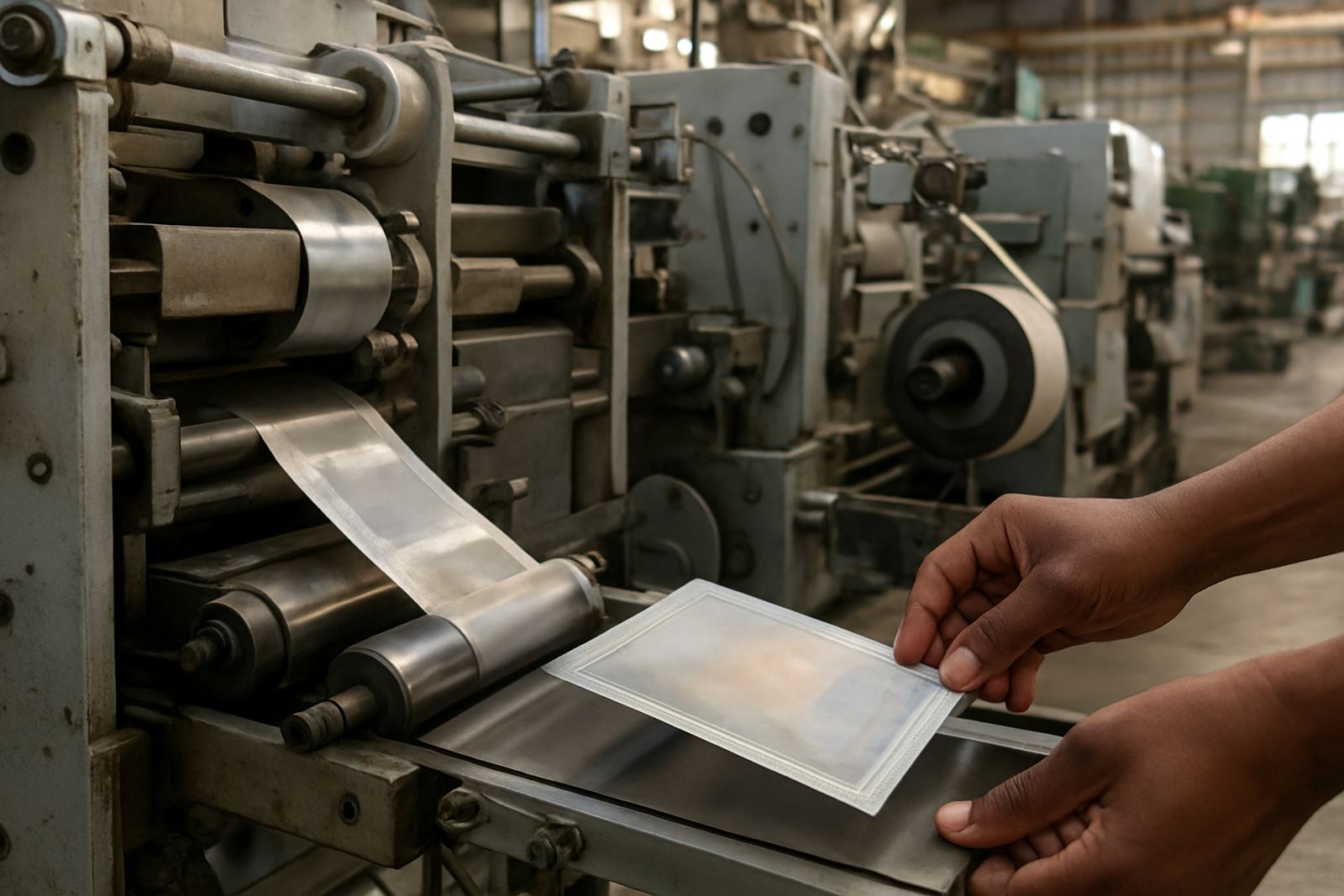
Before any supply went in, we reviewed the press setup, the substrate build and the end-use conditions. The pack needed to survive handling, transport and shelf life without the mark fading or picking up through the stack. We also had to work around typical Gauteng production realities: dust, static on dry days and pressure to keep machines moving when a load-shedding changeover or maintenance window cuts into production time.
The key constraints were drying window, adhesion, rub resistance and compatibility with the converter’s coating and sealing stages. The mark had to remain discreet under normal viewing, yet still give a clear response under the agreed verification method. Because the line was moving quickly, we kept the set-up practical, with a narrow adjustment range so the operators could hold it steady shift after shift.
- Substrate compatibility check
- Drying and set-off control
- Rub resistance and handling durability
- Verification response under controlled conditions
Ink selection, tuning and press support
We supplied a security ink system matched to the substrate and the way the pack was converted. The work included drawdown panels, threshold tuning and a set of trial batches so the client could compare mark visibility, print consistency and drying at press speed. Shaun October handled the technical sales side, while Pieter van Wyk worked on the security pattern and the verification approach. Nomfundo Khumalo led colour matching where the security element needed to sit cleanly within the printed design.
We also carried out adhesion tests and rub resistance checks before press approval. That let us confirm the mark would hold through folding, sealing and packing without showing unwanted migration. Lindokuhle Dlamini managed production coordination from our Jacobs base, and Jason Pillay planned the supply movement so the converter could get material on site without waiting on last minute freight. The result was a controlled start-up rather than a rushed one.
- Drawdown panels for approval
- Trial batch making for live press tests
- Adhesion and rub checks before release
- Press startup support during first production runs
Timeline from brief to production
The project ran over four weeks from first enquiry to stable production. Week 1 covered the brief, substrate review and initial lab work. Week 2 focused on sample preparation, threshold tuning and compatibility testing. In Week 3 we attended the press for startup support, confirmed settings and adjusted the run where needed. By Week 4 the converter had a repeatable process and could carry the security mark through normal production with minimal intervention.
That timeline mattered because the customer could not afford a long pause. They had live orders moving through the plant and a narrow window for setup changes. The faster we got the mark behaving correctly, the sooner they could return to full output and keep delivery dates intact.
- Week 1: brief and lab review
- Week 2: samples and tuning
- Week 3: press setup and trial batches
- Week 4: steady production sign-off
Results on the floor and in the pack
The line settled quickly once the ink settings were locked in. Operators reported cleaner print response, less variation between runs and no repeat stoppages linked to the security mark. Finished sachets kept the required visual cue without upsetting the primary artwork and the converter could verify packs using the agreed inspection method at production pace.
For the client, the practical gain was confidence. They had a security feature that sat inside the normal print process instead of becoming an extra handling step. It also gave them a better position with customers who expect traceability and authenticity on packaged goods, especially where the pack may move through several hands before it is used.
- Cleaner, repeatable mark on finished sachets
- Reduced variation between runs
- No disruption to sealing or stacking
- Better confidence in authenticity checks
What we would repeat on the next sachet run
We would use the same approach again: start with the substrate, test the drying window early and confirm the security response before the first full production run. For fast flexible packaging lines, that sequence saves time and avoids avoidable waste. It also helps when the plant is running under pressure and every hour of output counts.
For similar work, we would recommend a retain sample library, a simple verification setup at the line and a short operator guide kept with the job bag. That keeps the process consistent across shifts and makes it easier to track changes if a customer switches film, coating or sealing conditions later on. In Durban and inland alike, the same principle holds: if the pack has to move fast, the ink system must be ready first.
- Start with substrate and coating checks
- Lock in verification before full run approval
- Keep retain samples for future comparison
- Keep operator notes with the job bag
Key facts
| Project | Aeroton Sachet Run |
|---|---|
| Client type | Sachet converter |
| Location | Aeroton, Johannesburg |
| Timeline | 4 weeks |
| Services used | Security Pattern Design, Drawdown Panels, Threshold Tuning, Adhesion Tests, Rub Resistance Checks, Press Startup Support |
| Outcome | Discreet security mark stabilised on a high-speed flexible packaging line |