Freshness cue for a local pouch launch
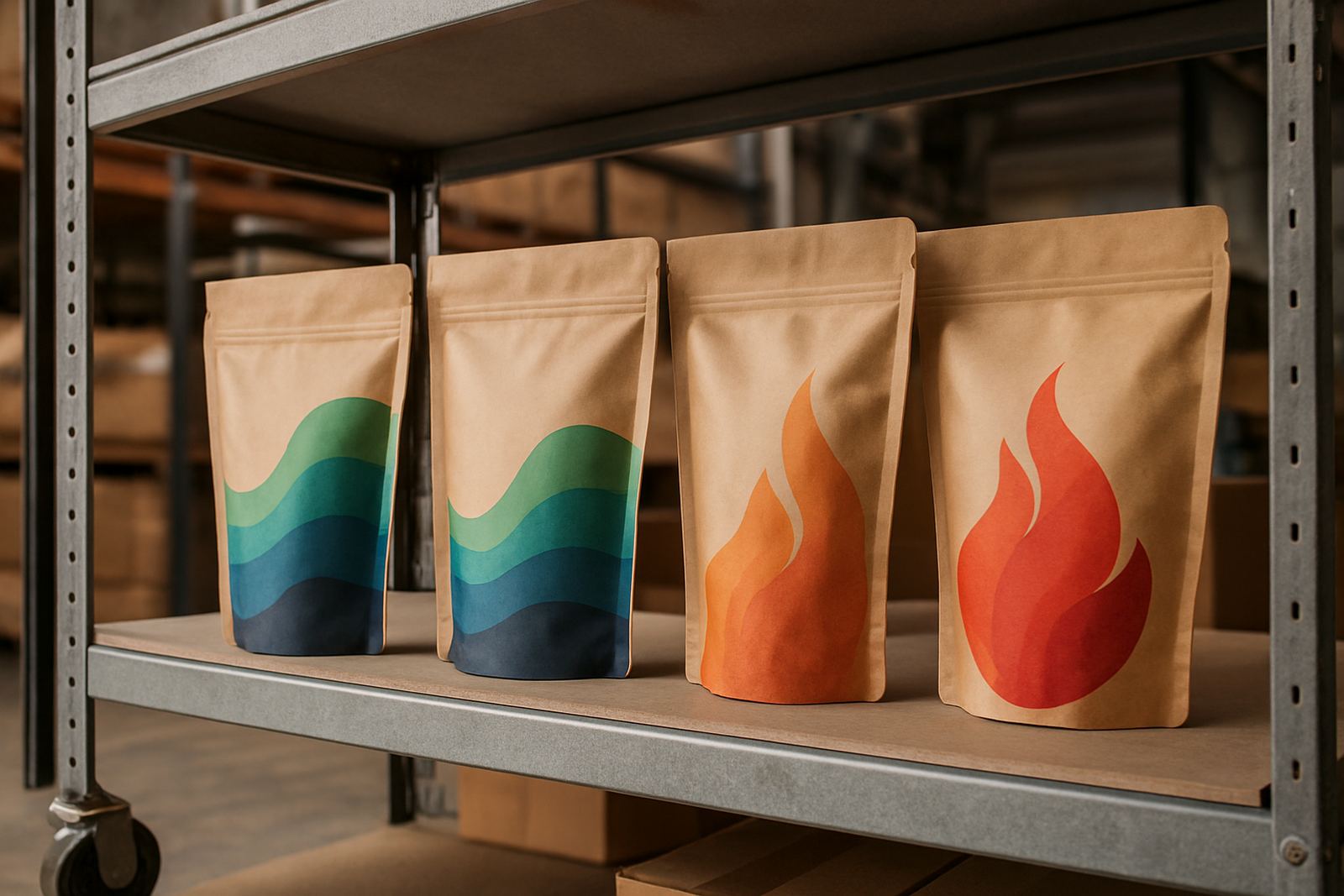
The client was a food packer in Polokwane preparing a new stand-up pouch for chilled products sold through township spaza channels and formal retail. Their brief was simple enough to say but not simple to print: the pack had to show a visible colour change when the product moved out of the safe temperature band, while still looking clean on shelf and holding up through transport from Limpopo to Gauteng and the coast.
They also wanted the pouch to carry a security mark so the pack could be checked quickly if stock moved through multiple depots. The design had to work on a flexible substrate, with a heat seal area at the bottom and a clear window panel in the front. Because the pouch was intended for high-volume packing, the ink system had to survive fast line speeds and a fair bit of handling, from carton loading to market storage in hot back rooms.
- Pack type: stand-up pouch with a front freshness window
- Substrate: printed laminate with heat seal areas
- Use case: chilled food product with temperature cueing
- Security need: visible authenticity marker for pack verification
What the line had to cope with
The biggest constraint was the packaging material itself. The converter wanted a strong bond to the laminate, but the ink also needed to stay active after flexing, sealing and stacking. The pouch would see temperature swings during loading, refrigerated holding and short periods on the road, so the colour-change point had to be set carefully. Too sensitive and it would trigger during normal handling. Not sensitive enough and the cue would be missed by the shopper.
There was also a production limit on the coating weight. The customer did not want a heavy layer that could slow drying or affect the seal integrity. In addition, the print had to stay legible under daylight and fluorescent store lighting, and the security pattern had to remain visible enough for manual checks without looking busy. We also had to account for dust and humidity in the plant, since the pack line runs through periods of warm weather and load-shedding can interrupt ideal drying windows.
- Colour-change threshold set for a practical chilled range
- Low coating weight to protect seal zones and drying time
- Compatibility checked against the laminate structure
- Security mark designed to be quick to inspect by eye
Trial batch, drawdowns and press setup
We started with drawdown panels in our Durban Jacobs base and tuned the colour response to the client’s target pack temperature. Nomfundo Khumalo led the colour matching work, while Pieter van Wyk handled the security pattern layout and verification checks. Shaun October supported the technical brief with the converter, and Lindokuhle Dlamini oversaw the trial batch preparation so the formula could go from lab sample to production mix without surprises.
Over the first two weeks we produced test panels, checked adhesion and ran rub resistance tests. After that we prepared a small trial batch and went to press startup support on site. The pouch line used a standard flexo-style application setup, so we checked doctoring, drying, laydown and registration against the artwork. We also set up UV verification where needed, because the security element had to be easy to confirm during receiving and stock audits.
- Week 1: drawdowns, threshold tuning and adhesion tests
- Week 2: rub checks, coating compatibility and security proofing
- Week 3: trial batch making and press startup support
- Week 4: final sign-off and batch retain entry for repeat supply
On-site support during the first run
The first production run went out in a four week window from approval to live packing. Jason Pillay coordinated supply so the converter had product on time, and we kept a batch retain library for repeat work on the next run. Once the press was up, the team checked the window opacity, colour shift timing and seal edge behaviour. The pouch had to stay neat after filling and still show a clear response when moved from cold storage to ambient shelf conditions.
We also watched how the ink behaved under the plant’s everyday conditions. That included stop-start operation, cleaning breaks, warm afternoons and the usual handling around cartons and pallets. The final result was a pouch that carried a clean freshness cue, held its print quality and gave the client a practical way to communicate product condition without adding a separate label or insert. No fuss, just a better pack that did the job.
Results on shelf and in the packing room
After launch, the client reported that the colour-change window made the pouch easier to explain to buyers and store staff. The freshness cue was obvious enough to be noticed but not so strong that it distracted from the brand artwork. The security mark also gave the operations team a simple way to confirm the correct pack version during dispatch and receiving.
The converter saw fewer issues with print mismatch and less back-and-forth during startup, since the colour target had been agreed before the main run. That saved time in the packing room and reduced waste on the first pallets. For a product going out across Polokwane, Pretoria and Johannesburg routes, that kind of practical control matters. It keeps the line moving and helps the pack stay consistent from week to week.
Key facts
| Project | Polokwane stand-up pouch launch |
|---|---|
| Location | Polokwane, Limpopo |
| Base support | Jacobs, Durban |
| Ink system | Thermochromic colour-change window ink |
| Security feature | Manual verification pattern with UV check support |
| Timeline | 4 weeks from drawdown to production sign-off |