A chilled label brief for Umhlanga retail conditions
The project came in from a beverage packer supplying chilled drinks into Umhlanga, Durban North and nearby coastal retail stores. The brief was practical: show the shopper when the product had reached serving temperature, keep the print readable after refrigeration, and make sure the label still looked clean after ice bucket handling and condensation on the bottle.
Because the pack was moving through cold rooms, delivery vehicles and store fridges, the label stock and ink system had to cope with moisture, rubbing and changes in temperature. The client also wanted a visual marker that staff could check at a glance during packing, without needing special tools on the line.
- Pack type: pressure-sensitive beverage labels
- Area served: Umhlanga, with distribution into coastal KZN stores
- Use case: chilled product with temperature response on pack
- Main concern: condensation, scuffing and readable cues on shelf
What the pack needed to handle on the coast
Coastal conditions around Umhlanga are hard on labels. Humidity comes in off the sea, cartons sit in warm delivery bays, and chilled bottles sweat when they come out of the cold room. That can cause edge lift, soft print, blurred colour response and poor adhesion if the system is not set up properly.
The brief also included a production constraint. The customer runs steady day shifts and needed the label run to stay stable across multiple batches, without constant line stoppages for adjustments. We built the ink and application checks around that reality rather than a lab-only setting.
- High humidity resistance for coastal storage and transport
- Good wet rub resistance after refrigeration
- Clear cold-readiness indication under chilled conditions
- Consistent results across repeat batches
We also kept the compliance side in mind. The pack had to remain legible for batch details and track marks, and the security feature could not interfere with normal label reading or bottle appeal.
Colour-change cue and security print work
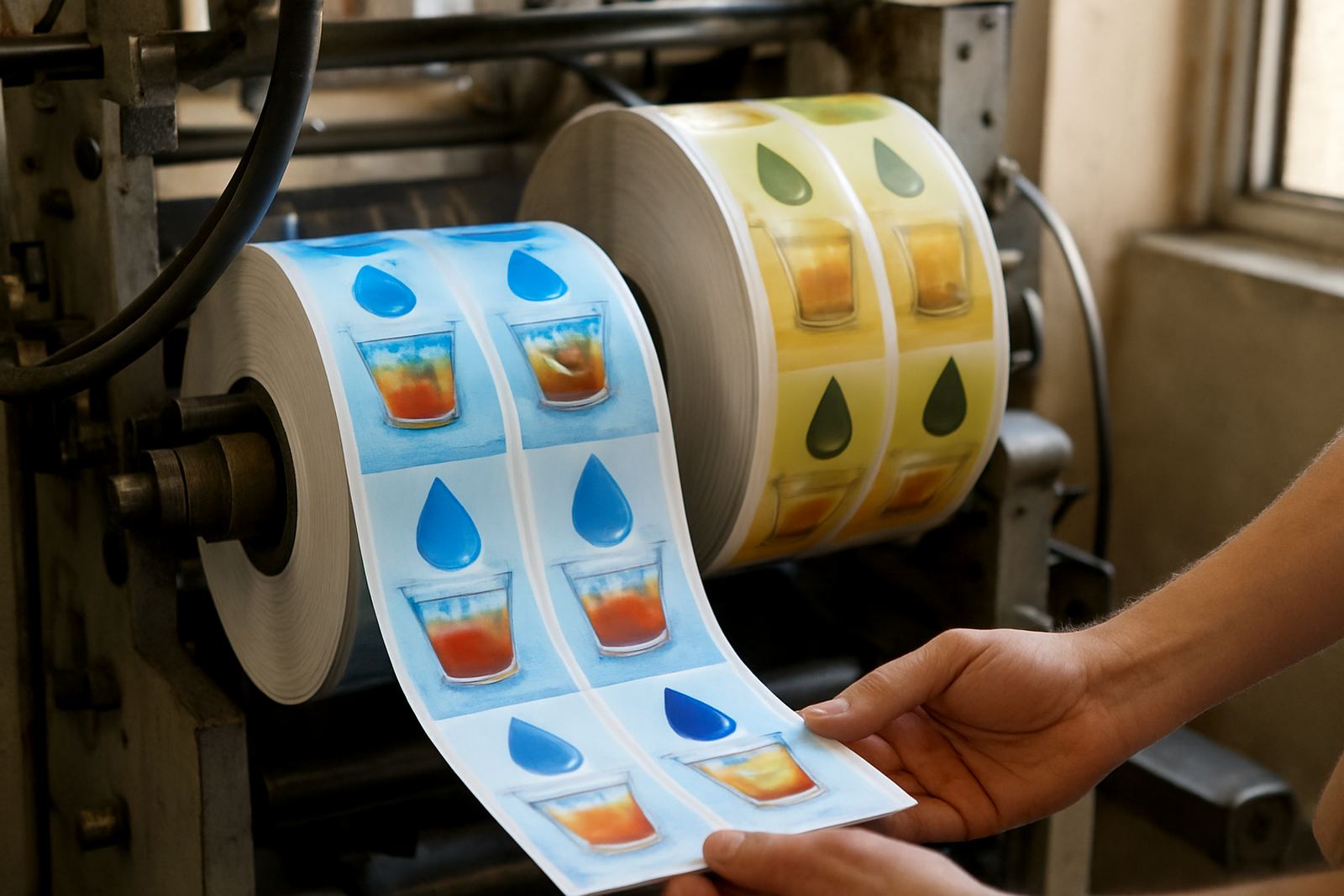
We supplied a thermochromic label ink system with a target activation point set for chilled service rather than frozen storage. The colour-change window was tuned so the cue appeared once the pack reached the intended serving range, giving a visual check for staff and shoppers without being over-sensitive.
Alongside that, we added a security print element for pack integrity checks. The goal was not to make the label busy, but to include a discreet feature that could support authenticity control and make unauthorised copying harder.
Our work on the project included:
- Colour Matching for the base artwork and response tone
- Threshold Tuning for the cold-readiness cue
- Adhesion Tests on the selected label stock
- Rub Resistance Checks after cold conditioning
- UV Verification Setups for line-side inspection
- Security Pattern Design for an in-pack authenticity cue
The client wanted the final pack to remain clean and easy to read, so we kept the response area compact and placed it where it would be visible without taking over the label face.
Trial batch and press support in three weeks
The project moved through a short, controlled schedule over three weeks. Week one covered colour matching, coating compatibility checks and drawdown panels. Week two was used for trial batch making and threshold tuning on the selected substrate. Week three covered press startup support, live line checks and final retentive samples for the batch retain library.
That sequence mattered because the packer needed confidence before locking in volume. We worked through the label response at actual chilled temperatures, not just room temperature, and checked how the cue behaved after time in the fridge and after handling by packers and store staff.
- Week 1: matching, compatibility and test panels
- Week 2: trial batch, response setting and adhesion review
- Week 3: press support, live run checks and retain samples
Jason coordinated dispatch so the trial material arrived on time to the Durban side, with follow-up deliveries available into Pinetown and Prospecton as required. The aim was to keep the packer moving and avoid gaps between testing and production.
Results on shelf and in the cold room
Once the label was approved, the beverage pack showed a clear cold-readiness cue at the intended temperature range, with no loss of readability after refrigeration and handling. The print held well through cold storage and delivery, and the pack retained a tidy appearance even where condensation was present.
The customer reported fewer questions from store staff about whether product had reached the right serving condition, and the pack looked more deliberate on shelf. The security feature also gave their team a simple way to confirm that the label was the approved version during repacking and dispatch.
Key results included:
- Clear temperature indication for chilled product
- Stable adhesion on the chosen beverage stock
- Better rub resistance after refrigeration cycles
- Consistent visual finish across repeat runs
- Improved line confidence during startup and changeovers
For a coastal beverage pack, that is the sort of outcome that keeps operations steady. It does not need extra fuss on the line, and it avoids the common problem of a label looking fine when warm but failing once the bottles hit the fridge.
What we would do again for a similar beverage pack
If we were starting the same type of project again for a pack going into Umhlanga or any other coastal market, we would follow the same approach. First, test the label system in chilled conditions with the actual stock finish. Second, set the temperature response around the real serving target, not a broad guess. Third, check rub and moisture resistance after the label has sat in the cold room, because that is when faults usually show up.
We would also keep the print simple where it matters most. A clear cue, a secure identification feature and solid adhesion usually do more for a beverage pack than a crowded label with too many effects. That was the thinking here, and it held up well once the product reached the shops.
For packers working in coastal KZN, especially around Durban, Umhlanga and the eastern corridors, the lesson is straightforward: if the label is going onto a chilled product, test it in the same conditions it will face in the real world. That includes humidity, condensation, fast pack lines and the odd rough delivery day.
- Test in chilled and humid conditions before full release
- Match the response point to the serving temperature
- Confirm line behaviour during startup and batch changeovers
- Keep retain samples for future reference and repeat runs
Key facts
| Client type | Coastal beverage packer supplying chilled drinks |
|---|---|
| Project area | Umhlanga, Durban North and coastal KZN distribution |
| Timeline | 3 weeks from test panels to press support |
| Ink system | Thermochromic label ink with security print feature |
| Substrate checks | Adhesion, coating compatibility and rub resistance |
| Support supplied | Colour matching, threshold tuning, UV verification and trial batch making |