When low-migration thinking starts to matter
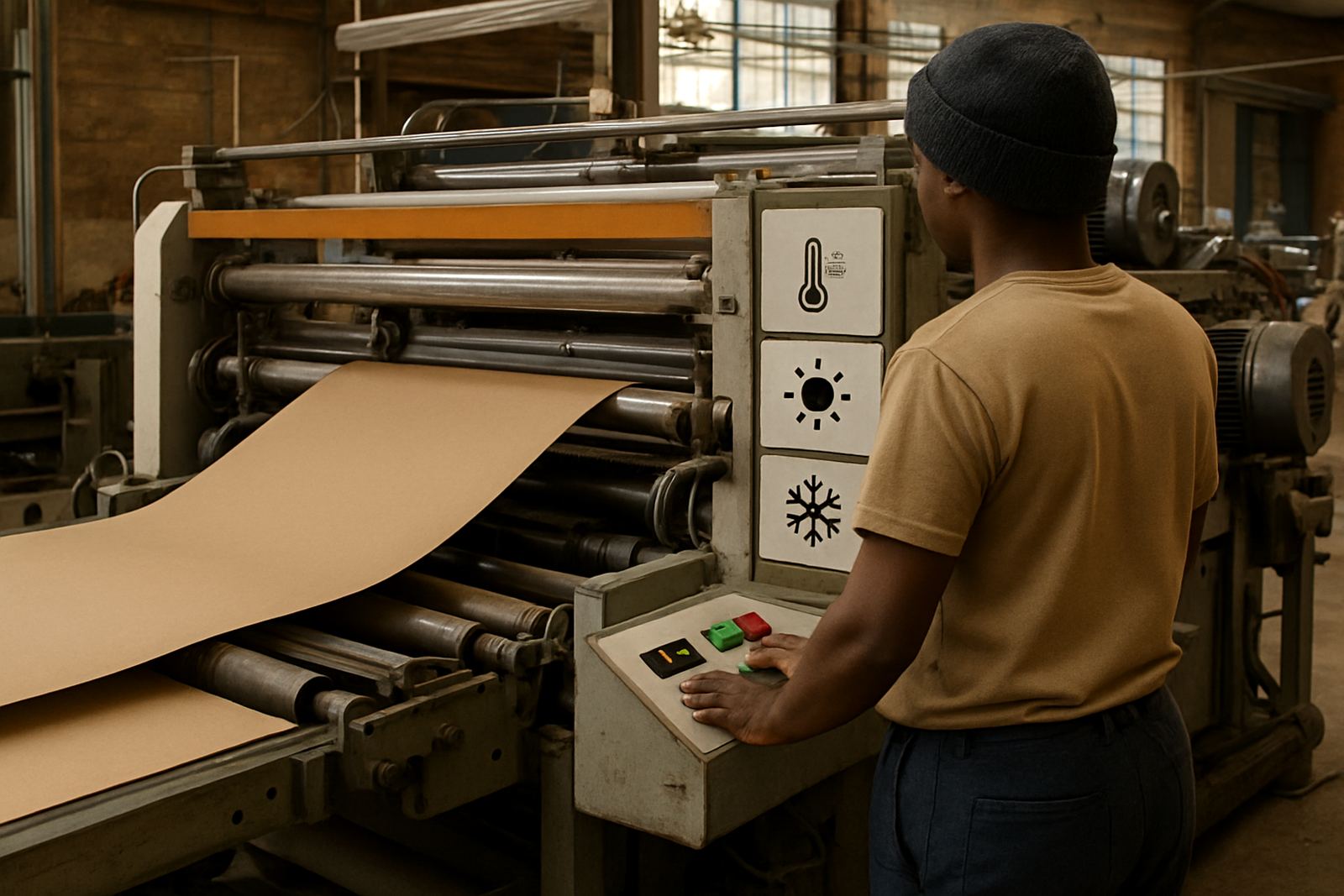
Low migration usually becomes important when the printed pack may sit close to food, medicines or other sensitive contents. In South Africa that can mean a pallet in a Durban warehouse in February, a container crossing inland in summer, or finished packs sitting in a cold room and then moving back into ambient conditions.
It is worth raising the issue early if the packaging carries food, flavours, dietary products, pharmaceuticals or high-care consumer goods. The print system may still be suitable, but the specification has to be checked properly instead of assumed. That includes the substrate, the ink layer, the coating, the drying method and the final converting process.
What can cause unwanted transfer in the pack
Migration is not only about one ingredient. It is often a chain of small decisions that add up. Ink laydown that is too heavy, incomplete curing, the wrong primer, poor substrate compatibility, or a varnish that is not suited to the application can all create risk. Even a good formula can underperform if the press is running too fast or if the drying section is not matched to the job.
Heat is only part of it. Pressure during stacking, long storage, folding, sealing and repeated handling can all influence whether components stay where they should. Coastal humidity around Jacobs, Prospecton and other Durban industrial areas can make drying control trickier, so production teams need to account for that from the start.
- Heavy ink build can leave more material available to transfer
- Under-dried prints can keep releasing volatile components after converting
- Some laminations and coatings change behaviour under heat or pressure
- Substrate porosity and surface energy affect absorption and anchorage
How to specify the job before it reaches the press
Good low-migration planning starts before the first drawdown panel. The converter, brand owner and ink supplier should agree on what the pack is for, how long it will be stored, what it will touch and whether there are any local compliance requirements linked to the product category. That conversation saves time later because it narrows the number of inks, coatings and finishing routes that should even be considered.
At ThermoInk, this is where practical testing comes in. A specification can be checked with colour matching, threshold tuning, coating compatibility checks and trial batch making. If the job needs a security feature as well, the print build can be planned so that the security layer does not interfere with the low-migration requirement.
- Define the end use clearly: frozen, chilled or ambient
- State whether the print will face the product or the outer surface
- Confirm the substrate and any barrier layer already in use
- Agree on acceptable drying time, curing method and press speed
Testing that tells you more than a sample sheet
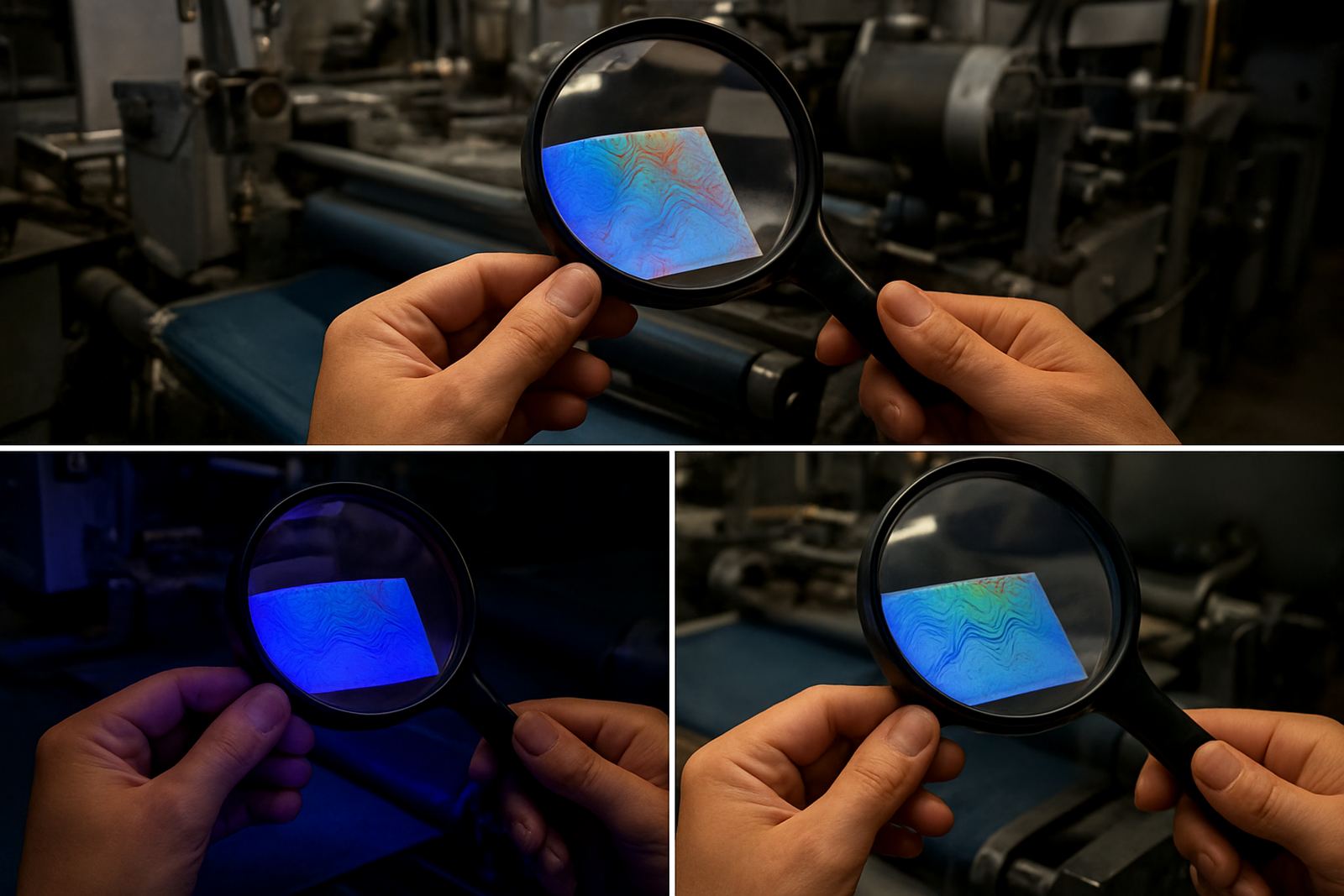
A neat sample is useful, but it does not tell the full story. You need to know how the print behaves after handling, storage and transport. That is why adhesion tests, rub resistance checks and UV verification setups are part of a proper evaluation. If the job needs a special thermochromic effect, the trigger point has to work repeatably and not drift after repeated packaging cycles.
For converters serving Gauteng, KwaZulu-Natal or the Western Cape, it is also useful to compare how the same ink behaves on different lines. A press in Johannesburg may run in a drier environment than one in Durban. That difference can change drying windows and the way a coating sits on the sheet. Production troubleshooting then becomes less about guesswork and more about documented settings.
A Durban example: chilled products moving through long routes
Consider a packed chilled product printed in Jacobs and distributed through depots in Pinetown, Pretoria and Cape Town. The outer carton may not touch the product, but it still needs stable print quality, readable codes and the right coating balance. If the brand also wants a security feature, the design must remain legible after transport, stacking and rehandling at warehouses.
In a case like that, the safest route is to run trial batch making, check the coating compatibility and keep retain samples in a batch retain library. If there is a complaint later, the team can compare the production sample with the returned pack and see whether the issue came from ink, substrate, sealing or storage. That kind of record-keeping is very useful when multiple converters are involved across the country.
- Keep production notes for press speed, temperature and drying settings
- Retain samples from each approved batch
- Record who approved the final colour and the security layout
- Match the print plan to the route the packaging will actually travel
Why the right supply partner matters once the spec is set
Low-migration work is rarely solved by one product alone. It depends on the full production chain and on quick support when the line starts behaving differently. A supplier should be able to help with drawdown panels, press startup support, threshold tuning and production troubleshooting, then back that up with practical logistics to the converter site. For national operations, that means reliable deliveries from Jacobs to Durban South, Pinetown, Prospecton, Cape Town, Gqeberha, Johannesburg and Pretoria.
ThermoInk works with packaging converters who need print systems that are tested properly and handled with care. The aim is straightforward: keep the packaging compliant with the job, keep the colour consistent, and keep the process workable on an actual South African press line. That is what matters when the pack is going into a real market, not just a sample folder.