When produce labels need more than a price tag
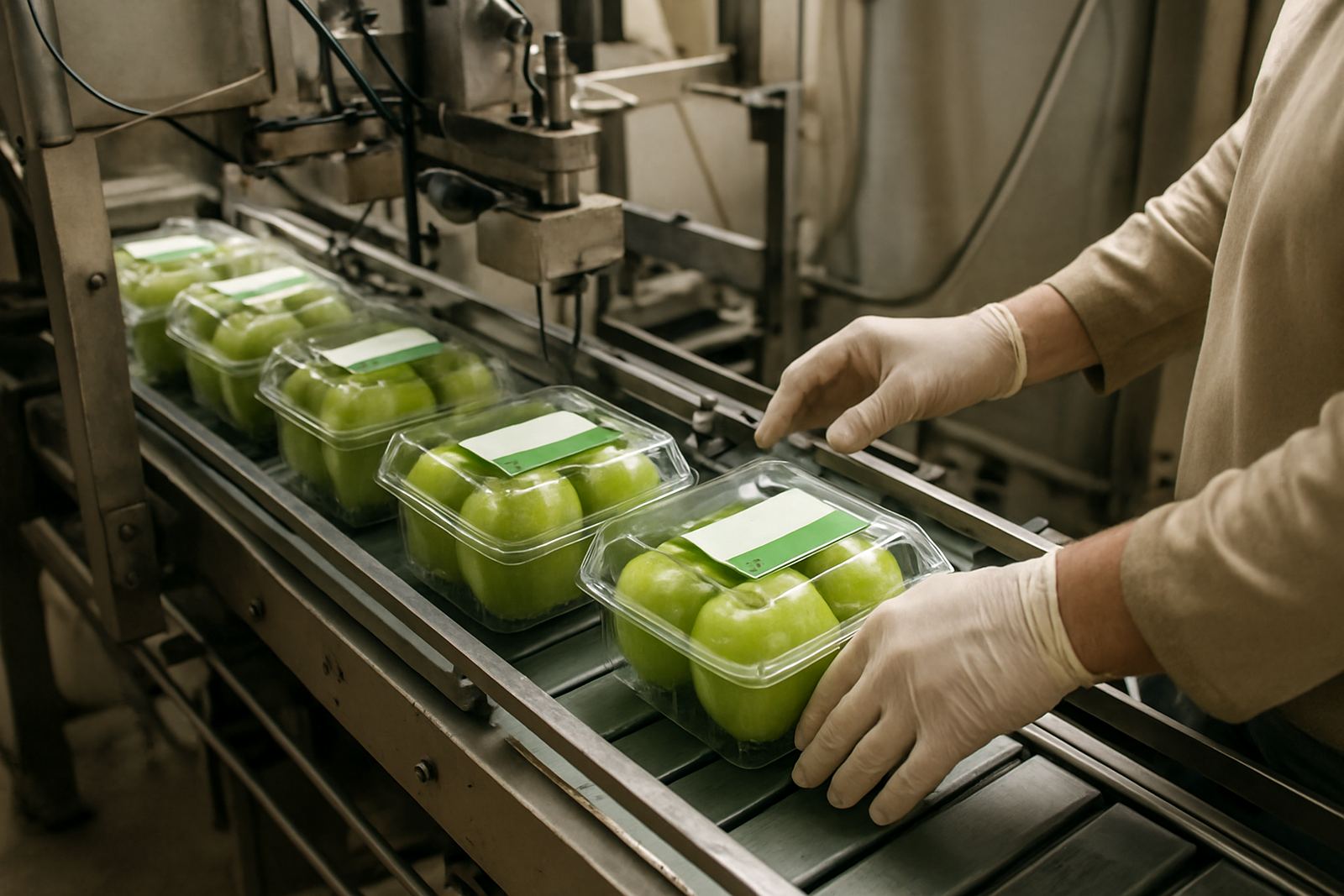
Fresh produce labels often sit on crates, clamshells, cartons and flow-wrap packs that move through cold stores, dispatch bays and retail receiving floors in the same day. In Durban, the air can carry enough moisture to affect adhesion before the pallet even leaves Jacobs, and that gets worse when goods go from a cold room into warm loading areas. A standard print may look fine on day one but lift at the corners, smear after a wet wipe, or fade once the pack has been handled a few times.
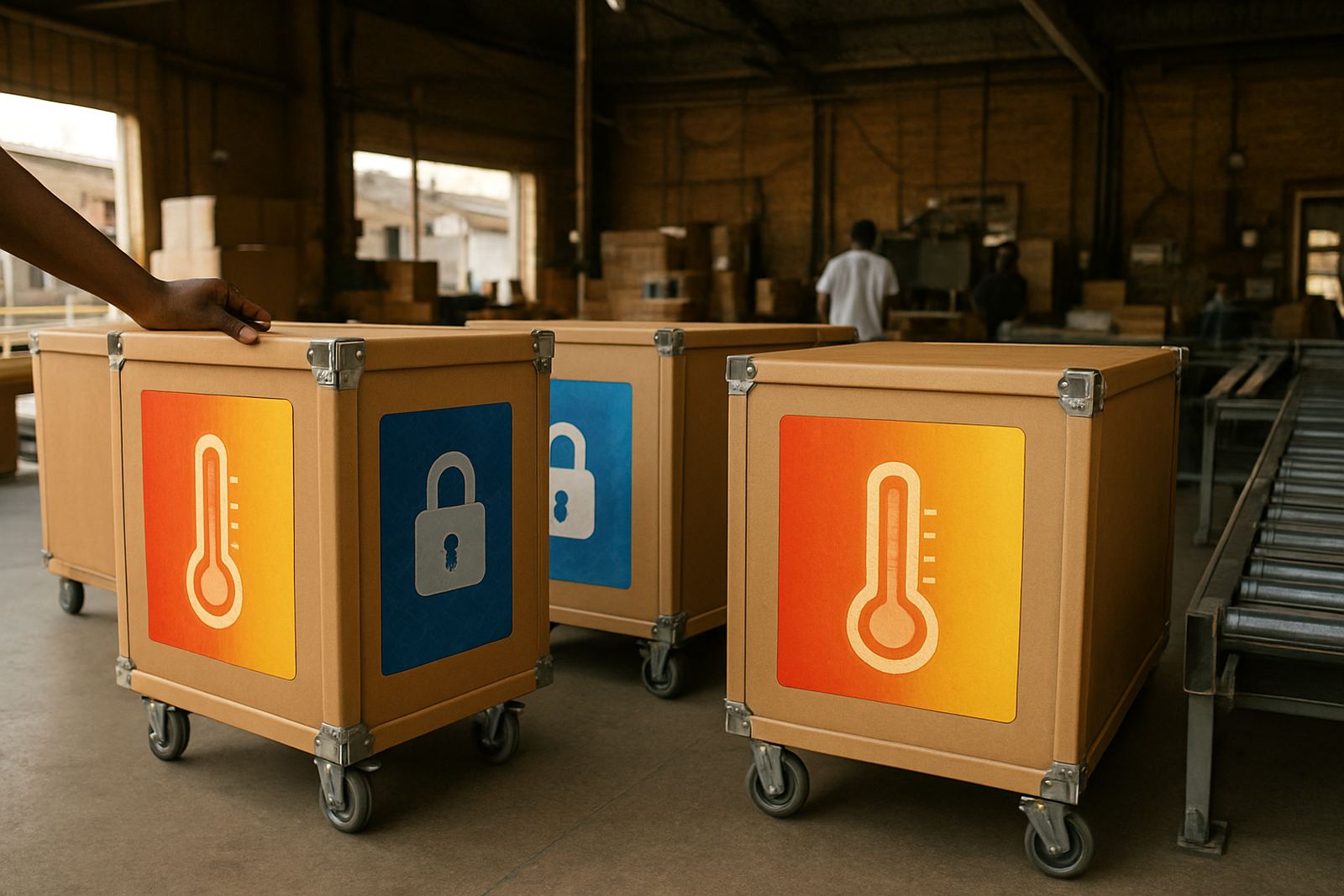
Thermochromic marks give a clear visual cue when a label has reached a set temperature band, which is useful for chilled items that must stay within a controlled range. Security ink can add a second layer, helping verify that a carton has not been opened, relabelled or swapped during distribution. For avocados, berries, citrus, leafy greens and cut produce, that mix of visual control and traceability is often more practical than adding more text to the label.
We work with packaging converters who need labels that run at speed, stay readable and match the rest of the pack line. If your business supplies supermarkets, wholesalers or export packhouses, the label has to survive cool rooms, condensation and rough pallet movement without giving false signals.
Typical equipment set for chilled produce runs
Most produce label projects use a combination of the labelstock, coating, print method and verification step. The ink choice must suit the substrate, whether that is paper, film, coated board or a synthetic label face. In many cases we start by checking whether the label needs to be applied before or after cooling, because that changes the adhesive choice and the ink tolerance needed for handling.
For clients in the Western Cape, Eastern Cape and Gauteng, the usual setup includes a label press, coating or overprint station, drying or curing support, and a line check for rub resistance and adhesion. Where security coding is needed, the layout may also include a pattern layer, covert mark, or a simple visible authentication cue for packhouse staff and distribution teams.
- Label press or flexographic line for short and medium runs
- Coating or overprint unit for thermochromic and security layers
- Drying, curing or controlled hold time before rewinding
- Handheld verification light or inspection aid for security checks
- Sample cutting and pull testing for adhesion on the actual label face
Layout planning for cold rooms and distribution security
Good layout starts with where the label will be read. If the packhouse staff need to see a chilled-state mark from arm’s length, that mark needs to sit in a clear space with enough contrast. If the distribution team must check authenticity on a busy loading bay, the security feature needs to be easy to find but not so obvious that it is copied quickly. Balance is important because too much information on one small label can slow application and confuse picking teams.
We usually advise clients to separate the visible handling cue from the authenticity feature. That means one part of the label can change colour at the target temperature, while another part carries a security pattern, trace mark or coded area for inspection. This keeps the operation simple for the cold store and gives the brand owner better control over the pack moving through Durban, Pietermaritzburg, Johannesburg or Cape Town.
We also recommend testing the label against the actual crate or carton surface, not just a flat sample. Corrugated board with recycled fibre behaves differently to a smooth film pack, and condensation can make a small sizing error into a daily problem. On busy lines, a 2 mm shift can be enough to affect barcode scan quality or cover the wrong part of a visual cue.
Common mistakes that cost time and money
The most common mistake is choosing the ink system before the packing environment has been checked. A label that works in a dry prep room can fail once it meets a cold room at 4 degrees or a dispatch bay with coastal humidity. Another frequent issue is using a generic proof instead of doing drawdown panels and trial batch making on the same substrate that will go to production.
Clients also sometimes underestimate how much handling a produce label sees. Bags are stacked, cartons are brushed past shrink wrap, and pallets are moved with forklifts that do not care about fine print. If rub resistance is weak, the design starts to look tired long before the produce itself reaches shelf life. And if the security element is not checked against the print process, the same line that makes the label can accidentally reduce the mark’s effectiveness.
- Skipping adhesion tests on the real label face
- Using a colour cue that is too subtle for busy staff
- Ignoring condensation after cold room pull-out
- Not checking rub resistance after pallet movement
- Leaving no retain samples for later comparison
Budget ranges for trials and production
Budget depends on volume, substrate, number of colours, security complexity and how much testing is needed before release. For a small trial batch with colour matching, threshold tuning and basic adhesion checks, many clients allow between R8,000 and R18,000. If the job needs security pattern design, UV verification setups and a more detailed press startup support session, the first phase can move into the R20,000 to R45,000 range.
For ongoing production, the unit cost often drops once the layout is settled and the same label spec is repeated across multiple packs. Larger converters running regular volumes from Jacobs, Pinetown, Prospecton or further afield usually keep a retain library so repeats can be matched quickly, which helps avoid another full setup every time. National delivery is available, and it is worth factoring courier time into lead planning when a packhouse is in Limpopo, the Free State or the Northern Cape.
If the product range changes often, ask for a staged approach: one formulation for chilled-state marks, one for the security layer, then a combined production run after the trial results are signed off. That keeps the spend controlled and gives the packing team a clearer picture of what is practical on their line.
What to send before the first trial
Before we prepare a trial, it helps to know the pack type, expected temperature range, label size, application speed and whether the label must survive spray, condensation or refrigerated storage. If the line already has a print setup, send the current artwork, substrate details and any existing issues such as peeling corners, fading, or poor scan quality. For security work, let us know who will inspect the mark in the warehouse and what they need to confirm.
A clear brief saves time and avoids unnecessary rework. Once we know the environment and the pack flow, we can suggest a practical ink system, run the needed checks and help you decide whether the label should prioritise handling cues, authenticity coding or both. For fresh produce, the best result is usually the one that keeps working quietly after the carton leaves the packhouse.