Where stand-up pouches need extra ink performance
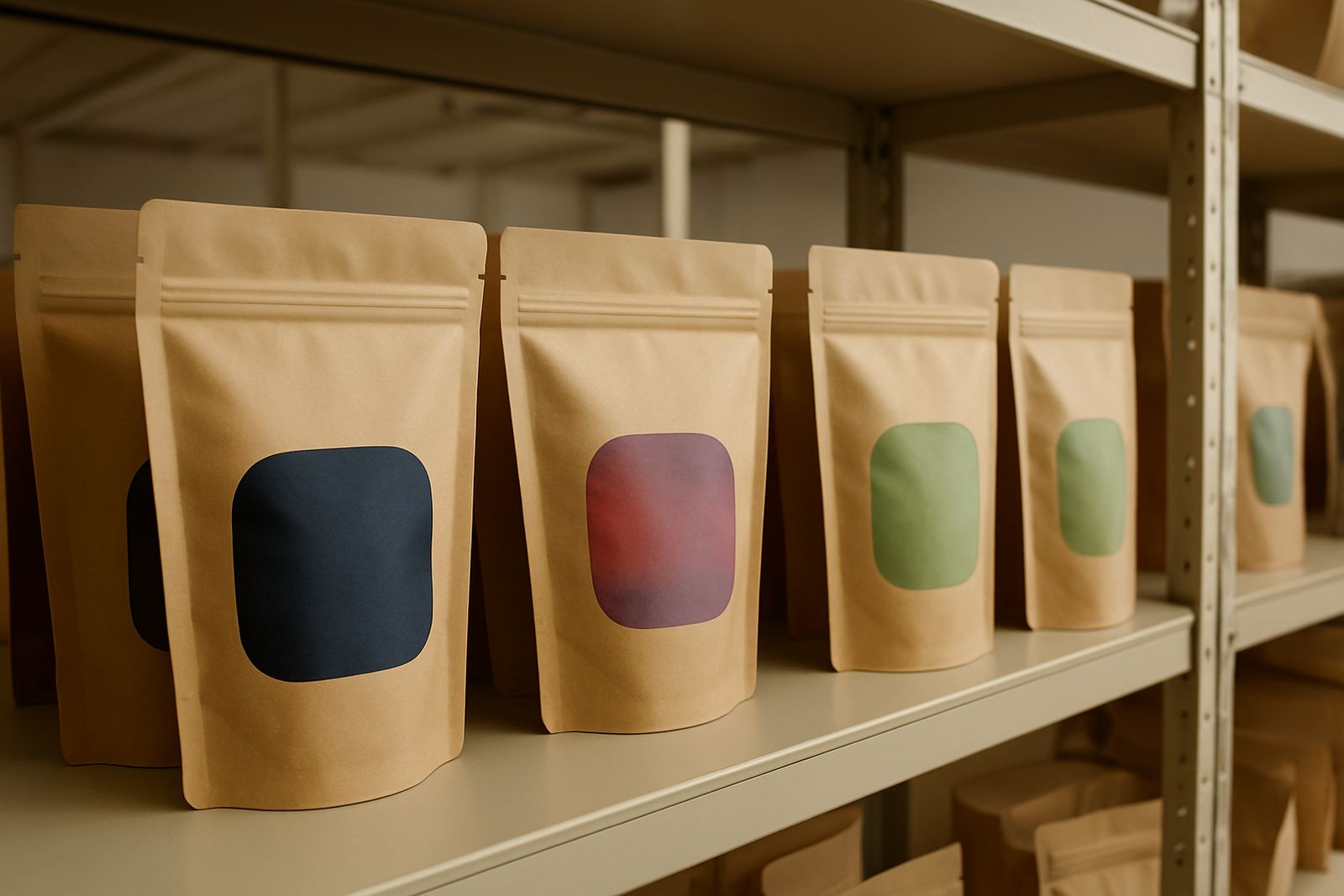
Stand-up pouches are used for snacks, coffee, powders, nutraceuticals, pet food and ready-to-use products, so the print has to cope with handling as well as shelf display. In Durban, Johannesburg and Cape Town, clients often ask for artwork that still reads clearly after heat, humidity and stacking in the warehouse. That is where thermochromic and security inks are useful, especially when the pouch carries a sensitive product or needs a clear authenticity check.
At ThermoInk in Jacobs, we usually start by looking at the pouch structure, the print side and the sealing areas. A pouch with a matte film, a foil layer or a clear window will behave differently from a plain laminated bag, so the ink choice must suit the substrate not just the artwork. For national runs, we also factor in how the packs will move between the converter, filler and distributor. A design that looks perfect on press but scuffs during transit will cost more later.
- Heat-sensitive graphics for products that should not sit in the sun or near warm machinery
- Security elements that help confirm genuine packaging at point of sale
- Print systems that still work when the pouch is filled, sealed and packed into cartons
Typical equipment set for pouch decoration
Most pouch work comes through flexographic or gravure lines, with some short-run work done by digital or hybrid equipment. The actual line set-up depends on the converter’s volume, but the common requirement is the same: the ink must transfer evenly, dry at the right speed and hold up on a film surface that may be slick or textured. When a client in Pinetown or Prospecton is setting up a new pouch job, we usually check the full print path before any trial batch is approved.
For stand-up pouches, the following equipment and controls are often part of the conversation:
- Print units suited to the film type and line speed
- Viscosity control and mixing equipment for repeatable colour
- Drying or curing capacity matched to the substrate and factory temperature
- Corona or surface treatment where adhesion is a concern
- Simple verification tools for colour change and security response
If the site has load-shedding pressure, backup power planning matters as well. An ink that behaves well in a stable production window can still give trouble if curing drops out halfway through a run. We often advise converters to keep a small trial window and a hold-back plan for first production, especially when the pouch is going into a national retail chain with tight delivery dates.
How to plan layout without compromising seals
Good pouch planning starts with the seal map. Artwork that runs too close to the gusset, zipper area or heat seal line can lead to weak seals, print distortion or blocked closure. The safest approach is to map the live print area first, then place the thermochromic or security feature where it will be visible and still survive converting. In many cases, the best position is on the front panel above the fill line, where consumers can see it easily and the pack still seals cleanly.
We normally advise converters to keep the active feature simple. A colour-change patch, warning icon or verification mark works better than a crowded graphic that is hard to register on press. For multi-language packs, the message should stay short and direct. If the pouch is going to Mpumalanga one week and the Western Cape the next, the print needs to hold up across temperature swings and handling conditions.
- Leave enough safe space around seals, tear notches and reseal strips
- Keep the security mark visible but not too close to fold lines
- Use clear contrast so the colour change can be seen under shop lighting
- Test the layout on a drawdown panel before a full run
Common mistakes on pouch jobs
A lot of pouch problems come from trying to force a general ink system onto a specialised pack. One common issue is poor adhesion on treated film, which shows up as rubbing, flaking or ghosting after the packs have been handled by filling crews. Another is choosing an activation point that is too sensitive, so the graphic changes colour from ordinary warehouse heat instead of only when the product reaches the intended threshold. That leads to confusion and claims.
We also see jobs where the security feature is placed in a spot that gets creased during filling. Once the film is folded too hard, the mark loses its read quality and the purpose is gone. On smaller runs, another mistake is skipping the trial batch because the artwork looks straightforward. It seldom is. Even a plain pouch can behave differently once the lamination, ink laydown and curing conditions are all working together.
Our team in Durban usually checks the likely failure points early. Shaun October handles technical sales queries, Lindokuhle Dlamini manages production concerns and Pieter van Wyk focuses on security ink detail, so the client gets practical guidance instead of guesswork.
Testing that protects the run and the brand
Before production, we recommend a set of checks that match the real packing environment. That includes colour matching, threshold tuning, adhesion tests, rub resistance checks and UV verification setups where required. For pouch work, the best sample is the one that has gone through the same conditions as the live job, not a clean sheet that never saw the sealing jaws or the carton stack.
We can prepare drawdown panels, trial batch making and press startup support for converters nationwide. If a client needs a batch retain library for future comparison, we keep that in mind from the start so repeat orders stay consistent. For facilities with strict quality control, the security pattern design can be set up to fit the plant’s own verification method, whether that is a visual check, a light-based inspection or a simple operator guide.
- Keep one retained sample from each approved batch
- Record the substrate, drying conditions and press speed
- Check the pouch after sealing, not only after printing
- Confirm that the active effect still reads after transport vibration
What pouch projects usually cost in Rand
Budget depends on pouch size, number of colours, security complexity and whether the job needs a trial batch or full production support. For smaller packaging development work, converters in South Africa often start with a few thousand Rand for test material and basic matching. A more involved setup with custom threshold tuning, trial batches and multiple verification rounds can move into the mid tens of thousands. Large volume production with repeated batches, retained samples and ongoing support is usually priced around the press schedule and total ink usage.
As a broad guide, simple pouch development may begin from about R5 000 to R15 000. More detailed work, including colour lab checks, adhesion testing and press startup support, often sits between R15 000 and R45 000. Bigger national programmes can go higher, especially when the pack needs specialised security elements or multiple product variants. We keep the scope clear from the start so the client knows what is included before the first run goes live.
For converters in Jacobs, Pinetown, Prospecton, Cape Town, Gqeberha, Johannesburg and Pretoria, the practical aim is the same: produce a pouch that prints cleanly, seals properly and gives the buyer a reason to trust what is inside.
Getting a pouch run ready for supply
When a stand-up pouch brief comes in, we start with the intended product, pack material and target market. From there, the team can advise on colour matching, security pattern design, coating compatibility and production troubleshooting. Jason Pillay manages national logistics so deliveries can be planned around the converter’s schedule, whether the run is going to Durban South, inland Gauteng or the coast.
If you are planning a new pouch line or changing an existing design, it helps to bring the artwork, substrate details and target print quantity together early. That reduces rework and keeps the job moving. A well planned pouch is easier to fill, easier to handle and better at carrying the message the brand wants to send.
For enquiries, clients reach us through the form on our contact page and we follow up with the next steps.